







SAPPHIRE: Carotid stenting superior to endarterectomy in high-risk patients
Tue, 19 Nov 2002 23:00:00 | Susan Jeffrey

Chicago, IL - A randomized comparison of carotid endarterectomy with carotid stenting using distal protection has shown the interventional procedure cut 30-day rates of death, MI, and stroke by more than 50%. Results of the study, called the Stenting and Angioplasty with Protection in Patients at High Risk for Endarterectomy (SAPPHIRE) trial, were presented here at the American Heart Association November 2002 meeting.

"This is the first randomized trial comparing carotid stenting with emboli protection [with endarterectomy] and shows a definitive advantage of stenting in this group of patients who have comorbidities," said Dr Jay S Yadav (Cleveland Clinic Foundation, OH), principal investigator of the trial.

Dr Jay S Yadav

Interestingly, he pointed out, this is also the first time that an interventional procedure has been shown to be superior and not just equivalent to surgery in cardiovascular medicine. "In the 25 years since Andreas Gruntzig started doing angioplasty, this is the first time we've shown an interventional procedure superior to surgery, so in that sense, I think it marks perhaps a coming of age for intervention."


From cowboys to pioneers

Over the past decade, carotid angioplasty and, more recently, carotid stenting using distal embolic protection devices have become more and more widely used as an alternative to carotid endarterectomy (CEA) to relieve carotid obstruction and prevent stroke. Initially seen as reckless, even unethical, by some physicians in the neurology community, registry case series began to sway thinking that this might be a real alternative to open surgery, with acceptable safety and efficacy particularly in vulnerable patients.

During the early 1990s, the North American Symptomatic Carotid Endarterectomy Trial (NASCET) in symptomatic patients and the Asymptomatic Carotid Atherosclerosis Study (ACAS) trial in asymptomatic patients established CEA as the standard of care in patients with high-grade obstruction. However, the so-called NASCET-eligible patients are relatively young and healthy, and many patients with high-grade stenosis and other comorbidities may not be considered candidates for this surgery.

Results of the Carotid and Vertebral Artery Transluminal Angioplasty Study (CAVATAS) trial comparing carotid angioplasty without stenting with CEA, reported last year,1 showed equivalency of these proceduresat least with CEA as performed in the community, where complication rates were higher than those seen in NASCET and ACAS.

What has not been available to date is randomized controlled data with carotid stenting using distal protection; the tendency to throw emboli has been the "Achilles heel" of the stenting procedure, Yadav said, and the advent of distal protection has made it much safer.


Team approach to assessing eligibility

The SAPPHIRE trial enrolled patients from 29 US centers. Eligible patients could be either asymptomatic with > 80% stenosis by ultrasound or symptomatic with > 50% stenosis and at least 1 feature that would make them high-risk: age greater than 80 years, the presence of congestive heart failure, severe COPD, previous endarterectomy with restenosis, previous radiation therapy or radical neck surgery, or lesions distal or proximal to the usual cervical location.

Eligible patients were then screened by a team including a vascular surgeon, an interventionalist, and a neurologist. Consensus that patients were good candidates for either procedure was required before randomization; those rejected as surgical candidates underwent stenting and were included in a stenting registry; those rejected as candidates for intervention had surgery and went into a surgical registry.

At the end of enrollment in June 2002, 409 patients had been included in the stenting registryconsidered by the surgeons as too high riskand only 7 patients were in the surgery registry, indicating that there were really very few patients that the interventionalists did not feel equal to addressing, Yadav noted. A total of 307 patients were randomized, 156 to carotid stenting, 151 to CEA.

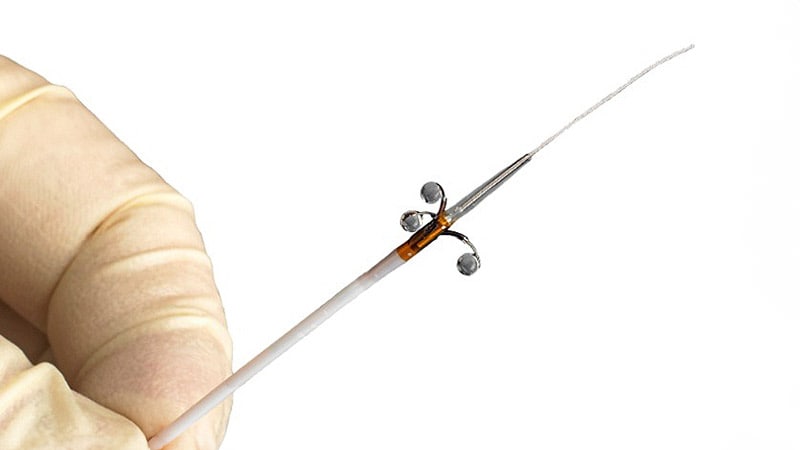
Both surgeons and interventionalists participating in the trial were high-volume operators, with low complication rates. The devices used in the trial were the PRECISE® nitinol stent (Johnson & Johnson), and the AngioGuard® (also Johnson & Johnson) distal protection device, of which Yadav is the inventor.

The trial was actually stopped prematurely in June of this year because of slowing enrollment, with increasing resistance on the part of both patients and physicians to randomization, Yadav said. The primary end point presented here was the incidence of major adverse cardiac events, including death, stroke, or MI within 30 days of the procedure.


MACE reduced by half

Carotid stenting was performed with a high degree of success, Yadav reported. At 30 days, results for the combined end point showed MACE was significantly reduced by more than 50% with the interventional procedure compared with surgery. Trends to lower rates were seen with stenting for all components of the primary end point.

SAPPHIRE: 30-day MACE (death, any stroke or MI), overall and in symptomatic and asymptomatic patients

Group

Carotid stenting (%)

Carotid endarterectomy (%)

p

Overall

5.8
12.6
0.047

Symptomatic patients

4.2
15.4
0.13

Asymptomatic patients

6.7
11.2
0.33

In the registry data, the 30-day MACE rate was 7.8% in the stenting registry (32/409) and 14.3% (1/7) in the surgery registry.

SAPPHIRE: 30-day complications

Complication

Carotid stenting (%)

Carotid endarterectomy (%)

p

Transient ischemic attack

3.8
2.0
0.50

Major bleeding

8.3
10.6
0.56

Cranial nerve injury

0.0
5.3
<0.01
To download tables as slides, click on slide logo below

"In conclusion, this is the first randomized study to compare carotid stenting with distal emboli protection with carotid surgery in only high-risk patients," Yadav said, showing significantly lower 30-day MACE among those undergoing stenting with distal embolic protection. Favorable trends were seen for both symptomatic and asymptomatic patients.

It is important to note, he pointed out, that surgical risk was defined by surgeons, using their own criteria.

Longer-term results are pending, with 1-year data expected to be available in the spring, he added.

Restenosis rates, a secondary end point of the trial, were not presented here, Yadav said, as they are still being compiled and will probably be reported at the American College of Cardiology meeting in March 2003. However, they don't anticipate restenosis will be much of a problem with carotid stenting, he told heartwire.

"We have a lot of data on restenosis in the carotid and it's actually lower than carotid surgery," he said. For this reason, he doesn't expect drug-eluting stents will be necessary in the carotids.


SAPPHIRE a "gem"

Dr David R Holmes (Mayo Clinic, Rochester, MN) was the invited discussant for the SAPPHIRE trial. He called the trial "extremely important," noting that while it "would have been nice" to have the trial finish with higher numbers, it still is first in its class: "a prospective, multicenter, randomized, controlled trialall the right wordsof carotid stenting with distal protection against carotid endarterectomy."

A particular strength was the team approach to evaluation of patients, he said. Operators were particularly competent in this trial, making the results even more reliable, he noted, pointing to the low degree of cranial nerve palsy as evidence of this. "These were not surgeons who were having a bad day at the office," Holmes said. "The surgery was excellent; it just happened to be that the interventional cardiology was excellenter."

"In experienced hands, these high-risk patients now have a better option, a less invasive option that works better," Holmes said.

Questions remain, including whether these good results could be translated to lower-risk populations, he noted, but, "at the end of the day, what can we say about the SAPPHIRE trial? We can say SAPPHIRE is a gem."


An even bigger piece of the pie?

Yadav estimated that the patients in this trialpatients with comorbidities making them high-risk surgical candidatesrepresent about one third of those requiring carotid revascularization each year. An ongoing NIH-sponsored trial, the Carotid Revascularization vs Stenting Trial (CREST) is comparing carotid stenting with surgery in lower-risk patients who do meet the NASCET/ACAS criteria for surgery and should be an acid test to determine whether carotid stenting will capture a much bigger piece of the carotid revascularization pie.

While debates about this procedure were at one time extremely heated, "I think the emotion is getting drained out of the process, especially after this trial," Yadav told heartwire. "Generally, the less science there is, the more emotion there is, and it's going to be hard for people to be emotional about it because the data is so overwhelming."

Many vascular surgeons, including those at Yadav's own institution, are learning how to do carotid stenting, he said. "I think they've seen the data and have seen their patients and how well they do."


Source
  1. Endovascular versus surgical treatment in patients with carotid stenosis in the Carotid and Vertebral Artery Transluminal Angioplasty Study (CAVATAS): a randomised trial.2001 Jun 2; 357(9270):1729-37  Available at: http://www.thelancet.com


You have to be logged in to add a comment to this article
Login
Username 
Password 
  Forgot your password?
 
Remember me on this computer
 
Join theheart.org community
Five reasons to become a member of the most trusted source of cardiology news:
1Be part of the conversation in our blogs and discussion forum
2Share your thoughts on our news or educational programs
3Receive exclusive newsletters related to your field of interest
4Access unique continuous medical education content
5See and read what leaders have to say about cardiology today
It is free and it only takes five minutes to join!
 
button
Previews
Featured CME