





Wall Street Journal exposes lucrative ties linking Cleveland Clinic and top staff members to investigational device companies
December 12, 2005 | Shelley Wood

Cleveland, OH - A page-one, 3500-word, investigative feature in the Wall Street Journal reveals a lucrative partnership between the Cleveland Clinic—and some prominent staff members—and companies manufacturing devices used in clinical trials there [1].

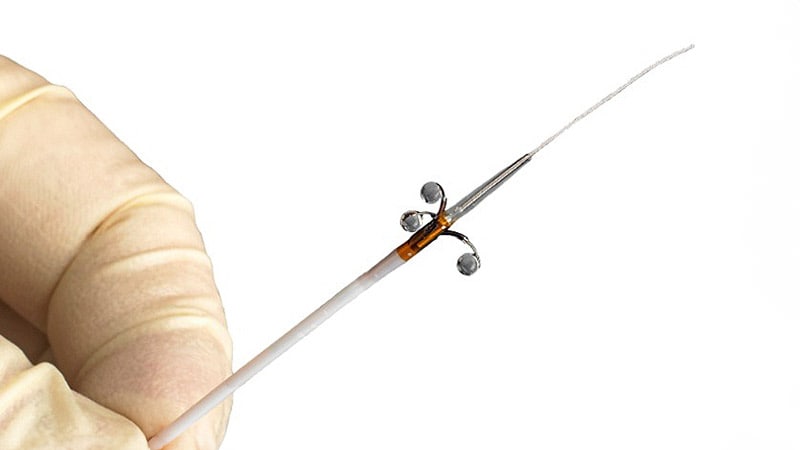
According to the report, by Journal reporter David Armstrong, more than 1200 patients since 2001 have undergone a radiofrequency ablation procedure at the Cleveland Clinic using an off-label device rejected three times by the FDA for cardiac use. The device is made by AtriCure, a company in which a venture-capital fund (Foundation Medical Partners [FMP]), created by the Cleveland Clinic to boost hospital coffers, owns approximately US $7 million in stock. FMP also invests in two other companies making products that are also in clinical trials at the Cleveland Clinic.

Ties between AtriCure and the Cleveland Clinic also involve prominent staff members, the Journal story notes. These include CEO Dr Toby Cosgrove, who, until March of this year, sat on AtriCure's board of directors, had invested in the fund personally, and was one of the general partners managing the company until he severed ties in October. According to the Journal, Cosgrove also worked with AtriCure on a medical device for which he will begin receiving royalties next year. As well, Dr Marc Gillinov, a surgeon at the clinic who has performed procedures using the AtriCure method, is a paid consultant to the company, as is Dr Patrick McCarthy, who has left the Cleveland Clinic for Northwestern Memorial Hospital in Chicago. McCarthy, says the Journal, performed the "AtriCure procedure" at the Cleveland Clinic and continues to use AtriCure devices at his current institution, receiving $2000 per month from AtriCure.

The AtriCure device is only FDA approved for the ablation and coagulation of soft tissue during surgery.


Ties loosened after COI committee called for change

Cosgrove, who became CEO last year, stepped down from AtriCure's board of directors in March 2005 after a clinic conflicts-of-interest committee called for stricter guidelines governing clinic employee ties to industry and capped the amount staff could earn in consulting fees. The committee also requested changes to the consent form alerting atrial-fibrillation patients participating in clinical trials to the clinic's ties to AtriCure. Previously, none of the patients treated with AtriCure devices as part of research trials were told about the clinic's relationship to the company, Armstrong notes in his article. Yet so far, little has changed. "None of the patients undergoing the AtriCure surgery outside of clinical trials will see these disclosures," Armstrong writes. "So far, 1247 patients have had the AtriCure procedure at the clinic, including 16 who are enrolled in current clinical trials, and . . . clinic staff members have performed the procedure on 100 more patients in other hospitals. None of these patients saw the new consent form with added disclosure."

FMP has also invested $5 million in Immunicon Corp, a developer of cancer-screening products, and $3 million in CardioMems, which makes devices for endovascular repair of abdominal aortic aneurysms, Armstrong notes. The Cleveland Clinic also has a direct $2.75 million investment in Immunicon. Both Immunicon's and CardioMems's devices are in clinical trials at the Cleveland Clinic.

Armstrong quotes research ethicist, Dr Adil Shamoo (University of Maryland, College Park), saying: "The whole process of institutions having large-scale holdings in equities is corrupting the process. . . . It sends the wrong message and could lead to serious harm to human subjects because it clouds your judgment."


Media attention, of the wrong ilk

The startling details represent the second time this week the Cleveland Clinic has found itself the subject of negative press—uncommon for an institution frequently cited as the top hospital in the US. The clinic is also in the spotlight for its decision to strip renowned cardiologist Dr Eric Topol of his title as provost and chief academic officer, purportedly as a result of administrative restructuring, as reported today by heartwire. The changes to Topol's title and duties mean he is also off the conflict-of-interests committee and board of governors at the Cleveland Clinic.

Media reports have already raised the question of whether Topol's demotion is linked to his vocal condemnation of Merck's handling of Vioxx's cardiovascular risk and his claims that Merck executives complained to Cleveland Clinic executives about his outspoken criticism of the company. The Cleveland Clinic has yet to issue a public statement about Topol's changed circumstance but will no doubt now be in damage control over the Journal's revelations.


How we learn?

In an interview with the Journal, Cosgrove said that the AtriCure procedure is used because it is safe and effective, "not because of any financial considerations," Armstrong writes. According to the Journal, four patients have died during or following AtriCure procedures, but Cosgrove told Armstrong he was unaware of the deaths and believed off-label use of devices is "the nature of what we do and how we learn." He continued: "The important thing is the candor by which you discuss results and failures."

Some of that candor may occasionally have been lacking, Armstrong's story suggests. He points out that Cosgrove participated in a debate last year about whether atrial-fibrillation surgery should be done on patients having a heart-valve replacement. "[Cosgrove] mentioned only one company by name, AtriCure," Armstrong writes. "Not mentioned during the debate or in the disclosure section of the program guide was his seat on AtriCure's board or his investment ties to the company. A Clinic spokeswoman said his secretary mistakenly checked a box on a disclosure form indicating he had no conflict."

Elsewhere, Cosgrove and Gillinov coauthored a study on AtriCure surgery patients showing the procedure to be of benefit at six months. Although the journal disclosed Gillinov's role as a paid consultant, Cosgrove's was absent, something Cosgrove said it was "an oversight on my part," Armstrong writes.

The Journal article is not the first time Cleveland Clinic investments have fallen under scrutiny. A March 2005 article in the Cleveland Plain Dealer [2] also illuminated some of the ties between the clinic and device companies and quoted a clinic spokesperson as saying that since Cosgrove became CEO, he has been working "to identify, manage, and, if necessary, modify his relationships."

Sources
  1. Armstrong D. How a famed hospital invests in device it uses and promotes. Wall Street Journal, December 12, 2005, p A1.
  2. Treffinger S. Money and medicine; Scientists grapple with expanding role of firms in research. Plain Dealer, March 13, 2005. Available at: http://www.canaan.com/releases/2005/050313_medicine.htm.


Your comments
Wall Street Journal exposes lucrative ties linking Cleveland Clinic and top staff members t
# 1 of 3
December 15, 2005 02:35 (EST)
LJ Laurent
this is concerning
does this bother anyone else besides me?
# 2 of 3
December 16, 2005 09:20 (EST)
irene clyde
disgrace
Dr. Cosgrove and CCF should be ashamed. If I needed cardiac care I would go to Dr. Topol. I feel that I could trust him.
# 3 of 3
December 17, 2005 07:51 (EST)
Navin Jarugumilli
Quacks
The case of Vioxx and AtriCure only prove that the leadership at Cleveland are borderline quacks. Pay to play scams might work in politics but not in medicine because people may die. I hope Dr. Topol comes out of this clean!

You have to be logged in to add a comment to this article
Login
Username 
Password 
  Forgot your password?
 
Remember me on this computer
 
Join theheart.org community
Five reasons to become a member of the most trusted source of cardiology news:
1Be part of the conversation in our blogs and discussion forum
2Share your thoughts on our news or educational programs
3Receive exclusive newsletters related to your field of interest
4Access unique continuous medical education content
5See and read what leaders have to say about cardiology today
It is free and it only takes five minutes to join!
 
button
Previews
Featured CME