







Higher radiation doses with MSCT than conventional angiography, but trade-off may be worth it
April 26, 2006 | Shelley Wood

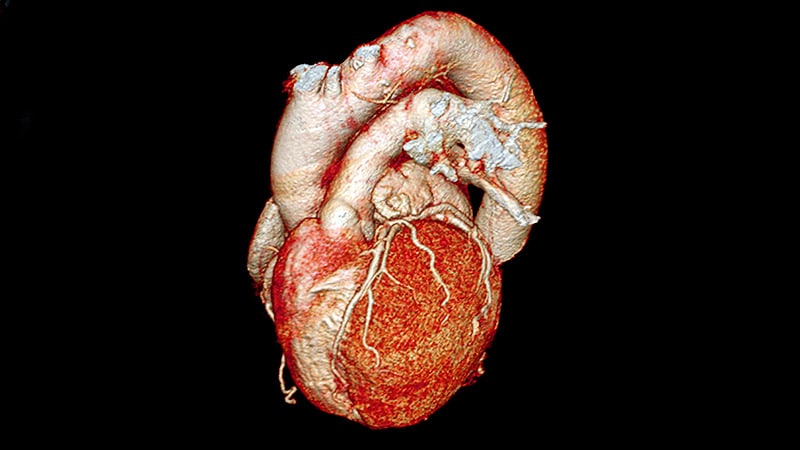
Bristol, UK - Multislice computed tomography (MSCT) using a 16-slice scanner delivers more than twice the radiation than conventional angiography, a new study shows. In a paper published online April 19, 2006 in the Journal of the American College of Cardiology, Duncan R Coles and colleagues (Bristol Heart Institute, UK) say operators need to pay closer attention to radiation dose when using MSCT.

"Coronary CT delivers a relatively high radiation dose for a purely diagnostic procedure," the authors write. "It also delivers a significantly higher effective dose than conventional angiography to patients being investigated for coronary artery disease."

Excitement over the possibility of detecting coronary artery disease using MSCT has mounted in recent years, particularly with the advent of increasingly sophisticated machines, including 64- and 128-slice scanners. As Coles et al point out, however, actual radiation doses from cardiac MSCT in the clinical setting are unknown.

For their study, Coles and colleagues estimated effective radiation dose in 180 patients with suspected coronary artery disease undergoing MSCT or conventional angiography. A subset of 91 patients underwent both types of imaging tests. During MSCT, patients scanned with 16 detectors instead of 12 received significantly higher effective radiation doses (15.3 mSv vs 14.2 mSv). When compared with conventional angiography, MSCT was associated with statistically significant higher estimated radiation doses.

Radiation doses

Dose
MSCT
Conventional angiography
Mean effective radiation dose (mSv)
14.7
5.6

To download table as a slide, click on slide logo below

The authors emphasize that radiation dose results relate to the protocols in use at the time the study was conducted. "Ideally, operators should optimize protocols to achieve adequate image quality for different-sized patients and should be aware of the impact this will have on patient dose," they say.

"With the increasing availability of MSCT cardiac scanners, operators must be aware of the radiation dose and the factors that affect it for both clinical and research protocols," Coles et al conclude.


A trade-off

In an accompanying Viewpoint, Dr Pat Zanzonico (Memorial Sloan Kettering Cancer Center, New York, NY) and colleagues argue that the radiation risk associated with MSCT must be put in perspective.

"When weighing the relative risk of any medical procedure, it is imperative that one consider the overall risk of alternative procedures," they write. The lifetime cancer mortality risk associated with the radiation doses reported by Coles et al for the general population would be 0.02% for conventional angiography and 0.07% for MSCT. However, they add, nonradiogenic risk of mortality associated with conventional angiography—because of its invasive nature—is 0.11% by some estimates; accordingly, the overall mortality risk of conventional angiography is 0.13%—nearly twice that of the radiogenic risks of MSCT, they estimate.

"For an equivalent diagnostic efficacy of MSCT angiography and conventional angiography, MSCT angiography emerges as the safer of these two alternatives, despite its higher radiation dose," Zanzonico et al write. If the entire US population between ages 50 and 55 were to be screened for CAD using MSCT until age 70, the anticipated aggregate increased risk of fatal cancer would be 42 900; however, screening would also identify many patients with significant stenosis, they write. "If this procedure prevented even 10% of the estimated 355 000 sudden deaths each year, the trade-off would be well worthwhile," Zanzonico et al conclude.


Why dose algorithms are needed

Also commenting on the study for heartwire, Dr Jörg Hausleiter (Deutsches Herzzentrum, Munich, Germany) called the research "very interesting . . . supporting the need for physicians to be aware of the dose that a patient could obtain from cardiac MSCT."

The magnitude of dose described in this study for MSCT angiography is certainly not helpful to promote this very exciting new technology.

Hausleiter pointed out that while the methodology used by the authors to calculate effective dose for both modalities appeared to be valid, the values for MSCT are higher than other reports. In research conducted by Hausleiter et al, in a larger population, the MSCT average dose was roughly half that of what Coles et al reported.

Reasons for this difference include the fact that Coles et al scanned longer ranges: 155 mm instead of the more standard 125 mm; a 25% increase in length corresponds to a 25% increase in dose, Hausleiter pointed out. While CABG patients, who require longer scan lengths, were included in Coles et al's study, this does not account for all of the increase in scan length, he told heartwire. In addition, dose-saving algorithms—a topic recently explored by Hausleiter and colleagues, as reported by heartwire [3]—were mentioned by the authors, but were not applied.

"If they would have taken care of these issues, the MSCT dose would have been significantly lower, probably about 50% to 60%," Hausleiter stated. As such, the study stands as a good example of the type of risk a patient is exposed to if such algorithms are not used, he added.

"The magnitude of dose described in this study for MSCT angiography is certainly not helpful to promote this very exciting new technology."

Sources
  1. Coles DR, Smail MA, Negus IS, et al. Comparison of radiation doses from multislice computed tomography coronary angiography and conventional diagnostic angiography. J Am Coll Cardiol 2006; 47:1840-1845.
  2. Zanzonico P, Rothenberg LN, Strauss W. Radiation exposure of computed tomography and direct intracoronary angiography. J Am Coll Cardiol 2006; 47:1846-1849.
  3. Hausleiter J, Meyer T, Hadamitzky M, et al. Radiation dose estimates from cardiac multislice computed tomography in daily practice. Impact of different scanning protocols on effective dose estimates. Circulation 2006; 113:1305-1310.


Your comments
Higher radiation doses with MSCT than conventional angiography, but trade-off may be worth it
# 1 of 7
May 1, 2006 11:27 (EDT)
Daniel R. Pichel
COMMON SENSE
The message of this study is that MSCT cannot be used as a "screening" test for everyone. We have to think in CAD risk of each patient before indicating it.
# 2 of 7
November 29, 2006 10:43 (EST)
Giancarlo Casolo
CLINICIANS SHOULD REMEMBER
The detection of a stenoses is only one step int he management of the patient. It may be also a less important information than others. The presence and extent of ischemia are relevant information.
# 3 of 7
November 29, 2006 08:24 (EST)
Mike Hawke
screen
I think you can screen everyone.
Also more radiation for the patient...none for me and my staff!
After 15 years I could use a break.
bring it on ; ct everyone!
# 4 of 7
December 6, 2006 08:39 (EST)
Daniel Tarditi
Shift from the hole to the donut
PET/CT is the best of both worlds, but no way providers will pay for it.

You can reduce radiation of MDCT with prospective gating (40% less radiation). However, the real life correlation at our institution has not been as good as the studies comparing QCA and CT.

There was a good registry on CT, MRI, and CATH.
Ann Intern Med. 2006 Sep 19;145(6):407-15.

BACKGROUND: Multislice computed tomography (CT) and magnetic resonance imaging (MRI) are the main candidates for noninvasive coronary angiography; however, multislice CT, unlike MRI, exposes patients to radiation and an iodinated intravenous contrast agent. OBJECTIVE: To compare the diagnostic accuracy of multislice CT and MRI for noninvasive detection of clinically significant coronary stenoses (> or =50%). DESIGN: Prospective intention-to-diagnose study.
SETTING: Single tertiary referral center, Berlin, Germany.
PATIENTS: 129 consecutive patients with suspected coronary artery disease. Interventions: Multislice CT and MRI were both performed within a median of 1 day before conventional coronary angiography, which served as the reference standard. MEASUREMENTS: Diagnostic performance of multislice CT and MRI.
RESULTS: 129 patients completed the study. Altogether, 108 patients with 430 vessels could be examined with both multislice CT and MRI and were used for analysis. In the per-patient analysis, the sensitivity of multislice CT (92% [95% CI, 82% to 96%]) was significantly higher than that of MRI (74% [CI, 61% to 83%]; P = 0.013). The sensitivity for detecting clinically significant stenoses was 82% for multislice CT and 54% for MRI (P < 0.001). Specificity and negative predictive value of multislice CT and MRI in the per-vessel analysis were 90% versus 87% (P = 0.73) and 95% versus 90% (P = 0.032), respectively. The effective radiation dose used with multislice CT (mean, 12.3 mSv [SD, 1.4]) in a consecutive subgroup of 73 patients was not significantly different from that used with diagnostic cardiac catheterization (11.4 mSv [SD, 4.8]) (P = 0.169). Most patients (74%) indicated that they would prefer multislice CT for future diagnostic imaging (P < 0.001). LIMITATIONS: This was a single-center study with 129 patients.
CONCLUSIONS: In patients referred for conventional coronary angiography, multislice CT compares favorably with MRI for noninvasive detection of coronary stenoses.

Did bayesian analysis. If pretest probability is <50% and MDCT negative, has a post-test probability of <10%.

I am being trained in CT, but I think it is still a year or two away from prime time.

Dan
# 5 of 7
December 8, 2006 08:14 (EST)
Melissa Walton-Shirley
Yes, I'm going to try to beat the Fall 2007 deadline for training but.........
Fall is coming. If we want to get trained before having to do a formal fellowship in CT, thus avoiding getting caught in the "let's exclude and make difficult already practicing physicians from learning new technology net", we're going to have to get on the ball.
However, If "sensitivity of detecting clinically significant stenoses is 82%" for multislice CT then why on earth would anyone want to do it to the exclusion of stress testing. It strikes all of us I'm certain every single time I read this statistic that when you uncouple ambulatory stress testing from attempts at detecting coronary artery disease, you've just lost a world of information that prognosticates and assists with medication selection. I feel badly enough already for all the folks that have to do adenosine and dobutamine exams. Gone are the opportunities to see how well hypertension is truly controlled, evidence for exercise induced arrhythmias, the unmasking of hidden LVOT velocity issues, etc. The earliest pioneers of stress testing knew that with a plain treadmill exam you could fairly well prognosticate a patient based on exercise duration and tolerability.
All of us have become obsessed with learning coronary anatomy, but that's the cosmetic side of cardiology. CT is going to be fun for cosmetology but rotten for prognostication when compared to all the things we learn from a simple Bruce protocol exam.
The ideal assembly line for every cardiac patient would be to start on a conveyor belt that stops for fasting lipids, passes them by a sonographer for resting echo, dumps them on a treadmill for ambulatory stress, throws them back over to the sonographer for wall motion and LVOT check, then passes them through the multislice CT scanner for anatomy then have them "Meet George Jetson".
Melissa
# 6 of 7
December 8, 2006 08:38 (EST)
Daniel Tarditi
Prognosis vs diagnosis
Melissa,
I agree with everything you said. Enjoyed the George Jetson reference.

I think stress testing provides much more prognostic information, especially when exercise, METS, HRR, etc are taken into account. That has never beeen in question.

However, with the increasing prevalence of DM, obesity, metabolic syndrome, I think we also need to shift our goal on early diagnosis.

Not sure what ideal risk stratification for CAD is with respect to CT and/or stress testing. I think though, that if you have a patient who cannot exercise, CT may be a reasonable choice. Especially when you look at the DIAD study, pharm testing done because of majority of DM patients were unable to exercise on treadmill.

Dan
# 7 of 7
December 9, 2006 07:01 (EST)
Mike Hawke
agree
As usual I agree with you both.
Three years ago the CT was coming; now as Dan says it is a year or two away?
Who really knows? I think it someday will supplement our knowledge but stress and particularly stress thallium gives us so much knowledge. We also are getting away from the cosmetic side of just doing angioplasty with a lesion. Frankly it is a function partly of being highly paid to do pci. Once we have 'pay for performance' I think at least docs will have to pay attention to and document lipids, smoking, betablocker use and things that really matter.
This fascination with 'finding a blockage' needs to be replaced by a comprehensive treatment and risk assessment protocol and approach in my opinon.
As far as ct from a financial viewpoint I think if we can get the surgeons and others to use it we might make it viable.
I would recommend people get trained so the Nazi storm trooper regulators with their jackboot on our necks can't prevent us from accessing the technology! To all of you that write these inane rules "yes we think you are idiots with all your efforts to regulate ie turf protect a useful technology"
Sorry for the rant, can I get an "Amen"?
Speaking of cosmetic how is your 'spa' coming along Melissa?

You have to be logged in to add a comment to this article
Login
Username 
Password 
  Forgot your password?
 
Remember me on this computer
 
Join theheart.org community
Five reasons to become a member of the most trusted source of cardiology news:
1Be part of the conversation in our blogs and discussion forum
2Share your thoughts on our news or educational programs
3Receive exclusive newsletters related to your field of interest
4Access unique continuous medical education content
5See and read what leaders have to say about cardiology today
It is free and it only takes five minutes to join!
 
button
Previews
Featured CME