







Tucson, AZ - The University of Arizona (UA) Health Sciences Center has permanently barred cardiologist Dr Paul E Fenster from clinical research, heartwire has learned. The UA's decision is the result of a 2004 investigation instigated by the UA of Fenster's conduct as the UA principal investigator for the Comparison of Medical Therapy, Pacing, and Defibrillation in Heart Failure (COMPANION) trial.
However, a subsequent FDA audit in October 2005 that resulted in a warning letter sent to Fenster earlier this year cites "objectionable conditions" but makes no recommendations for punitive actions. Fenster, who told heartwire he is appealing the UA's decision, says the UA's actions did not take into account FDA policies, while the FDA's own conclusions focused primarily on "clerical errors."
According to a UA public statement obtained by heartwire last week, responding to the March 21, 2006 FDA warning letter, university officials conducting a "routine audit" made discoveries that cast into question "the execution of the approved protocol."
"Following further investigation supervised by the office of the vice president for research, the university has taken corrective action," the statement notes.
That action is a permanent ban on human subject researchthe first time the UA has levied such a ban.
An "incompetent audit," Fenster says
But Fenster, commenting on the situation to heartwire, insists the university's investigative panel "incompetently audited" his work and made "egregious errors" in the process.
"I have been prohibited from conducting research at the UA because a investigative panel incompetently audited the COMPANION trial," Fenster told heartwire in an email. "That panel made more errors, and more serious errors, in auditing the trial than I made conducting the trial."
According to Fenster, the university's investigative panel incorrectly concluded that Fenster was in violation of FDA regulations regarding submission of data to the sponsor, source documentation, and obtaining medical records of ongoing care of trial participants. "The reality is that I was compliant with FDA regulations and that some of the actions recommended by the panel would be violations of FDA regulations. I have letters from the FDA to prove this," Fenster said. "A thorough review of all the evidence clearly demonstrates that all of my errors were clerical mistakes and that these errors had absolutely no impact on patient safety or well-being and did not compromise the scientific validity of the data," Fenster said. "The action by the UA was not based on the FDA audit; the FDA did not bar me from engaging in research and did not recommend any punitive action against me."
FDA investigation turns up violations
The FDA warning letter, summarizing the findings from its 2005 audit, states that Fenster failed "to ensure that the investigation [was] conducted in accordance with the signed agreement with the sponsor, the investigational plan, applicable FDA regulations for protecting rights, safety, and welfare of subjects under the investigator's care, and for control of devices under investigation, and any conditions of approval imposed by the FDA or the IRB [institutional review board]."
In one instance cited in the warning, a physician implanted three investigational devices and attempted a fourth implantation over a six-month period before being approved as a study physician, a transgression that Fenster, as supervisor, should not have permitted.
"Such supervision includes not supplying the investigational device to any person not authorized to receive it," the warning letter states.
In other instances, a study subject was enrolled before determination of eligibility; study logs were not maintained appropriately or were "created" years after initial enrollment; and the IRB was not informed of a death or of a serious adverse event within the five-day window specified in the trial protocol.
But as Fenster explained in some depth to heartwire, he responded to each of the FDA's concerns spelled out in the March 21 warning letter, as requested, and has subsequently provided the FDA with information on the corrective actions he plans to take to ensure that future violations of FDA regulations will not occur.
In the case of the physician implanting devices before being approved as a study investigator, for example, the physician in question, Dr Lionel Faitelson, had completed the training program conducted by the trial sponsor (Guidant), and Fenster believed him to have been approved as an independent trial investigator; Faitelson himself believed his approval to be that of a subinvestigator. The problem, said Fenster, was that all of the discussions between himself, the other physician, and the sponsor were oral and not in writing. In the future, Fenster told the FDA, he would make sure the status of all investigators is confirmed with the sponsor in writing. In this case, the error, upon discovery, was immediately reported to the IRB, which reported the problem to the FDA, Fenster told heartwire.
Likewise, other violations cited by the FDA were also largely the result of miscommunications among investigators, sponsors, and institutional reviewers or due to confusion about study protocol, Fenster explained. These were duly reported over the course of the trial and did not result in changes to or disruption of the trial and were deemed not to affect the "scientific validity" of the study results.
|
No patients harmed
To heartwire, Fenster outlined some of the "serious errors and incorrect conclusions" in the BRIP's report. In one instance, the university took issue with the fact that data from four patients were submitted directly to the trial sponsor, in violation of university and FDA rules. In response, Fenster contacted the FDA, which replied that Fenster was, in fact, following protocol. "The university panel is simply incorrect, but it nonetheless recommended that I be harshly judged and punished," Fenster stated. "That is but one of several serious errors contained in the university report," he added.
Most important, patient safety was never in jeopardy, Fenster stressed.
"Almost all of the patients and their families expressed their gratitude for the excellent care we provided," he told heartwire. "Almost all of the patients who received a device experienced a marked improvement in their symptoms. And the families of those who died thanked us for our efforts."
Tolbert was out of the country and unable to comment on the action against Fenster to heartwire; however, she is quoted in the Tucson Citizen as saying "It's hard to say who was harmed and how. . . . [Fenster] was following practices that didn't minimize the protection from harm. You can't just say, 'I know my patient will be okay. This is fine.' "
Fenster clarified to heartwire that the UA's action would not prevent him from conducting research at other institutions. Dr Peter Ott, Fenster's co-PI for COMPANION at the UA, was also prohibited from engaging in research until he completed remedial courses. According to Fenster, Ott has completed the required courses and is allowed to engage again in clinical research.
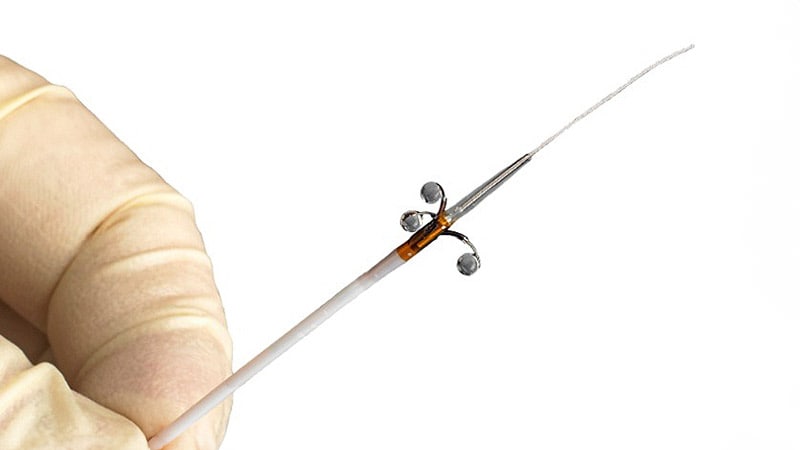
The COMPANION trial results, first reported by heartwire in 2003, established a role for biventricular cardiac resynchronization therapy in patients with heart failure.
|
||||
|
|
|
|||
|
|
|
|||
|
|
|
|||
|
|
|
|||