








ACC/AHA/ESC updates guidelines for AF management
August 4, 2006 | Michael O'Riordan

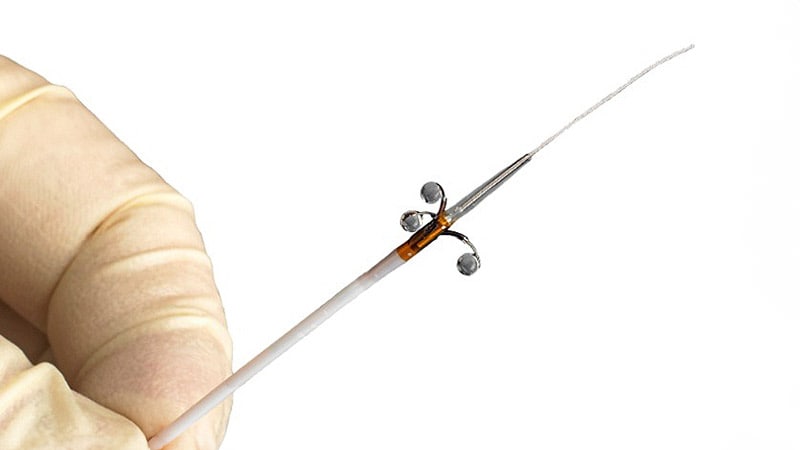
New York, NY - The American College of Cardiology, the American Heart Association, and the European Society of Cardiology (ACC/AHA/ESC) have released revised recommendations for the management of patients with atrial fibrillation (AF) [1]. The committee, cochaired by Drs Valentin Fuster (Mount Sinai School of Medicine, New York) and Lars Rydén (Karolinska Institute, Stockholm, Sweden), said the guidelines incorporate results from the major clinical trials published since the 2001 treatment recommendations were published. Not surprisingly, the new management guidelines reflect the growing acceptance of the use of catheter ablation to treat AF, as well as the option of rate control, largely based on the AFFIRM and RACE trials, in the management of AF in certain patients. Importantly, the guidelines also emphasize the consideration of risk factors for stroke to determine whether patients should be treated with an anticoagulant.

The new guidelines are published online August 2, 2006 in Circulation and will later be published in the Journal of the American College of Cardiology and the European Heart Journal.


Changes regarding atrial fibrillation ablation

Dr Anne Curtis (University of South Florida, Tampa), a member of the ACC/AHA/ESC writing committee, who spoke with heartwire about the new guidelines, said the management of patients with AF involves three objectives: rate control, prevention of stroke, and correction of rhythm disturbance. As noted in the new guidelines, regardless of whether a rate- or rhythm-control strategy is pursued, clinicians must still pay close attention to antithrombotic therapy for the prevention of stroke. However, other changes in the guidelines are likely to catch the attention of clinicians.

"To me, the biggest change in the new guidelines that people are going to notice is the fact that ablation for atrial fibrillation is becoming a little more prominent," said Curtis. "What happened is that in the old guidelines, if you looked at the flow diagrams for managing patients with atrial fibrillation, you could see that you had to basically exhaust all medical therapy. Ablation was considered experimental or a last resort. The results with it have been so good that it didn't make sense to approach it this way any longer."

Under the previous guidelines, Curtis told heartwire, patients were typically expected to have been treated with and failed amiodarone therapy before they were considered for ablation therapy. Now, amiodarone and ablation are going to be considered equal in terms of options.

"There is still the general impression that a patient should try some medication before moving onto ablation because it is an invasive procedure, it's difficult, and it's not guaranteed," she said. "So if you could tolerate drugs just for a little bit of time, then that's good. But if drugs, at least one reasonable medication, have failed and you're considered a favorable candidate for ablation—a younger or middle-aged patient with paroxysmal atrial fibrillation and with little or no left atrial enlargement—then the success rate is pretty good and they shouldn't be expected to wade through multiple drug trials, including amiodarone, before going to ablation."


Rate and rhythm control reasonable options

The new guidelines also incorporate data from the rate-control trials, including AFFIRM, RACE, STAF, and HOT CAFE. The guidelines recommend that for patients with symptomatic AF lasting many weeks, initial therapy is anticoagulation and rate control, while the long-term goal is to restore sinus rhythm. If rate control offers inadequate symptom relief, restoration of sinus rhythm becomes a "clear long-term goal." Depending on the symptoms, controlling heart rate might be a reasonable therapy in elderly patients with persistent AF who have hypertension or underlying heart disease.

"There is certainly a lot more of a feeling that rate and rhythm control are both reasonable options," said Curtis. "The newer trials have gotten people away from the automatic expectation that as soon as the patient has atrial fibrillation they need to be cardioverted and attempts [should be] made to get them into normal sinus rhythm. It's not that atrial fibrillation is just as good as sinus rhythm, as I'm sure we would agree that it would be better to keep them in sinus rhythm. The key question is whether you can keep them in normal sinus rhythm safely."

Curtis noted that one of the side effects of the antiarrhythmic drugs is proarrhythmia, further aggravating AF. She said rate and rhythm control are excellent options for patients who are not symptomatic or only mildly symptomatic. "The problem is with people who are very symptomatic," she noted. "If you try to tell them that rate [and] rhythm control is just as good for them, they aren't going to like rate control very much."

In addition to these changes, Curtis noted there has been a "juggling around" of medications, and although no drug has been eliminated, certain medications, such as quinidine and procainamide, have been deemphasized because they are considered less effective or incompletely studied.

Curtis noted that there have been some small changes regarding anticoagulation, which now emphasizes risk factors for stroke. For those with no risk factors, 81- to 325-mg aspirin is the recommended therapy. For those with one moderate risk factor, including high blood pressure, heart failure, diabetes, or impaired left ventricular systolic function, aspirin or warfarin is recommended. Warfarin is the recommended therapy for those with a previous stroke, transient ischemic attack, systematic embolism, or prosthetic heart valve, or for those with more than one moderate risk factor.

Source
  1. Fuster V, Rydén LE, Cannom DS, et al. ACC/AHA/ESC 2006 Guidelines for the management of patients with atrial fibrillation. Circulation 2006; 114:700-752.


You have to be logged in to add a comment to this article
Login
Username 
Password 
  Forgot your password?
 
Remember me on this computer
 
Join theheart.org community
Five reasons to become a member of the most trusted source of cardiology news:
1Be part of the conversation in our blogs and discussion forum
2Share your thoughts on our news or educational programs
3Receive exclusive newsletters related to your field of interest
4Access unique continuous medical education content
5See and read what leaders have to say about cardiology today
It is free and it only takes five minutes to join!
 
button
Previews
Featured CME