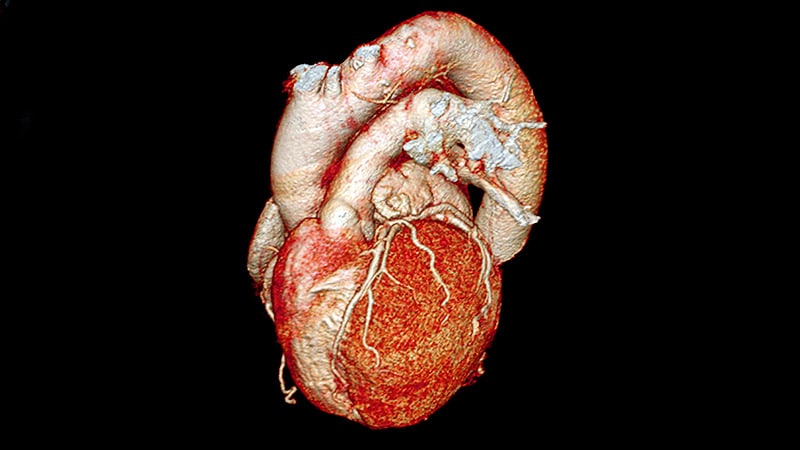










Durham, NC - New evidence suggesting a survival benefit for patients with severe CAD initially treated with CABG instead of PCI or medical therapy will only add to the ongoing debate over the relative benefit of the two revascularization procedures, particularly in the drug-eluting-stent (DES) era [1].
While this latest study, which looked at 15 years of CAD treatments across the spectrum of disease severity, does not include DES, the lead investigator points out that the results are still highly relevant, particularly since long-term survival with DES is unknown. Indeed, uncertainty over the true late-stent-thrombosis risk with DES has led some interventionalists to return to bare-metal stents, making the study results pertinent to real-world patients.
The applicability of this study "relates entirely to what the story ends up being on drug-eluting stents," Dr Peter K Smith (Duke University Medical Center, Durham, NC) told heartwire. "I don't think these data can be ignored, and they certainly shouldn't be minimized by comparison with what amounts to predictions of what long-term results will be with DES. I don't think we have a full or complete understanding of what the problem is, if any, with DES, and I think it's speculative to say that things are different now and these results are too old to be meaningful."
The study is published in the October 2006 issue of the Annals of Thoracic Surgery.
Mortality rates decline with all three treatments
In their longitudinal observational study, researchers examined outcomes of 18 481 patients with >75% stenosis CAD treated at Duke University Medical Center between 1986 and 2000 according to initial treatment strategy: medical therapy (6862 patients), PCI (6292 patients), or CABG (5327 patients). Each group was further stratified according to baseline CAD severity: low (mostly one-vessel disease), intermediate (mostly two-vessel disease), or severe (mostly three-vessel disease). The treatment period itself was further divided into three eras, 1986-1990, 1991-1995, and 1996-2000.
Over the entire treatment period, mortality rates decreased for all three treatment types, regardless of disease severity. Revascularization with either PCI or CABG was associated with greater survival than medical therapy for each level of disease severity, but most obviously in the severe disease group. When CABG was compared with PCI, investigators saw a survival advantage of bypass over PCI, increasing incrementally over the study period, and particularly in the 1996-2000 period, when stents were used. Of note, in the patients with the most severe disease, the increase in survival rates among CABG-treated patients compared with PCI-treated patients was statistically significant.
Interventions to live by
To heartwire, Smith emphasized that the study was conducted according to initial treatment and noted that crossovers in the study were common: 53% of patients initially treated medically went on to have PCI (17%) or CABG (36%). Likewise, 74% initially treated with PCI underwent subsequent revascularization (repeat PCI 46%, CABG 28%), as did 40% initially treated with CABG (PCI 31%, repeat CABG 9%). Still, the high usage of medical therapy among patients with severe disease was striking, Smith noted.
"A lot of patients were having medical therapy recommended for three-vessel diseaseabout 40% of the patientsand that's an unusual recommendation," Smith told heartwire. "Ultimately, many of those people did receive either PCI or CABG, but they did so at their detriment in terms of survival."
The findings may also prompt some rethinking of the use of medical therapy in patients with single-vessel disease, since in combination, initial CABG and PCI were associated with lower mortality than initial medical therapy in this study. Recent debate over the appropriate use of DES in stable CAD has led many physicians to revisit their use of stents in the setting of stable disease: at the time of writing, a poll on theheart.org showed that of more than 1100 respondents, more than 70% believed PCI is "grossly overused" in the setting of stable angina.
"A lot of people think that medical therapy [is appropriate], especially in stable disease, and especially now that questions are arising regarding DES," Smith commented. "So, for stable chronic angina, people might be thinking that medical therapy would be reasonable." In fact, he points out, surgery or PCI alone were no better than medical therapy in terms of survival, but outcomes for revascularization strategies combined significantly increased survival compared with medical therapy.
Telling the whole story
The authors conclude by saying that their results highlight the need for randomized controlled trials in patients with multivessel disease to compare DES with CABG, particularly since the bulk of the DES trials so far have shown no survival advantage of DES over bare-metal stents. To heartwire, Smith pointed out that such randomized controlled trials would not provide all the answers.
The trade-off between longevity, quality of life, durability of therapy, and the invasive nature of the longevity-producing procedure really can be decided only by the patients when they are fully informed.
"The biggest advantage of our study is that it's dealing with real-world patients," he said. "A randomized controlled trial of DES vs CABG would be fine as long as the results of that led to usage restricted to the types of patients who were actually studied. The restrictive nature of recruitment into the trials often limits results to a 5% sample of the population who are ideal candidates for either therapy, and the results of such trials must be able to show equivalence of surgery to PCI," he explained. "But it's almost a given that more of the remaining patients are more suitable for bypass grafting than they are for PCI, at least when you know there is a trial going on. But in the real world, every patient with coronary obstruction is considered to be a candidate for percutaneous intervention. So randomized controlled trials don't always tell the whole story."
Smith's hope is that the current study will aid both physicians and patients in making informed decisions about which treatment they decide to have. "Obviously, it's very appealing to avoid surgery," he commented. "But the trade-off between longevity, quality of life, durability of therapy, and the invasive nature of the longevity-producing procedure [CABG] really can be decided only by the patients when they are fully informed. Our data add to a body of evidence that suggests that that evidence isn't really being received by patients. And it may be that they'll do anything to avoid having a big surgical operation, but surgeons are not the ones presenting that information to patients, and it may be that cardiologists are not either."
As for the question of CABG vs DES, Smith emphasized the need for survival data. "Ultimately the long-term data from the DES will have to be known and if it's equivalent to bare-metal stents, then these data are completely relevant. And for people who are choosing bare-metal stents today instead of DES for whatever reason, these data are highly applicable."
|
||||
|
|
|
|||
|
|
|
|||
|
|
|
|||
|
|
|
|||
|
|
|
|||
|
|
|
|||


Blinklist
delicious
Digg
Facebook
Furl
Google
LinkedIn
ma.gnolia
Mixx
Reddit
Stumbleupon
Twitter
Y! Bookmarks
Yahoo Buzz