








"Convincing evidence" that aspirin does prevent colorectal cancer
May 11, 2007 | Zosia Chustecka
From Medscape Medical News—a professional news service of WebMD

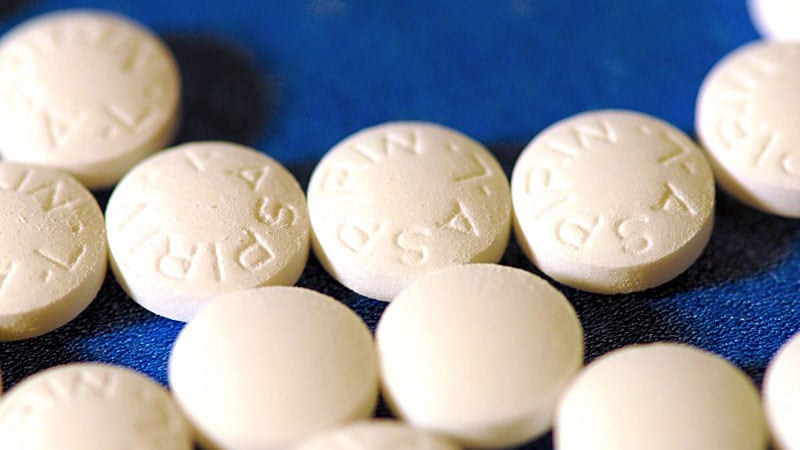
London, UK - Aspirin can prevent colorectal cancer, concludes a new analysis of data from two large randomized trials [1]. It found that aspirin at a dose of 300 mg or more per day for about five years reduced the subsequent incidence of colorectal cancer by 37% overall and by 74% during the period 10 to 15 years after treatment was started.

The new results, published in the May 12, 2007 issue of the Lancet, taken together with previous studies, "provide convincing evidence that aspirin, at biologically relevant doses, can reduce the incidence of colorectal cancer," comments an accompanying editorial [2].

However, "these findings are not sufficient to warrant a recommendation for the general population to use aspirin for cancer prevention," comments the editorialist, Dr Andrew Chan (Massachusetts General Hospital, Boston). He cites concern over the potential risks of long-term aspirin use and also the availability of alternative prevention strategies, such as screening.

Lead author Dr Peter Rothwell (University of Oxford, UK) said that he agrees with this caution about the general population. Overall, from the studies of aspirin use in healthy individuals for the primary prevention of cardiovascular disease, the benefit of aspirin is more or less outweighed by the risk of bleeding (mainly in the gastrointestinal tract, but also in the brain), he noted.

However, he would argue for use of aspirin to prevent colorectal cancer in certain high-risk populations—for example, in first-degree relatives of patients with colorectal cancer. This group has an increased risk of colorectal cancer—whereas the general population has a lifetime risk of colorectal cancer of about 5%, in first-degree relatives the risk is increased about two to fourfold, so their lifetime risk is 10% to 20%, he said.

Another example would be patients with vascular disease (angina or previous MI or stroke) who are taking aspirin or an antiplatelet agent such as clopidogrel for secondary cardiovascular prophylaxis. In this group, aspirin would have an additional benefit of also offering protection against colorectal cancer (via its inhibition of the cyclo-oxygenase enzymes COX-1 and COX-2), whereas the other antiplatelet agents do not, as they work through a different mechanism. "This new evidence pushes the balance in favor of aspirin over these other drugs," Rothwell commented in an interview, and as a result he would expect to see a shift back toward aspirin and away from the newer agents, which are also more expensive, he noted.

One further point Rothwell made is that screening for colorectal cancer is very advanced in the US, with regular colonoscopies and regular removal of polyps offered as a standard of care. However, the US is almost alone in offering such a service, Rothwell commented, and in other countries around the world, where there is limited access to these procedures and so little else available for prophylaxis against colorectal cancer, the benefit of using aspirin as a chemopreventive would be viewed differently.


New analysis of data from old studies

The latest results come from a new analysis of data that were collected in two large trials carried out some time ago—the British Doctors' Aspirin Trial (which involved 5139 individuals, two thirds allocated to aspirin 500 mg for five years) and the UK-TIA Aspirin Trial (in 2449 individuals, two thirds allocated to aspirin at 300 mg or 1200 mg for one to seven years). Both trials were conducted during the late 1970s and early 1980s, before the effect of aspirin on cancer was recognized, and so colorectal cancer was not a prespecified end point.

The analysis showed a reduction in the incidence of colorectal cancer, but not any other type of cancer, in individuals who had been taking aspirin, compared with controls. The effect was seen only after a latency of 10 years, the researchers comment, and was greatest at 10 to 14 years after randomization in patients who had taken aspirin for five years or more.

"These results are remarkably consistent with several previous observational studies," comments the editorial. In their paper, Rothwell and colleagues systematically review 19 case-control studies (n=20 815) and 11 cohort studies (n=1 136 110) and report that regular use of aspirin or a nonsteroidal anti-inflammatory drug was consistently associated with a reduced risk of colorectal cancer, especially after use for 10 years or more. "However, a consistent association was seen only with use of 300 mg or more of aspirin a day, with diminished and inconsistent results for lower and less frequent doses," they comment.

This effect of aspirin dose may explain why no effect on colorectal cancer was seen in two large US studies, the Physicians' Health Study (which used 162.5-mg aspirin) and the Women's Health Study (which used 50-mg aspirin), the editorial notes.

More study is needed to determine the optimum dose of aspirin, the editorial suggests, as well as the mechanisms involved. The studies to date "provide proof of principle that chemoprevention of colorectal cancer with aspirin is feasible," the editorial concludes. "However, before chemoprevention can be practical, more work is needed to characterize those for whom the potential benefits of aspirin outweigh the hazards."

The complete contents of Medscape Medical News, a professional news service of WebMD, can be found at www.medscape.com, a website for medical professionals.

Source
  1. Flossmann E, Rothwell P, on behalf of the British Doctors Aspirin Trial and the UK-TIA Aspirin Trial. Effect of aspirin on long-term risk of colorectal cancer: consistent evidence from randomised and observational studies. Lancet 2007; 369:1603-1613.


You have to be logged in to add a comment to this article
Login
Username 
Password 
  Forgot your password?
 
Remember me on this computer
 
Join theheart.org community
Five reasons to become a member of the most trusted source of cardiology news:
1Be part of the conversation in our blogs and discussion forum
2Share your thoughts on our news or educational programs
3Receive exclusive newsletters related to your field of interest
4Access unique continuous medical education content
5See and read what leaders have to say about cardiology today
It is free and it only takes five minutes to join!
 
button
Previews
Featured CME