






Interventional/Surgery
May 16, 2007 | Shelley Wood

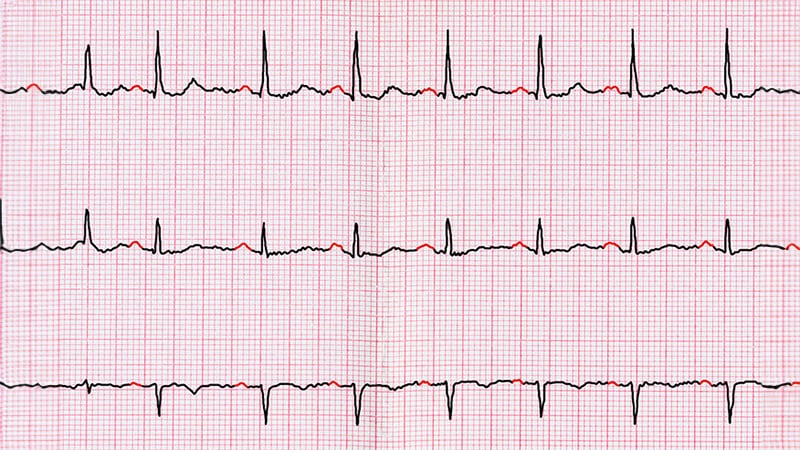
Medford, OR - Physicians in southern Oregon are boasting remarkable reductions in mortality and time to PCI for patients with acute ST-segment-elevation MI (STEMI) after implementing a strategy of paramedic-diagnosed STEMI, followed by direct transfer to a single PCI center [1]. The new protocol, created in collaboration with four community hospitals and two cardiology practices, incorporates some of the recommendations set out in the recent ACC/AHA-backed "D2B" initiative, despite being launched in June 2003, before the D2B program was announced.

"What we noticed over the years as we started to do more and more interventions for acute MI was that folks who got interventions just seemed to get better more quickly," lead author on the study, Dr Brian Gross (Heart Clinic of Southern Oregon and Northern California), told heartwire. "So it was always frustrating when we'd hear that a patient was out there with a heart attack and we wanted to get him here to the PCI hospital, yet we were experiencing those same types of delays that others have reported. It's just the way the system is set up in the US—it always takes forever. . . . We decided there must be a better way."

Gross et al report the results of their study in the May 15, 2007 issue of the American Journal of Cardiology.


Not stepping on toes

According to Gross, he and his coinvestigators were able to convince local hospitals to "relinquish" their STEMI patients and persuade local paramedic units to obtain electrocardiograms in the field to look for STEMI, alert the PCI team at the PCI hospital, and then transfer the patient directly to that hospital. Unstable-angina patients, however, would still be taken to the nearest hospital, a strategic decision to help soothe any rumpled feathers at the non-PCI hospitals. "We wanted to be sure that we didn't step on toes and offend other hospitals," he said.

A similar protocol was put in place for walk-in patients at non-PCI hospitals, whereby they would be transferred directly from the non-PCI hospital emergency rooms directly to the cath lab at the PCI hospital.

Between June 2003 and December 2004, 233 consecutive patients were managed according to the new protocol. As Gross et al report, paramedics identified 35% of patients with STEMI, while an additional 16% presented directly to the PCI center, and 49% presented to one of the referring hospitals. Delay times were shortest for patients who were diagnosed by paramedics and taken directly to the alerted PCI hospital and longest for patients who walked into one of the referring hospitals. Likewise, the percentage of patients being treated within the recommended 90 minutes was greatest among those identified by paramedics as having STEMI and lowest among patients who presented first to a referring hospital.

Time-to-treatment delays

Factor
Paramedic-identified
Walk-in to PCI hospital
Walk-in to referring hospital
Study period: Median time to treatment (min)
83
108
149
Study period: Patients treated in <90 min (%)
58.3
37.5
5.2

Importantly, mortality rates not only followed this pattern—and, in fact, were 0% among paramedic-identified STEMI patients—but were also radically lower than mortality rates for "like hospitals" (similar staff and capabilities to the PCI hospital in Gross et al's study) and for the PCI hospital prior to the adoption of the new strategy, according to the National Registry of Myocardial Infarction database.

Mortality by strategy, hospital

Outcome
"Like hospitals" 2001
PCI hospital 2001
All STEMI patients during study
STEMI patients directly triaged by paramedics
Mortality (%)
11.8
8.6
2.1
0

To download tables as slides, click on slide logo below

Interventionalists at other cath labs have asked Gross how he and his colleagues were able to achieve such improvements; Gross is quick to acknowledge that the changes were delicate ones and might not work everywhere.

"The answer is, we're big enough that we have enough resources to do it, but we're small enough that we can do it. I think this becomes highly problematic in a bigger city, where you have all of these geopolitical issues competing with one another. That's the reality. Everyone wants to do STEMIs. . . . We were able to do this because we were a cooperative-enough community. A lot of regions have geopolitical differences where the attitude is, if you're not with us, you're against us."


Wringing more minutes

It's a point reiterated by Dr Elizabeth Bradley (Yale School of Public Health, New Haven, CT), who has done much of the pioneering research used in the D2B recommendations. "Orchestrating the prehospital ECG and paramedic-triage process, as this study does, can be difficult in some regions," she told heartwire.

As for the study as a whole, she called the findings "not surprising."

"The evidence that activation of the cath team while the patient was en route is consistent with our previous paper and existing evidence," she said.

Additional, more "central" strategies would also help, Bradley added, including activating the cath lab with a single call from the emergency department, having a system in place to track door-to-balloon times and provide that feedback to members of the team, and expecting the cath team to be ready to start a procedure within 30 minutes of being paged. The paper by Gross et al does not state whether or not any or all of these were done in the Oregon setting, she notes.

"We believe that with all these strategies firmly in place, hospitals can meet the 90-minute guideline in 75% or more of the cases," she said. "This study met the guideline, even in the best case of paramedic triage, less than 60% of the time. It is a good performance, but it may be possible to wring out a few more minutes routinely with some of the other D2B Alliance recommendations implemented as well."

And in fact, Gross told heartwire that the protocol in southern Oregon has been tweaked to the point that now 92% of patients who are diagnosed with STEMI by paramedics, then transferred to the PCI hospital, are treated within 90 minutes.

"Educating the public to call 911 is important," he observed.

But there are other barriers to implementing a model like that developed by Gross et al, among them gaining the cooperation of smaller hospitals, many of which are calling for the right to provide primary PCI.

"Then the issue will come down to, how efficiently can this be done?" Gross argues. "In small hospitals that see just a couple STEMIs a year, when you don't have the rapid SWAT-team mentality, yes, you can do PCI for STEMI, and yes, you can get them through with a very low mortality, but is an extra five- or 10-minute drive to a place that does hundreds of PCIs a year a more efficient option? A small hospital that isn't doing a lot of these may not have the full array of catheter equipment and expertise. Because it's more than just a cardiologist, it's a team."

Source
  1. Gross BW, Dauterman KW, Moran MG, et al. An approach to shorten time to infarct artery patency in patients with ST-segment elevation myocardial infarction. Am J Cardiol 2007; 99:1360-1363.


Your comments
Paramedic-diagnosed STEMI slashes delay to treatment times in southern Oregon
# 1 of 2
May 16, 2007 09:57 (EDT)
Melissa Walton-Shirley
And the answer is: Make more centers PCI capable
This piece made me flash back to the old TIMI 19 days when we implemented paramedic interpretation of ECG in the field and delivered prehospital lytic agents to those who were eligible. We've taken it a step further now and do STEMI patients only.
Having pre-hospital ECG capability makes a world of difference in door to anything time whether it be treatment of SVT or mobilizing the cath lab.
Congratulations to Southern Oregon. No doubt several folks will live to see their grandchildren because of their efforts!!
Thanks to all . This was no small undertaking.
Melissa
# 2 of 2
May 17, 2007 08:45 (EDT)
Daniel Tarditi
why resistance to general population?
I would argue the reason it is so difficult to implement in the general population is money. As I said in another forum post, NJ is no larger then denmark where DANAMI was conducted. We should have this at the forefront for AMI guideline driven interventions. It would save lives and should not be that costly to implement given the long term savings in money and lives. Too bad the politicians/CEO's (interchangeable terms) won't ever let it happen.

Daniel

You have to be logged in to add a comment to this article
Login
Username 
Password 
  Forgot your password?
 
Remember me on this computer
 
Join theheart.org community
Five reasons to become a member of the most trusted source of cardiology news:
1Be part of the conversation in our blogs and discussion forum
2Share your thoughts on our news or educational programs
3Receive exclusive newsletters related to your field of interest
4Access unique continuous medical education content
5See and read what leaders have to say about cardiology today
It is free and it only takes five minutes to join!
 
button
Previews
Featured CME
Inside: Interventional/Surgery