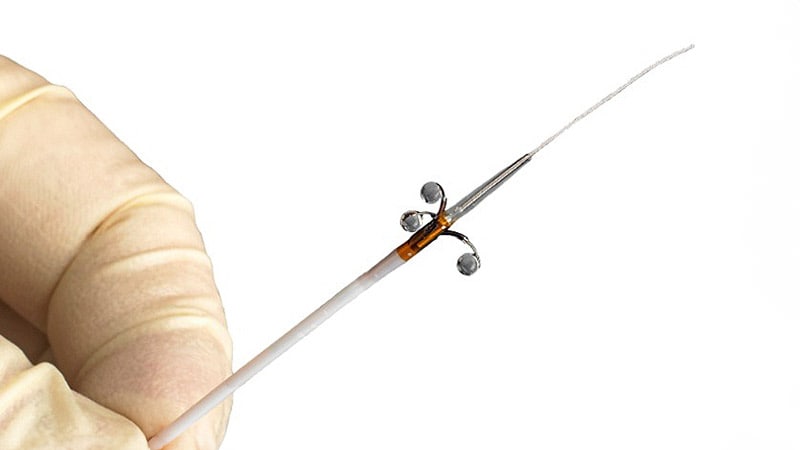










Wall Street Journal chronicles events leading up to Medtronic defibrillator lead recall
October 30, 2007 | Steve Stiles

New York, NY - Every medical device recall has a backstory, and today's Wall Street Journal (WSJ) provides, at least in part, the one that led to Medtronic removing one of its most successful products from the market earlier this month [1].

In a detail-intensive page-1 story, the newspaper relates how in January of this year, physicians at the Minnesota Heart Institute reported signs of premature failure in the company's slender Sprint Fidelis defibrillator leads to both Medtronic and the FDA and how both responded to the new information.

The physicians said they would stop using the leads, and "across the country, physicians at leading hospitals . . . came across similar problems and some took similar steps. But it wasn't until this month that Medtronic of Minneapolis reached the same conclusion," write WSJ reporters Thomas M Burton and Anna Wilde Mathews.

Framed as something of an indictment of the company and the regulatory agency, the story recounts a months-long tug of war between the company and one of the physicians who had earlier sounded the alarm about the lead failures, Dr Robert Hauser (Minnesota Heart Institute, Minneapolis), who had conducted his own review of Sprint Fidelis performance. Hauser, the article relates, had repeatedly called for the lead's market withdrawal.

Medtronic consulted its outside advisory committee of heart doctors, who thought the company had to act.

The WSJ story balances those events by telling of Medtronic's efforts to document suspected Sprint Fidelis failures on a larger scale once notified of the several cases in Minnesota. "The company was trying to get to the bottom of what was becoming a crisis," according to the article.

As an aside, the Minneapolis-St Paul Star Tribune reported on July 29 [2] that several area cardiologists had stopped using the leads because they were seeing an increased failure risk. The article, as noted by heartwire's coverage at the time, quoted Hauser as praising Medtronic for being "candid and forthcoming with all requests for information."

According to the WSJ article, Medtronic—following what is described as an eight-month analysis of data from 25 000 patients using its Carelink system (a proprietary remote telephone-line-based device interrogation system)—"by October determined that the Fidelis overall failure rate—2.3% over 30 months on the market—was higher than the 0.9% rate for one of its Quattro models."

A Medtronic spokesperson, the article notes, defended its own performance review by stating that "the company didn't hide the problems or delay revealing them . . . and couldn't rely on data from individual hospitals and needed time to complete its statistical analysis and confirm that there truly was an excessive fracture rate with Sprint Fidelis."

The article says that once its findings emerged, "Medtronic consulted its outside advisory committee of heart doctors, who thought the company had to act"—which, as reported by heartwire, is what happened on October 15 when it announced the halt to Sprint Fidelis sales.

There was nothing we could point to specifically to say this is a violative product that needs to come off the market.

Not mentioned in the WSJ story is that the company's "outside advisory committee of heart doctors" may signal that recent recommendations on device performance oversight and reporting for industry, regulatory agencies, and physicians—most prominently last year by the Heart Rhythm Society [3]— are working, at least partly. According to the society's recommendations released in April 2006, reported by heartwire at the time, "Manufacturers should establish independent, standing committees of outside experts to analyze device performance reports and to recommend appropriate action."

In fact, the newspaper story makes no mention of the recommended reforms and only passing references to the series of highly publicized implantable-defibrillator recalls that led to them.

For its part, the FDA is portrayed in the article as mostly an observer throughout the events of 2007, as it responded to both Hauser's review of the lead's performance and to Medtronic's suspension of Sprint Fidelis sales.

"The manuscript 'put Sprint Fidelis on our radar,' says the FDA's Dr [Daniel] Schultz," according to the article. "Still, the implications of one bad shock—even one death—in isolation were hard to discern, FDA officials say. The agency lacked details about some incidents. Given the lack of information, it couldn't put them in context or be sure they were all tied to a specific pattern of failure."

Schultz, "director of the FDA's device center," is also quoted as saying that "over the last several months, 'we had pieces of information that suggested there were certain problems associated with the Fidelis lead.' But, he says, 'there was nothing we could point to specifically to say this is a violative product that needs to come off the market.' "

Sources
  1. Burton TM, Mathews AW. Medtronic recall exposes gaps in medical safety. Spotty data and testing Left FDA in the dark; firm cites five deaths. Wall Street Journal, October 30, 2007; Available at: http://www.wsj.com.
  2. Moore J. Medtronic device under scrutiny. Star Tribune, July 29, 2007.
  3. Heart Rhythm Society. Draft recommendations report by the Heart Rhythm Society task force on device performance policies and guidelines, April 26, 2006. Available here.


You have to be logged in to add a comment to this article
Login
Username 
Password 
  Forgot your password?
 
Remember me on this computer
 
Join theheart.org community
Five reasons to become a member of the most trusted source of cardiology news:
1Be part of the conversation in our blogs and discussion forum
2Share your thoughts on our news or educational programs
3Receive exclusive newsletters related to your field of interest
4Access unique continuous medical education content
5See and read what leaders have to say about cardiology today
It is free and it only takes five minutes to join!
 
button
Previews
Featured CME