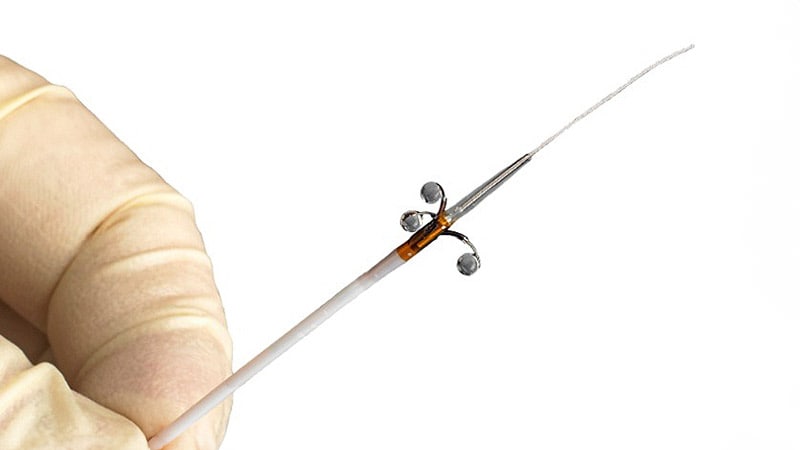










New York, NY - Cordis/Johnson & Johnson broke new ground in the world of direct-to-consumer marketing by launching a television commercial for its Cypher drug-eluting stent (DES) during a Thanksgiving Day football game, New York Times reporter Barnaby Feder writes in the Times today [1]. Citing a Cordis/J&J spokesperson, Feder writes that US TV watchers will have "more than 175 opportunities to see the 60-second spot, entitled 'Life Wide Open,' during other games and on cable news programs before the end of the year." The company has also taken out ads in national newspapers and magazines, as well as in medical journals.
The Times article notes that the company's motives for advertising a niche medical device directly to consumers (despite the fact that many "have never heard of stents") is likely twofold: to shore up Cypher's reputation after a year of mostly negative press and to establish brand recognition in advance of the marketing approval for Medronic's Endeavor and Abbott's Xience V stents, expected in the coming months. In the latter half of 2006 and in early 2007, use of drug-eluting stents dipped after the release of several studies pointing to the increased risk of stent thrombosis following DES implantation and after the publication of the COURAGE trial, which suggested stents were no better than optimal medical therapy in patients with stable angina. Over the past six months, however, a host of registry studies and meta-analyses have suggested that DES do not increase the risk of death or MI as compared with bare-metal stents and have an edge in terms of reducing repeat procedures.
Cordis chief medical officer, Dr David Kandzari, is quoted in Feder's article as saying, "We think we have a good safety story to tell, and we want to encourage heart patients to talk about it with their doctors. . . . And we want them to know Cypher's track record when newer, less-proven stents reach the market."
Another cardiologist quoted in the article, Dr William E Boden (State University of New York, Buffalo), who was a co-principal investigator on the COURAGE study, calls the company's tactics "deplorable."
"You've got to wonder whether it's a sign of desperation," he told the Times.
Flawed strategy?
Dr Julie M Donohue (University of Pittsburgh, PA) recently published a review in the New England Journal of Medicine examining trends in direct-to-consumer advertising over the past decade [2]. In an interview with heartwire, Donohue observed that not knowing what a stent is may not stop patients from asking their doctors about it.
"You can look at the experience of direct-to-consumer advertising for prescription drugs during the mid-1990s when, to get around FDA regulations, drug companies were advertising drugs just by name only, not saying what the drug treated. And patients would go to their doctors and ask for the medication."
But as for the two problems the company seems to be tackling with its ads, Donohue believes a direct-to-consumer strategy may help with getting the safety message out and bolstering consumer confidence in DES, but it won't necessarily steer patients toward getting the Cypher stent over any other.
"If you look at evidence on advertising prescription drugs to consumers, it tends to have an effect on overall use of drugs in the class but not on market share," she explains. "Once a patient goes in and asks for a drug, the physician, while highly likely to prescribe something, is just as likely to prescribe the advertised drug's competitor as the advertised drug."
Part of a larger trend
Donohue also noted that while the notion of peddling a cardiovascular device to consumers is new, it is consistent with a broader trend toward getting consumers more involved in healthcare decision-making.
"We've seen an increase not only in drug manufacturers promoting prescription drugs, but also, I think, we'll see more device manufacturers going directly to consumers. Certainly imaging services are widely advertised to consumers, but also on the other side, health-policy people are trying to fix problems in the healthcare system by getting consumers more involved, making quality information, such as effectiveness and cost information, available to consumers. Sometimes it's good information, sometimes its not so much good information, but it's part of a larger trend toward more consumer information dissemination and involvement."
Feder, in the Times article, draws parallels between the Cordis/J&J advertising strategy and ads by Medtronic earlier this yearas reported by heartwireaimed at reassuring consumers about "how defibrillators could save lives" in the wake of the 2005 and 2006 device recalls. Industry analysts have generally viewed that marketing effort as a "wasted investment," Feder writes.
Company responds
In an interview with heartwire, Kandzari said that the company has already heard positive feedback from physicians and emphasized taking a "broader view" than that suggested by Feder in his article.
"This public advertising campaign should really be viewed more as a tiered purpose: the first was to facilitate a dialogue between patients and their doctors on DES in general and their overall treatment options based on positive messaging, rather than what has been in the past year a series of negative messages regarding DES," Kandzari said. "Other [intents] were entirely motivated by the fact that the evidence regarding the Cypher clinical trials program has really never looked better at this point. . . . The Cypher program has the longest duration of follow-up and an extremely large number of patients who have been studied, in varied clinical settings."
Asked whether the company expects patients to make the leap that the Cypher is the stent for them, based on the fact that it has the largest evidence base behind it, Kandzari admitted that this is unlikely.
"I'm not quite sure that it would be realistic for us, as a principal motivator for doing this advertising program, to expect patients now coming into cath labs to say, 'I want a Cypher stent.' But it should start a dialogue between patients and physicians: Am I going to benefit from PCI, and if so should I receive a DES? What are the risks and benefits, and which stent are most studied, most proven, and most used?"
- Feder BJ. A heart stent maker decides the way to the patient is through the patient. New York Times. December 5, 2007. Available at: http://www.nytimes.com/2007/12/05/business/media/05adco.html?ref=health.
-
Donohue JM, Cevasco M, Rosenthal MB. A decade of direct-to-consumer advertising of prescription drugs. N Engl J Med 2007; 357:673-81.
|
||||
|
|
|
|||
|
|
|
|||
|
|
|
|||
|
|
|
|||
|
|
|
|||
|
|
|
|||