



Cleveland, OH - Dr Jay Yadav is suing the Cleveland Clinic on the basis of events surrounding the clinic's decision not to renew his contract in 2006.
|
Dr Jay Yadav
|
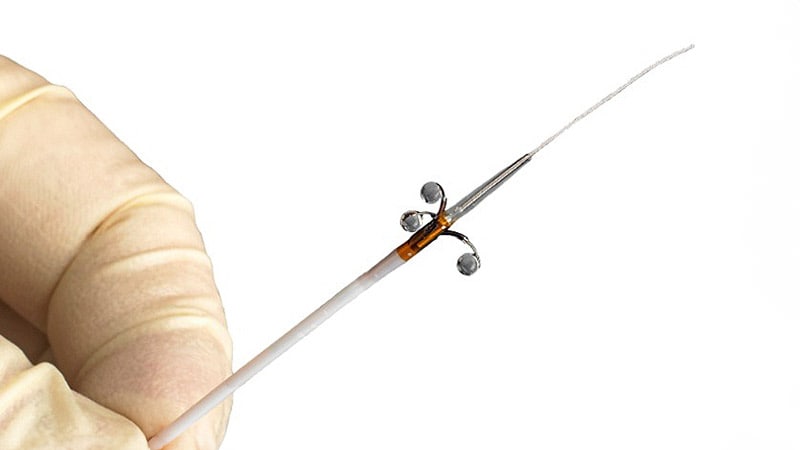
As reported by heartwire, the Cleveland Clinic issued a statement in August 2006 to the effect that it would not be renewing Yadav's contract because he had failed to adhere to the Cleveland Clinic's conflicts-of-interest (COI) policies. An article by reporter Joel Rutchick in the Cleveland Plain Dealer offered a more detailed explanation, suggesting that Yadav had repeatedly failed to fully disclose financial gains relating to the sale of the embolic-protection device and company he foundedAngioGuardto Cordis/Johnson & Johnson (J&J) to the FDA and to medical journals in which study results pertaining to the device were published.
But, as Yadav's suit explains, copies of financial-disclosure forms from the Cleveland Clinic's own internal review board (IRB) dating back to 2001 indicate that Yadav repeatedly disclosed the consulting fees he had received from J&J and "cash considerations" he received as an Angioguard stockholder when the company was sold to J&J, as well as the deferred payments. Moreover, copies of the FDA's financial-interest declaration forms also indicate that Yadav had provided appropriate COI disclosures.
A Cleveland Clinic spokesperson told heartwire that the clinic "strongly denies the allegations and plans to file a response to his complaints and counterclaims for substantial expenses incurred to review his research."
"Irreparable damage"
Prior to his departure, Yadav was the chair of Cleveland Clinic Foundation Innovationsthe technology commercialization arm of the clinicand had been at the clinic since 1998. Yadav's work on the Angioguard device predates his appointment, but he led or was a coinvestigator for studies testing this deviceincluding the SAPPHIRE and GUARD trialswhile on staff at the clinic.
My hope had always been, until now, that somebody in the Cleveland Clinic leadership would come to their senses and say, What are we doing here?
In his suit, Yadav accuses the Cleveland Clinic of creating the perception, through its public statements to the Dealer, that he was guilty of scientific misconduct, that he had "concealed" or been "dishonest with respect to his financial disclosures," that the SAPPHIRE study results were "flawed," and that there had been a "cause" for terminating his employment. These perceptions, "permeating through the media, the professional community, and the community in which Dr Yadav and his family reside, have stigmatized Dr Yadav and his family in a manner which is irreparable," the suit states.
The counts listed in the suit include invasion of privacy and portrayal in a "false light"; defamation of character, reputation, and professional integrity; and discrimination on the basis of national origin/ancestry. In this last count, Yadav's suit notes that he is of Indian descent and a member of a protected class but that he was replaced at the Cleveland Clinic by a white male and that other whites at the Cleveland Clinic with similar purported conflicts of interest were not terminated
Ahead of the curve?
In an extensive interview with heartwire, Yadav insisted that he was "way ahead of the curve" in terms of openly declaring his relationship with Angioguard and later J&J.
"I actually had taken, I thought, some good proactive steps in this direction before it became in vogue. There's just no doubt that I had given full disclosure to the clinic at multiple levels, particularly to the IRB, which is where disclosures had gone previously. There's no doubt about it: they knew about it, everybody knew about it. It wasn't a secret. . . . They knew about the transaction, and they knew about the deferred payments."
A bone of contention for Yadav is that he was never given a reason for his nonrenewal. The Cleveland Clinic's public statement at the time said only that Yadav "is no longer at the clinic. As an institution, we will continue to strongly encourage innovation while eliminating and managing conflicts."
Indeed, heartwire, when it covered the story last year, used the term "fired" to describe the clinic's action, but Yadav points out that had he in fact been "fired," he would have had some recourse to obtain an explanation from the clinic. By being nonrenewed, Yadav was not entitled to due process and given no reason for the clinic's decision. As his suit explains, Yadav learned at 4:00 PM August 17 that his contract was not going to be renewed, effective September 30, but that he was to pack up and leave the premises that same day. He was also informed that he was forbidden to speak to the Dealer or any other media outlet until the end of his contract, September 30.
Indeed, even leading up to his August 17 departure, the Cleveland Clinic had repeatedly blocked Yadav's efforts to speak directly to Rutchick, whose research and subsequent article seem to have played a pivotal role in the influencing the clinic's decision regarding Yadav's contract, and, ultimately, in disseminating the "false light" portrayal described in Yadav's suit.
Gag order imposed
The Dealer story alleges that Yadav "didn't fully disclose his conflict in writing in numerous medical-journal articles published after 2000 that discussed the SAPPHIRE trial or prominently mentioned AngioGuard . . . . In many instances, he failed to note his financial ties with Cordis at all, including in a 2003 article in which he predicted that a Cordis stent and AngioGuard filter would be the first devices to gain FDA approval for use in patients at high risk for surgery."
People who don't have an axe to grind, have looked at this in detail and don't have any problem with it.
To heartwire, Yadav said that the articles referred to by the Dealer include "two- or three-sentence disclosures." He points out that requirements for COI disclosures have since become more stringent, but he insists, if anything, he was "ahead of the curve" with disclosures during the time in question. "With the benefit of hindsight, you can have longer and longer disclosures. . . . At some point it becomes an issue of what's relevant, what's interesting, and how long should your disclosure be? I think that yardstick keeps changing and evolving. I thought saying that I was the inventor and that I sold the company to J&J clearly tells you that I have a financial interest in this company. And if it was an issue, I would have been happy to say that there were deferred payments. It really, from my perspective, wasn't a secret."
Most important, Yadav told heartwire that after the Dealer article appeared last August, the New England Journal of Medicine editors communicated with him, "and they chose not to amend my disclosure for the SAPPHIRE article or make any corrections."
He also points out that the FDA approved the Angioguard for sale in the US in September 2006, less than a month after suggestions of inadequate disclosure were raised by the Dealer and intimated by the Cleveland Clinic; medical journals have also continued to publish his papers. "[The FDA] knew that I had adequately disclosed my financial interests to them," Yadav said. "Same with a prominent medical journal, which has accepted the long-term data from the SAPPHIRE trial for publication. People who don't have an axe to grind have looked at this in detail and don't have any problem with it."
Yadav describes the immediate aftermath of his nonrenewal and the accompanying negative press as a period of shock. "My hope had always been, until now, that somebody in the Cleveland Clinic leadership would come to their senses and say, What are we doing here? We missed all these disclosures that were done years ago; maybe we were in a hurry, or we didn't go back several years, or we lost the paper records? All of these are possible explanations, but basically they'd say, We screwed up here, and we need to correct the record. But that has not happened."
A changing climate
Yadav's nonrenewal last year is only one of several departures of prominent cardiologists from the Cleveland Clinic, including Dr Andrea Natale in October 2007 and Dr Eric Topol in February 2006. Requests from heartwire to cardiologists on staff at the Cleveland Clinic about the changing climate there have gone unanswered. Yadav, for one, thinks the loss of big-name cardiologists has been "terrible" for the clinic.
It's had an effect "at really every level you look at," he said. "The morale of the employees, the doctors, the nonphysician staff, the morale of the fellows: it's very disheartening for them to see that some of their mentors and people who they came to the Cleveland Clinic to train with are no longer there. Many of the patients who have very specialized issues with complex disease now find themselves treated by other people or having to go to other institutions. It's had a tremendous negative impact on the institution and on the institution's reputation. The Cleveland Clinic is thought about in a different fashion now than it used to be under [former Cleveland Clinic CEO Dr Floyd] Loop."
|
||||
|
|
|
|||
|
|
|
|||
|
|
|
|||
|
|
|
|||
|
|
|
|||
|
|
|
|||
|
|
|
|||
|
|
|
|||
|
|
|
|||
|
|
|
|||
|
|
|
|||
|
|
|
|||
|
|
|
|||
|
|
|
|||
|
|
|
|||
|
|
|
|||
|
|
|
|||
|
|
|
|||
|
|
|
|||
|
|
|
|||