







Nighttime, weekends the worst times for cardiac arrest, in-hospital
February 19, 2008 | Shelley Wood

Chicago, IL - People who have an in-hospital cardiac arrest at night or on the weekends are more likely to die than people whose events occur during the day or evening, from Monday to Friday, new research from the National Registry of Cardiopulmonary Resuscitation Investigators (NRCPR) suggests [1]. Writing in the February 20, 2008 issue of the Journal of the American Medical Association, Dr Mary Ann Perberdy (Virginia Commonwealth University, Richmond) and colleagues conclude that the difference in survival, seen across more than 500 hospitals, should prompt hospitals to scrutinize their own resuscitation responses for what they may be doing wrong.

"The most important thing that hospitals [can do] to improve survival from in-hospital cardiac arrest is to critically evaluate the way that resuscitation is performed and identify whether there are local differences by time  of day," Perberdy told heartwire. She describes the "links to the in-hospital chain of survival" that must be in place, including a prompt mechanism for alerting the code team and key characteristics of the code team itself, which, she says, must be well-trained, constantly available, capable of responding rapidly, and called upon frequently enough to maintain proficiency. "Many hospitals often send some of the least experienced physicians—ie, interns and residents—to respond to cardiac-arrest victims," Perberdy explained. 'We know that hospitals simply don't work the same at night as they do during the day, and we know that more medical errors occur during the night. It is reasonable to strongly encourage hospitals to critically evaluate the efficiency and effectiveness with which they perform resuscitation."

Also commenting on the study for heartwire, Dr Beth Mancini, chair of the NRCPR—who was not an author on the paper—explained that understanding the timing of cardiac arrests in the hospital can help improve hospital performance.

"Resuscitation responses to cardiac arrests are one of those truly few cases where seconds matter," she said. "With the advent of a national registry, we were able to collect information from a number of different hospitals, and even when we controlled as much as we could for such things as kind of patient, kind of event—respiratory vs cardiac as precipitating factor—hospital characteristics, size, location, those sorts of things, nighttime survival was not as good as it was during days and evenings."

Mancini continued: "That should be a call to action for hospitals to ask, What are the distinct differences at night and how can we respond to them? It's incumbent on all of us in healthcare to take a look and see whether we can find out what distinct differences between night shift and day shifts may explain why outcomes are different."


Timing is everything

The NRCPR study looked at survival from cardiac arrest during the day and evening (7:00 AM to 10:59 PM), during the night (11:00 PM to 6:59AM), during weekdays, and on the weekend (starting at 11:00 PM on Friday and ending at 6:59 AM Monday). They report that of the almost 90 000 in-hospital cardiac arrests occurring between January 1, 2000 and February 1, 2007, rates of survival to hospital discharge, return of spontaneous circulation, short-term survival, and favorable neurological outcomes were all significantly higher among people whose events occurred by day and during the workweek.

Outcomes day vs night*

Outcome
Night (%)
Day/evening (%)
Adjusted odds ratio
24-h survival
28.9
35.4
1.19
Survival to discharge
14.7
19.8
1.18
Return of spontaneous circulation (longer than 20 min)
44.7
51.1
1.15
Favorable neurological outcomes
11
15.2
1.17

*p value <0.001 for all four outcome measures

Outcomes weekdays vs weekends

Outcome
Weekday (%)
Weekend (%)
Adjusted odds ratio
Day/evening survival
20.6
17.4
1.15
Night survival
14.6
14.8
1.02

To download tables as slides, click on slide logo below

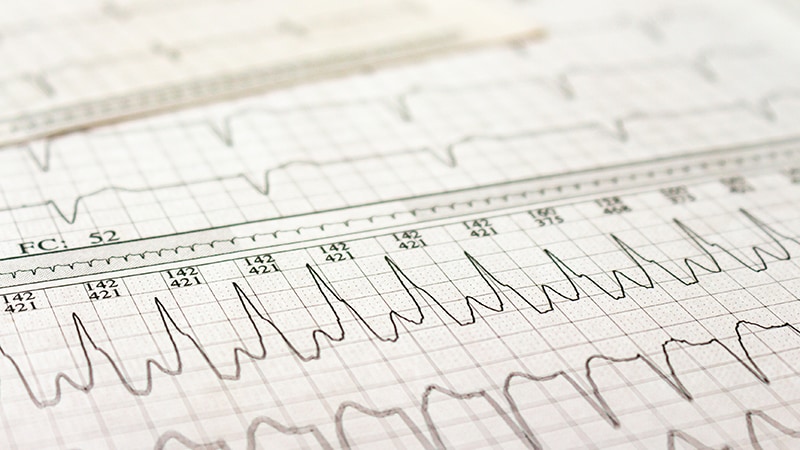
"You don't have as many physicians and staff around at night, so it may be that we are finding patients later [into their cardiac arrests]," Mancini suggested. If patients are "unmonitored and unwitnessed" when they arrest, their survival may be worse. "One thing this review told us was that the first presenting cardiac rhythm was more commonly asystole, which is a different kind of rhythm with a different kind of outcome than we expected. We would have expected ventricular fibrillation [VF], which responds more readily to an early shock." It may have been that patients first went into VF, then deteriorated to asystole before their events were noticed, she explained.

There may also be physiological explanations that were overlooked in the analyses, although the authors controlled extensively for patient- and hospital-related factors. Of note, little or no differences in outcomes by time of day or day of the week were seen in emergency departments and trauma units, which are more consistently staffed around the clock and always have senior or attending residents readily available.

Perberdy acknowledged that she and her coauthors cannot exclude the possibility that some physiological changes occurring by time of day or week might explain survival differences but thinks it's unlikely. "There has not been any physiological mechanism identified, or even suspected, to date that is known to cause this survival differential by time of day and day of week," she stated. "A physiological reason, if it exists, would be a newly identified phenomenon."

Source
  1. Peberdy M, Ornato JP. Larkin GL, et al. Survival from in-hospital cardiac arrest during nights and weekends. JAMA 2008; 299:785-792.


Your comments
Nighttime, weekends the worst times for cardiac arrest, in-hospital
# 1 of 1
February 22, 2008 10:15 (EST)
Melissa Walton-Shirley
What about later presentation?
A few months ago, I entered the ER to find a gentleman in the throws of resuscitation. I was upset to hear that he had "sat home all day" stating he knew he was having a heart attack but didn't have good insurance and refused to come to the ER until he finally collapsed and the family called 911. It was a sad indictment of what our politicians in this country AREN'T doing correctly in health care but also punctuates how mortality is affected by late presentation.
Weekends and nights spell long waits which in large part are responsible for the reluctance to present. But there is also the human element that just wants to "wait until Monday" for EVERYTHING.
Until we educate these weekend'ers that Monday won't come if they continue to put off their health needs, then nothing will change. I found it odd to begin with that the cause for nights and weekend mortality was being "blamed" on the health care providers. I pretty much run the same code on Thursday as I do Saturday and even though we should examine any part we have to play in the outcomes data, we'd better examine ALL of the issues external to the health care systems themselves.
Nights and weekends no doubt affect D2B times since large numbers of us don't live in the hospital but..... should the outcome for presenting in asystole be affected by nights and weekends? It's a pretty dismal outcome no matter who lives where. There is something more at play here than who is standing where in the ER.
Looking at duration of symptoms in this study, though hard to ascertain post mortem might have been helpful for further discussion.
Melissa

You have to be logged in to add a comment to this article
Login
Username 
Password 
  Forgot your password?
 
Remember me on this computer
 
Join theheart.org community
Five reasons to become a member of the most trusted source of cardiology news:
1Be part of the conversation in our blogs and discussion forum
2Share your thoughts on our news or educational programs
3Receive exclusive newsletters related to your field of interest
4Access unique continuous medical education content
5See and read what leaders have to say about cardiology today
It is free and it only takes five minutes to join!
 
button
Previews
Featured CME