







Arrhythmia/EP
Denervation successfully treats catecholaminergic polymorphic ventricular tachycardia
May 7, 2008 | Sue Hughes

Amsterdam, the Netherlands - Left cardiac sympathetic denervation may be an effective alternative treatment for catecholaminergic polymorphic ventricular tachycardia, especially for patients whose symptoms are not adequately controlled by means of beta blockade, a new report suggests [1].

The report, published in the May 8, 2008 issue of the New England Journal of Medicine, is written by a group led by Dr Arthur Wilde (University of Amsterdam, the Netherlands).

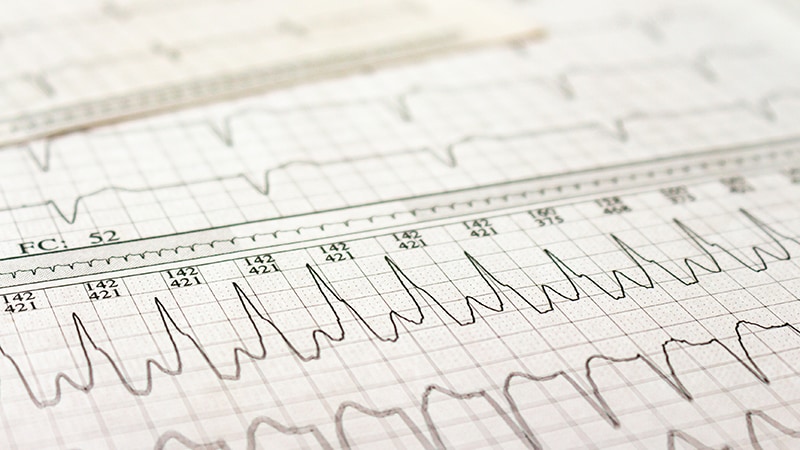
They explain that catecholaminergic polymorphic ventricular tachycardia is a genetic disorder caused by mutations in genes involved in the calcium homeostasis of cardiac cells. The condition, which is often manifested at a young age, is characterized by adrenergically mediated life-threatening ventricular arrhythmias, usually polymorphic ventricular tachycardia or ventricular fibrillation, particularly under conditions of increased sympathetic activity such as physical exercise and emotional stress, and the first event may be lethal.

Wilde et al note that most patients with catecholaminergic polymorphic ventricular tachycardia are managed on beta blockers, but many continue to have symptoms, documented exercise-induced ventricular tachycardias, or both. For these patients, ICDs are often implanted, but because patients experience fast ventricular tachycardias on even modest exercise, this results in frequent ICD shocks, with major psychological consequences in children, and still not all patients are protected. Therefore, physicians sometimes resort to the extreme measure of cardiac transplantation.

The authors point out that the ability to antagonize or reduce cardiac sympathetic activity seems to be the cornerstone of successful therapeutic interventions in patients with this condition, and they propose that surgical left cardiac sympathetic denervation, an antifibrillatory intervention that largely prevents norepinephrine release in the heart, may be an effective treatment for patients not protected by beta blockers.

They report that left cardiac sympathetic denervation is performed in 35 to 40 minutes and can be conducted through an incision at the base of the neck using an extrapleural approach, without opening the chest. The lower part of the stellate ganglion is ablated, together with the second and third thoracic ganglia, and the fourth ganglion is cauterized. Preserving the upper half of the stellate ganglion prevents the occurrence of Horner's syndrome. The surgery increases the threshold for ventricular fibrillation and increases ventricular refractoriness, but as it does not completely eliminate catecholamines in the ventricles, it does not lead to postdenervation supersensitivity (ie, excessive response to catecholamines), the authors add. 


Symptom-free

They describe the long-term efficacy of denervation in three young adults with catecholaminergic polymorphic ventricular tachycardia, all of whom had symptoms before the procedure and were symptom-free afterward, resulting in a marked improvement in quality of life.

They note that the procedure does not preclude implantation of an ICD and that the device could be used as a "safety net" in conjunction with beta blockers to minimize the risk of life-threatening arrhythmias. But they add that data from a larger number of patients treated with left cardiac sympathetic denervation are needed to properly assess the effect of this physiologically based method of treatment for catecholaminergic polymorphic ventricular tachycardia.

Source
  1. Wilde AAM, Bhuiyan ZA, Crotti L, et al. Left cardiac sympathetic denervation for catecholaminergic polymorphic ventricular tachycardia. N Engl J Med 2008; 358:2024-2029.


You have to be logged in to add a comment to this article
Login
Username 
Password 
  Forgot your password?
 
Remember me on this computer
 
Join theheart.org community
Five reasons to become a member of the most trusted source of cardiology news:
1Be part of the conversation in our blogs and discussion forum
2Share your thoughts on our news or educational programs
3Receive exclusive newsletters related to your field of interest
4Access unique continuous medical education content
5See and read what leaders have to say about cardiology today
It is free and it only takes five minutes to join!
 
button
Previews
Featured CME
Inside: Arrhythmia/EP