






New AHA obesity statement urges doctors to think beyond clinical treatment and prevention
July 1, 2008 | Shelley Wood

Dallas, TX - Think bigger: that's the thrust of the American Heart Association's new scientific statement on obesity prevention [1]. To have any meaningful impact on the obesity epidemic, physicians need to go beyond clinical prevention and treatments for obesity and use influence and advocacy to effect social and environmental change, authors of the statement say.

Dr Shiriki K Kumanyika

"The main point of the statement is that we need to place more emphasis on population-based and preventive approaches than we have to date," Dr Shiriki K Kumanyika (University of Pennsylvania School of Medicine, Philadelphia), lead author on the statement, told heartwire. "This point has been made in different ways before, in different kinds of documents, and it's being made globally, but we are still in the process of educating health professionals about what this actually means and why it's needed. . . . It's inefficient to put all your eggs in the basket of screening and treating the individual."

The statement, titled "Population-based prevention of obesity" includes an appendix listing all of the AHA's related statements dealing with obesity published between 2004 and 2006. "It turns out when we look at all the other statements, this is a missing piece," Kumanyika noted. "This statement is really putting the story of prevention together and pointing out that any prevention approach we take, in any population, still needs to be on a better platform," one that takes into account public policy and social and environmental factors."

So this is actually happening, it's a social movement. And we want cardiologists to know about it and put their weight behind it.

The statement emphasizes the need for changes that would help people make better food choices and be more physically active. Examples include things like limiting the availability of high-fat, low-fiber foods and sugary drinks, reducing restaurant portion sizes, reconsidering the location of fast-food restaurants, and thinking more creatively about community design and infrastructure to enhance "walkability" of neighborhoods and commutes between home, school, and recreation.

"In a way it's like the tobacco scenario, when people realized there were some broad policies that could be made that would change the options that people had," Kumanyika explained. "With food it's trickier, because food is not inherently harmful, so it's a much more complicated task. We're not trying to turn people against food, we're not trying to put the food industry out of business—where would we be if we did that? But we're trying to say that we've got to think more carefully about the health effects of a lot of the decisions we make about transportation, about community design, about food, about the school day, about what happens at a work site: that's the point about the comprehensive approach. We've got to go into the population and make it just easier for people to bump into the right choices."


Beyond the stethoscope

Kumanyika agrees that these points have been made before, but she says the AHA's goal in wading into the fray was to make it clear to physicians that they have a bigger role to play.

"This statement is about putting the information in one place and telling people who don't think it's their business that the level of advocacy and awareness we need also applies to them. We can't afford to have anyone working on cardiovascular disease who, if asked by the person next to them on the golf course or next to them in the hospital, doesn't really get it that obesity is not just a bunch of people who overindulge."

At the very least, she says, cardiologists and physicians need to understand the political, social, and environmental underpinnings of the obesity epidemic and make sure that they don't "contradict" the efforts at meaningful change. "I've had cardiologist colleagues joke with me in the cafeteria line when they've got a pile of fried onion rings on their tray and they say, 'Oh don't worry, we'll get them in the cath lab,' " Kumanyika told heartwire. "We can't afford to have the people who are involved in treatment think that's the only solution. They also have to convince people to do things that are a lot harder, because they're getting right to the heart of how people live, they're getting into vested interests, and there's not necessarily a profit motive. But cardiologists are very, very authoritative and influential people. People will ask their cardiologist for an opinion, and we want them to know what they should say."


Preventing obesity: action points

The stated aims of the new AHA statement are to:

  • Increase awareness of population-based efforts to prevent weight gain in kids and adults.
  • Detail ways of preventing obesity across the population and in higher-risk subgroups.
  • Distinguish between clinical prevention/treatment and environmental and policy approaches.
  • Consider the "multiple layers of influences" on what people eat and how they act, in order to identify environmental and policy-change targets.
  • Identify potentially relevant interventions and what kind of evidence is needed for population-based approaches.

Kumanyika acknowledged that is it difficult for some physicians to connect the dots and appreciate how their actions can influence political decision-making, urban planning, etc, but she also emphasizes that major grassroots and community-based initiatives are already making headway in pockets around the US. She says physicians should not underestimate the importance of their own influence in helping these kinds of movements succeed.

"There was a time when people thought it wasn't possible to change the type of fat people eat or that you couldn't change smoking habits," she says. "So you have to start somewhere with that conversation, to begin to shift the expectation that these things can't be changed. There are people who are out there, working on the ground with community coalitions fighting for this, and physicians need to help reinforce what those people are doing by lending their authority and helping to support their message."

She continued: "There is a lot of grassroots activity, there is stuff going on all over the country with people taking on planning commissions, school boards, and advertisers. So this is actually happening, it's a social movement. And we want cardiologists to know about it and put their weight behind it."

No pun intended.

Kumanyika disclosed being a consultant/advisory board member for Weight Watchers International. Other author disclosures are listed in the paper.

Source
  1. Kumanyika SK, Obarzanek E, Stettler N, et al. Population-based prevention of obesity. The need for comprehensive promotion of healthful eating, physical activity, and energy balance. A scientific statement from American Heart Association council on epidemiology and prevention, interdisciplinary committee for prevention (formerly the expert panel on population and prevention science). Circulation 2008; DOI:10.1161/CIRCULATIONAHA.108.189702. Available at: http://circ.ahajournals.org.


Your comments
New AHA obesity statement urges doctors to think beyond clinical treatment and prevention
# 1 of 3
July 9, 2008 09:23 (EDT)
James Churilla
Hard.......
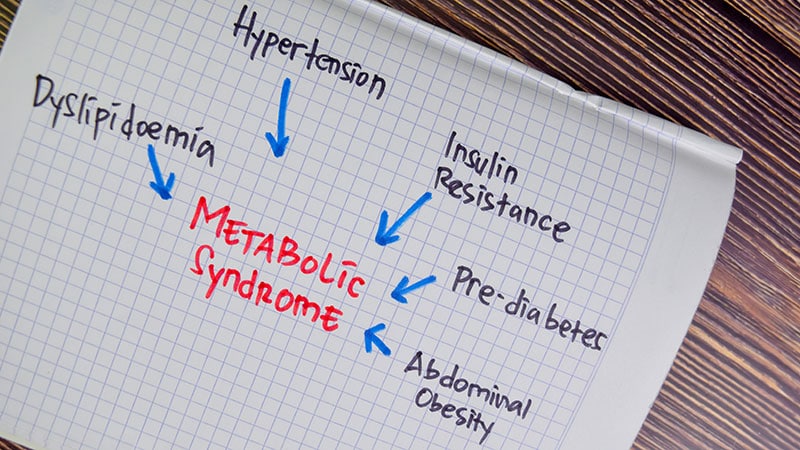
We need to ask patients/clients...What is the last thing you have done in your life that was HARD? Maintaining optimal levels of health and fitness does not have to be extremely arduous, however, we have to start conveying the 'message' that it is not easy either. There needs to be a paradigm shift in our thinking, hence how we make recommendations. The apparently healthy person is slowly becoming extinct and we have to begin counseling people from the perspective of 'this will not be easy, it will be hard...but if you value your health you have to make sure you do X, Y, Z. People have choices, if the medical and research community continue to try to circumvent what it REALLY takes to be healthy and fit (i.e. 30 minutes of moderate exercise for a hypertensive overweight/obese individual is simply not enough) and we do not tell this person they need more, the obesity and diabetes epidemics will continue to rise. Metabolic Syndrome currently effects more than one in three U.S. adults (36%) and ~15% of adolescence.

Dr. J
# 2 of 3
July 9, 2008 05:29 (EDT)
Melissa Walton-Shirley
There are more obstacles than we think
James,
If we are going to be the advice "givers", we need to also convince our fellow physicians that it's worth the effort. While I was supervising a stress exam today, a colleague of mine and great diagnostician bounced through the door and asked, "you really don't think that guy is going to do any of that crap do you?" , referring to a primary prevention clinic I had referred a gentleman to along with the mediterranean diet and exercise. Apparently, he and this patient had a big laugh about my recommendations and the ridiculous nature of them. Oh well, I didn't take offense because it's going to take time to drive change.
I posted this because I wanted to make the point that the patients aren't the only hurdles out there.
Melissa
# 3 of 3
July 9, 2008 05:31 (EDT)
Melissa Walton-Shirley
aside
Quickly I must add, just in case my partners are reading this post, "NO, it's wasn't either of you!". (My partners are very supportive of primary and secondary prevention measures).
Melissa

You have to be logged in to add a comment to this article
Login
Username 
Password 
  Forgot your password?
 
Remember me on this computer
 
Join theheart.org community
Five reasons to become a member of the most trusted source of cardiology news:
1Be part of the conversation in our blogs and discussion forum
2Share your thoughts on our news or educational programs
3Receive exclusive newsletters related to your field of interest
4Access unique continuous medical education content
5See and read what leaders have to say about cardiology today
It is free and it only takes five minutes to join!
 
button
Previews
Featured CME