



Extremely obese a cath lab problem: Some turned away because of weight restrictions on tables
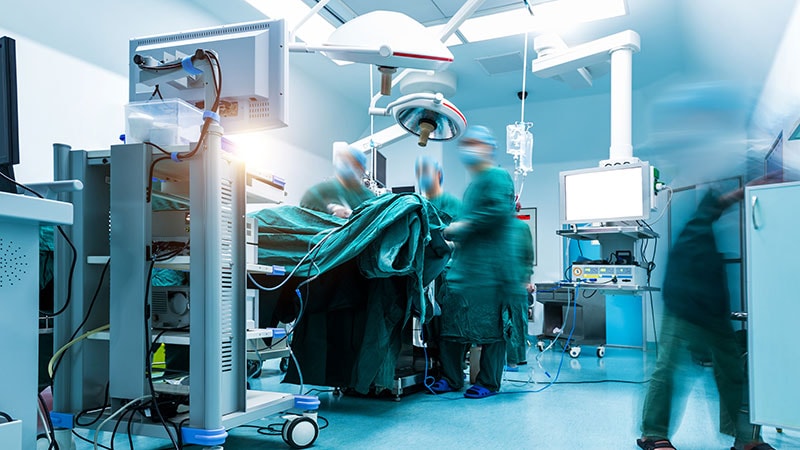
Royal Oak, Michigan - Extremely obese patients are posing logistical and safety challenges for interventionalists, and many hospitals don't know what to do when it comes to treating patients who exceed the designated weight restrictions on angiography tables, a new study has shown [1].
 |
|
Dr Thomas Vanhecke
|
"It is a paradox," said lead investigator
Dr Thomas Vanhecke (William Beaumont Hospital, Royal Oak, MI). "New research is showing us that patients are dying younger with more cardiovascular disease, and yet there are no cath lab guidelines for how to treat those who are morbidly or massively obese."
In a telephone survey of 100 hospitals that perform the most PCI procedures in the US, 22% of nurse managers in the cardiovascular catheterization laboratories said they referred patients to other institutions if they were too heavy, but 70% of respondents didn't have a solution to the problem. The average weight restriction on the angiography table, with its complex assortment of machinery, mechanisms, and controls, is 437 lbs, although 10 hospitals limit access to those weighing less than 350 lbs. The highest limit was 550 lbs. Roughly five patients per year were turned away for being above the lab's designated weight limit.
Speaking with heartwire, Vanhecke said that when faced with obese patients, they are typically told to exercise and diet before they can undergo the procedure. Unconventional means include cutting weight through dehydration or surgical means. Going the surgical route is often not effective, though, because most surgeons want to see a full risk profile, including stress tests and angiogram, before operating. Other methods include "offloading" some of the weight to supporting structures, such as a stretcher, to reduce the load on the angiography table, and even treating patients at veterinary hospitals, said Vanhecke.
Obese patients pose other challenges, he added, noting that adipose tissue impairs x-ray image quality. In addition, it is harder to control bleeding in heavier patients, and femoral access is often more difficult to obtain. Moreover, moving the patient from the stretcher to the table is challenging, requiring between six and 10 people, he said.
Source
-
Vanhecke TE, Berman AD, McCullough PA. Body weight limitations of United States cardiac catheterization laboratories including restricted access for the morbidly obese. Am J Cardiol 2008; 102:285-286.
 |
 |
 |
 |
|
 |
 |
 |
 |
 |
|
|
July 30, 2008 07:08 (EDT)
|
|
 |
 |
 |
 |
 |
|
There are no ideal solutions because it's certainly not an ideal problem My most recent case of moderate (used to be considered extreme) obesity involved a patient with chest pain that was typical for angina, "equivocal" troponin and no diagnostic ecg changes. She has a personal history of DVT's, a green field filter, positive family history of Factor V Leiden mutation (not certain if this patient is hetero or homozygous). Since she did not have "diagnostic" troponin or ST's down and plenty of room to medicate, I felt justified in recommending BB's, asa, nitro prn, statin, and the mediterranean diet. She weighed in at just under 350 pounds (not all that unusual or impressive) but was short in stature. Same advice went for a gentleman not too long ago that weighed in at just under 500 pounds.
And, sometimes it works despite less than ideal circumstances. A 386 pound 5'7 male with atrial fib was admitted in March 2008 and an EF of 20%. He's down to 357 pounds and very motivated and encouraged. His EF with good rate control is up to 45%. I discharged him home with an "unknown" sudden death risk in March because I didn't define his coronaries. BUT, I placed him on good medical therapy, discussed up front the hidden dangers of going home without a cath/aicd and respected his decision of going the medical route until he could get himself in shape for a possible CABG just in case he has multivessel disease. I strongly suspect his entire problem is sleep apnea which lead to afib which lead to tachycardia induced Cardiomyopathy.
No where in cardiology are we forced to practice evidence based medicine more often than in the treatment of the obese. When we absolutely DO need to cath these patients, it's really problematic. If they must go to CABG, it's even more of an issue with vent management, wound management, etc.
Our table limit I believe is now 500 lb. We used to have to transfer anyone over 350. I find myself recommending medical therapy more and more over the years and unless ST's are up/positive troponin OR progressive symptoms, and over all, they seem to do well provided they follow the prescribed medical/life style regimen.
Melissa |
|
 |
 |
|
|
July 30, 2008 04:07 (EDT)
|
|
 |
 |
 |
 |
 |
|
Three procedural issues For those who make it to the cath lab:
1. Access-these are the ideal patients for radial access.
2. Image quality-it's just hard to see through several inches of biscuits, so increasing the frame rate can help, and trying to stay away from extreme caudal and LAO shots is also helpful.
3. Panning-this is the real limitation. The mechanisms of some tables can't handle the weight. It's equivalent to driving a big car without power steering. |
|
 |
 |
|
|
July 30, 2008 09:10 (EDT)
|
|
 |
 |
 |
 |
 |
|
image quality is the toughest to get around William,
You are correct. The panning issue is a problem occasionally . I'm about 140 pounds (but when the patient is large, it's even difficult for my male partners) and when we unlock the table, you can imagine our feet spinning and going no where, so my rad techs on rare occasion have to help us pan. The radial issue is a good suggestion, though I'm afraid I'm stuck in the brachial mode which is my alternative access method. I'm very comfortable doing brachials but rarely find them necessary.
Good points. Always appreciate your insight.
Melissa |
|
 |
 |
|
|
July 31, 2008 02:26 (EDT)
|
|
 |
 |
 |
 |
 |
|
Transradial Approach for Obese Patients William Dixon's suggestion about radial access being ideal for heavy patients is one that is confirmed by every cardiologist I've interviewed for our "Radial Access Center" on Angioplasty.Org (Jeff Popma, Shigeru Saito, Kirk Garratt, John Coppola, etc.), specifically with regard to the reduction of bleeding complications. The M.O.R.T.A.L. study showed a strong correlation between access-related bleeding complications, transfusion and mortality at 30 days and 1 year. The study also showed that radial access reduced these complications by 50%. The radial approach is used widely in Europe, India and Japan, but U.S. utilization is still in the single digits. Considering the U.S. is experiencing an "epidemic" of obesity, it would seem that the radial approach should used much more frequently. |
|
 |
 |
|
|
July 31, 2008 05:27 (EDT)
|
|
 |
 |
 |
 |
 |
|
Cardiac CT is really not an option Despite the publish data, I have found Cardiac CT imaging produces very poor with very morbid obesity. Better to just go to cath when BMI > 40.
Very morbidly obese (BMI ≥ 40) and a few super-obese individuals (BMI ≥ 50). The patient seems better served with a Gastric banding than cardiac intervention
|
|
 |
 |
|
|
August 3, 2008 12:43 (EDT)
|
|
 |
 |
 |
 |
 |
|
1st procedural issue - Dr Dixon I beg to differ, Dr. Dixon. ALL patients are ideal radial patients.
Melissa, you are stuck in the stone age. No one does brachials anymore, especially when radial access has been so well studied and validated. Besides, I don't see that brachial access would be much easier in a 500 pounder. Please take a week out of your busy schedule to go to a radial course! Heck, come to Phoenix and I'll teach you myself. I'll even pay for your flight and you can shack in our guest room. :-) |
|
 |
 |
|
|
August 3, 2008 07:23 (EDT)
|
|
 |
 |
 |
 |
 |
|
Obviously, I'm not the only one. What is the prevalence of radial useage anyway? Mehrdad,
Appreciate the invite!!!!(prepare now for dripping scarcasm)
But, really Mehrdad, in the time it takes you to do one radial case, I've done three femoral artery sticks and having lunch by the pool! What is your flouro time buster?? My patients are in and out BEFORE the Versed has even started to work. :) Besides, they need both hands to eat so quickly after the case! and reapply their makeup/aftershave before they go shopping. They don't even have time to get amnesia from the sedation.
I know brachials are passe, however, I so rarely need to do one that it's a moot point. (serious here) ( Besides, I did original studies on 4 french catheters for Cordis back in the 1800's and because I don't want to be crass, will just say it was like doing a cath with a wet noodle) See, I resisted saying that they sucked. Their visualization sucked and their ability to steer them sucked. Of course, this was in 1991, so I'll hope they are much better now, though I'm unaware of any new earth shattering changes in catheter steerability since then. My new temporary "attending" who had done 130 cases was trying to "teach" me how to cath one day, (I was on my 600th case as a fellow) who promptly knotted his catheter in a patient's arm and I had to take it, get it unknotted and finish the case for him . (That story is completely true).
I just might take you up on your invitation, however, I'm a little jammed with AHA, ESC, TCT until the winter. Then, a little time in Pheonix just might be in order! Seriously, I'd love to come out sometime for a few days to observe.
Hope you know the above was tongue in cheek. But, Let's compare flouoro times and then we'll talk. A definite throw down I'd say.
Thanks
Melissa |
|
 |
 |
|
|
August 3, 2008 08:16 (EDT)
|
|
 |
 |
 |
 |
 |
|
And while you were sleeping.................. I've gotta go back to the hospital on this bright and beautiful August Sunday morning....so I'm up fairly early (certainly earlier than you because I'm on CST!!!!..unless you were up all night finishing your elective 4F schedule from Friday HA!)......
I'll just add another thought or two. The flow rates were so bad when I did those 4f studies that you probably couldn't even lay a 4F ON TOP of a 500 lb patient and see it. I used to have to keep the wire in the 4F Left judkins until I got right down on the valve, then slowly retracted it so it might not fold up. The multi's were noodles too. I admit it WAS brachial approach, but I can't imagine it being any better just because access was radial.
So, Mehrdad, I've tortured you mercilessly.SORRY.....just having fun and tongue in cheek, but I think it's an important time for an honest debate between those of us who argue that 4F is not ideal (siting above reasons, plus our fear that acute access for PCI, IABP would be delayed, two sticks necessary instead of 1 in that case, complications in the right hand of most folks who are right handed, etc. etc.
Those of you who are 4F proponents, please weigh in.(Mehrdad, you are welcome to lead the charge! sounds like you already have!) Would LOVE to hear from you all. Bring it!
Melissa |
|
 |
 |
|
|
August 3, 2008 02:35 (EDT)
|
|
 |
 |
 |
 |
 |
|
To each his own Melissa, I've used 4F from the leg and hated it, so I use 5F from radial or femoral. There is a learning curve for radial. I would teach fellows radial for alternate access, since hemostatic complications are minimal compared to brachial. It's like anything, if you do it enough, you get faster. That being said, I would do whatever you feel most comfortable with.
Merhdad, There are great arguments for doing radial, but the fastest way to draw skepticism/criticism about anything, is to say it is the only way and best way. You should make your teaching services available to all who would be willing to listen. |
|
 |
 |
|
|
August 4, 2008 09:45 (EDT)
|
|
 |
 |
 |
 |
 |
|
Fluoro times Melissa,
Maybe it takes YOU three times as long to do a radial stick, but my fluoro times are the SAME as femorals! The question of fluoro times has been studied (I'll have to dig up the reference) but in experienced hands, in large volume centers, radials are done equally as fast as femorals. In fact, I taught our chief of cardiology (old timer with grey hair who learned caths way back when via the old brachial cutdown technique) and now he's an avid radial proponent and his fluoro times are *almost* as fast as mine. So there!!
I don't know what this whole talk about 4F is about?? I do ALL my radial caths via 6F and I see just fine. And I can do practically anything, including rotational atherectomy, via a 6FR guide!
William - obviously radial access is not the only way. And it's not for everyone... Melissa is a prime example. But it's hard to argue against it when there is study after study showing decreased bleeding, greater patient comfort and satisfaction, less cost, and now potentially less mortality (MORTAL study) associated with radial use vs femoral.
I'm happy to have anyone come over to learn radials. Just give me a shout. |
|
 |
 |
|
|
August 4, 2008 10:00 (EDT)
|
|
 |
 |
 |
 |
 |
|
Fluoro times - reference Kiemeneij F, Laarman GJ, Odekerken D, Slagboom T, van der Wieken R. A randomized comparison of percutaneous transluminal coronary angioplasty by the radial, brachial and femoral approaches: the access study. J Am Coll Cardiol. 1997;29:1269–1275.
OBJECTIVES: This study sought to compare procedural and clinical outcomes of percutaneous transluminal coronary angioplasty (PTCA) performed with 6F guiding catheters introduced through the radial, brachial or femoral arteries. BACKGROUND: Transradial PTCA has been demonstrated to be an effective and safe alternative to transfemoral PTCA; however, no randomized data are currently available. METHODS: A randomized comparison between transradial, transbrachial and transfemoral PTCA with 6F guiding catheters was performed in 900 patients. Primary end points were entry site and angioplasty related. Secondary end points were quantitative coronary analysis after PTCA, procedural and fluoroscopy times, consumption of angioplasty equipment and length of hospital stay. RESULTS: Successful coronary cannulation was achieved in 279 (93.0%), 287 (95.7%) and 299 (99.7%) patients randomized to undergo PTCA by the radial, brachial and femoral approaches, respectively. PTCA success was achieved in 91.7%, 90.7% and 90.7% (p = NS) of patients, with 88.0%, 87.7% and 90.0% event free at 1-month follow-up, respectively (p = NS). Major entry site complications were encountered in seven patients (2.3%) in the transbrachial group, six (2.0%) in the transfemoral group and none in the transradial group (p = 0.035). Transradial PTCA led to asymptomatic loss of radial pulsations in nine patients (3%). Procedural and fluoroscopy times were similar, as were consumption of guiding and balloon catheters and length of hospital stay ([mean +/- SD] 1.5 +/- 2.5, 1.8 +/- 3.8 and 1.8 +/- 4.2 days, respectively). CONCLUSIONS: With experience, procedural and clinical outcomes of PTCA were similar for the three subgroups, but access failure is more common during transradial PTCA. Major access site complications were more frequently encountered after transbrachial and transfemoral PTCA.
|
|
 |
 |
|
|
August 5, 2008 12:06 (EDT)
|
|
 |
 |
 |
 |
 |
|
:=) Mehrdad,
Obviously, my flouro times were not included in that study! HA!
Ok, Mehrdad, thanks for taking the ribbing with such good nature and thanks for your invitation as well!
Don't blame me if about 200 folks show up in Phoenix, hope your guest room will hold us all! What a party.
Melissa |
|
 |
 |
|
|
August 19, 2008 04:33 (EDT)
|
|
 |
 |
 |
 |
 |
|
New data just published I refer you to the latest paper from the NCDR database on the benefits of radial PCI, hot off the press in JACC-Interventions.
I think what will ultimtaley change physician behavior is pay for quality. Once the benefits of radial PCI make it into the guidelines as a Level I indication, and third-party payors recognize the added value and change their pay scale accordingly, radial PCI will finally take off and we'll finally have Melissa convinced. |
|
 |
 |
 |
 |
 |