







Cleveland, OH - "Poor-quality" sleep may drive up blood-pressure levels in otherwise-healthy teens, a new study suggests [1]. Dr Sogol Javaheri (Case Western Reserve School of Medicine, Cleveland, OH) and colleagues say the study, published online August 18, 2008 in Circulation, is the first of its kind to show a link between inadequate, low-quality sleep and prehypertension or hypertension in adolescents without sleep apnea.
Javaheri et al point out that while the link between insufficient sleep and hypertension in adults is well documented, few studies have looked at this in young people and those that have have focused on children with sleep apnea, which is also a well-established risk factor for hypertension and CVD.
While young people aren't typically on cardiologists' radar, Dr Susan Redline (Case Western Reserve), senior author on the study, believes cardiologists need to be aware of sleep disturbance as a possible risk factor at any age. "Sleep quality and quantity may be fundamental health characteristics that impact homeostatic processes that affect risk factors for CVD," she told heartwire. "These data add to a growing literature emphasizing that, in addition to addressing diet and exercise, reinforcing the importance of consistent and sufficient sleep is important for maintaining health."
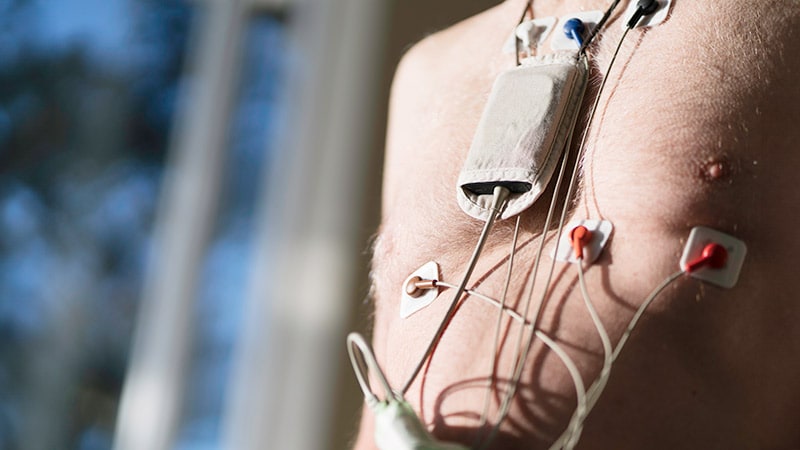
In their study, Javaheri and colleagues looked specifically at 238 adolescents, aged 13 to 16, and measured sleeping patterns both at home, using wrist actigraphy, and in a sleep lab, using overnight polysomnography, anthropometry, and then taking nine blood-pressure measurements over two days.
They found that adolescents with low sleep efficiency (meaning they have trouble falling asleep or wake early) and those who aren't getting enough sleep (6.5 hours or less) had increased odds of developing prehypertension (defined as >90th percentile for age, sex, and height). Even after adjustment for other possible contributing factors, adolescents with poor sleeping patterns had systolic blood-pressure levels that were on average 4 mm Hg higher than other children (p<0.01).
Odds of prehypertension associated with sleep disturbances|
Sleep problem
|
Unadjusted OR (95% CI)
|
p
|
Adjusted OR
|
p
|
|
Low sleep efficiency (<85%)
|
4.52 (2.11-9.70) |
0.0001 |
3.50 |
0.0028 |
|
Short sleep (<6 h)
|
2.79 (1.07-7.34) |
0.0366 |
2.54 |
0.0679 |
"Poor sleep quality is associated with prehypertension in healthy adolescents," the authors conclude. "Associations are not explained by socioeconomic status, obesity, sleep apnea, or known comorbidities, suggesting that inadequate sleep quality is associated with elevated blood pressure."
Strikingly, "sleep insufficiency" was found in one-quarter of the teens in the study, and the authors point out that this may actually underestimate the number of young people with sleep problems, since the study excluded kids with known sleep disorders and other illnesses.
Causal factors
In the paper, investigators say the cause of sleep disturbances in this group is unknowntheir analyses turned up no links between low sleep efficiency and the usual suspects: asthma or caffeine or tobacco use. While "unknown psychological disorders" may have played a role, confounding the results, the study authors believe this scenario is unlikely, given the strength of the association linking prehypertension and sleeping patterns and the fact that the study sample was community based.
Redline offered one additional hypothesis, pointing out that limited longitudinal data indicate that overall sleep times have been declining, by one or more hours, over the past 20 to 30 years. "There are growing data that numerous social factorsinternet access and other electronics in the bedroom, busy school schedules, increased caffeine use, and other stresses may also be operating to impact sleep quality," she told heartwire.
She and her colleagues conclude that further studies will need to address whether strategies to prevent the development of hypertension in children should include not only exercise programs and weight management but also sleep "optimization."
"Our data underscore the need to monitor the quantity and quality of sleep as part of health supervision in children," they write.
|
Redline disclosed receiving a subcontract from Cleveland Medical Devices Inc to provide clinical research services as part of the National Institutes of Health Small Business Innovative Research funding.
|
-
Javaheri S, Storfer-Isser A, Rosen CL, Redline S. Sleep Quality and Elevated Blood Pressure in Adolescents. Circulation 2008; DOI: 10.1161/CIRCULATIONAHA.108.766410. Available at: http://circ.ahajournals.org.