






Prevention
Low LDL cholesterol, but not statin use, associated with an increased risk of cancer
August 20, 2008 | Michael O'Riordan

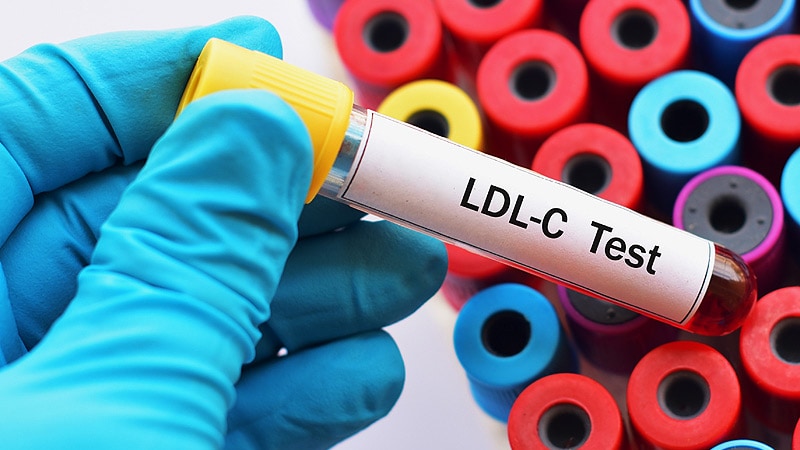
Boston, MA - There is an inverse and significant association between on-treatment LDL-cholesterol levels and cancer in statin-treated patients, an association that remained even after adjustment for age and other variables, a new analysis has shown [1]. However, there was a similar relationship between LDL-cholesterol levels and incident cancer among control patients not treated with statins, report investigators, and statin therapy, despite significantly reducing LDL-cholesterol levels, was not associated with an increased risk of cancer.

"We found that there is indeed an association, that the lower the LDL cholesterol, the higher the risk of cancer," senior investigator Dr Richard Karas (Tufts University School of Medicine, Boston, MA) told heartwire. "Despite the LDL-lowering capacity of statins, however, the data are quite reassuring that statins don't increase the risk of cancer."

The analysis, published online today as an expedited paper in the Journal of the American College of Cardiology (JACC), was prompted by a 2007 study published in JACC by Dr Alawi Alsheikh-Ali (Tufts University School of Medicine), of which Karas was also senior author. The study, reported by heartwire at that time, was initially designed to determine whether there was a correlation between the extent to which statins lowered LDL-cholesterol levels and liver and muscle toxicity, but it raised some alarm, as it showed lower LDL-cholesterol levels were associated with an increased risk of cancer in various statin studies.

"This raised the obvious question and concern that interventions that lower LDL cholesterol might offset the lowered risk of heart disease by increasing the risk of cancer," said Karas. "There is a bit of a conundrum, because previous studies have looked at whether the use of statins increased the risk of cancer, and the answer to that was no. So we had a bit of quandary: how could it be that low LDL is associated with a higher risk of cancer, but statins, which lower LDL cholesterol, don't seem to cause cancer?"


Background to the new research

With these questions in mind, Alsheikh-Ali and Karas, as lead and senior investigators, respectively, reviewed data from 15 randomized controlled trials of statins that included >1000 person-years of follow-up to determine whether statin-mediated reductions in LDL cholesterol were associated with a cancer risk. Overall, they reviewed data on 51 797 patients treated with statins and 45 043 patients treated with a placebo, and patients were followed for, on average, 4.5 years. During that time, there were 5752 new cases of cancer reported.

Assessing on-treatment LDL-cholesterol levels and incident cancer in the statin arms, they observed a significant inverse relationship between on-treatment LDL levels and cancer risk, with 2.2 incident cancers per 1000 patient-years for every 10-mg/dL decrease in LDL cholesterol. The relationship was significant after adjustment for various baseline variables, including age, gender, smoking status, diabetes mellitus, hypertension, and body-mass index. Similarly, they also observed an inverse relationship between on-treatment LDL-cholesterol levels and cancer risk among individuals treated with placebo, with 1.2 incident cancer per 1000 patient-years for every 10-mg/dL decrease in LDL cholesterol.

After analyzing whether statin use was associated with cancer risk compared with placebo, Karas said it was not. Among placebo-treated patients, there was an average of 12.6 new cancer cases for 1000 person-years of follow-up. With 2.2 cancers for every 10-mg/dL decrease in LDL cholesterol, and statin interventions lowering LDL cholesterol a mean of 40 mg/dL, there would be approximately eight more cancer cases per 1000 person-years of follow-up in the statin arms. This was not the case, however, as the cancer rate among those treated with a statin was 12.7 per 1000 person-years of follow-up, nearly identical to the placebo arm.

Although Karas said the data are reassuring that statins do not increase the risk of cancer, he said the study is a wake-up call for heart-disease researchers to track and monitor the development of cancer so there is a better understanding of the overall risk and benefit of these interventions. In addition, there is a need for more basic science research to understand the biology behind the association between low LDL-cholesterol levels and cancer risk.

"We don't know why it's true, and we can only speculate about the reason," Karas told heartwire. One possible mechanism might be related to the counterbalancing role of the inflammatory system and atherosclerosis. Individuals who develop atherosclerosis, he said, have overactive immune systems, whereas those without atherosclerosis have a low activation of the immune system. "People with low levels of LDL also have a low risk of atherosclerosis, but it's not known if they have low levels of inflammatory reactions. That's important, because the immune system is part of the surveillance system for ridding the body of cancer. Your own immune system is trying to find cells that are mutating into cancer cells and get rid of them."


Two editorials weigh in on the issue

Two editorials accompany the publication of the analysis by Alsheikh-Ali and colleagues, one by Dr Daniel Steinberg [2] and one by Drs Ori Ben-Yehuda and Anthony DeMaria [3], all of whom are from the University of California, San Diego (UCSD).

Commenting on the findings, Steinberg, an advocate of pushing LDL-cholesterol levels to as low 50 mg/dL to prevent cardiovascular disease, agrees with the investigators about the safety of statin therapy, noting that statins had "nothing to do with" the cancer risk observed with the low levels of LDL cholesterol. Untreated subjects, he points out, had the same "low-LDL/higher-cancer-risk" relationship as those treated with statins, and the epidemiologic correlation should not be interpreted as a causal connection.

To account for the association between low LDL cholesterol and cancer risk, Steinberg believes this is the "unsuspected-sickness phenomenon," with cholesterol levels lowered by subclinical disease. He notes that cancers can significantly lower cholesterol levels almost a decade before they surface clinically. "The randomly recruited cohorts in the large statin trials undoubtedly included some subjects who had low LDL levels at the time they entered the study because they already had cancer," writes Steinberg. "Low LDL is the result, not the cause, of cancer."

Karas is not convinced of such an interpretation, noting that the studies excluding the first five years of follow-up, when cancer is likely to show up in individuals with latent disease, still show an excess of cancer among those with low LDL-cholesterol levels. Moreover, most randomized, controlled, clinical trials include only healthy patients, with cancer patients not likely to be enrolled.


In a review paper published just a few weeks ago [4], Steinberg, along with Drs Christopher Glass and Joseph Witztum (both also from UCSD), said clinicians are doing "too little, too late" and pushed for more aggressive use of lipid-lowering therapies and earlier intervention in the development of atherosclerosis. In his editorial, he reiterates his case, writing that low LDL-cholesterol levels do not carry any intrinsic danger of cancer or other serious consequences.

Ben-Yehuda and DeMaria, the editors of JACC, write that the 2007 Alsheikh-Ali paper that first uncovered the cancer risk stimulated intense scrutiny and discussion. They are not entirely convinced the issue is resolved, either. The Effects of Simvastatin and Ezetimibe on Clinical Outcomes in Patients with Aortic Stenosis (SEAS) trial, a study presented last month during a press conference and slated for presentation at the European Society of Cardiology 2008 Congress in Munich, Germany in September, also had significantly higher rates of cancer in the active arm compared with the placebo-treated patients.

While an analysis of two other studies—IMPROVE-IT and SHARP—showed no excess of cancers, Ben-Yehuda and DeMaria write that the link between low LDL-cholesterol levels and cancer has not yet been resolved, even if it appears that statins do not increase the risk of cancer. Like Karas, they note the reporting of cancer rates is incomplete in many studies, and further research is needed. They are reassured by the Tufts University analysis, but new data from SEAS highlight the need for more study.

Karas has received honoraria from Merck and Abbot and research support from Pfizer. Alsheikh-Ali is the recipient of a faculty development award from Pfizer/Tufts Medical Center. Ben-Yehuda has served as an adviser to Schering-Plough Pharmaceuticals and received research grants from Merck.

Sources
  1. Alsheikh-Ali AA, Trikalinos TA, Kent DM, Karas RH. Statins, low-density lipoprotein cholesterol, and risk of cancer. J Am Coll Cardiol 2008; DOI: 10.1016/j.jacc.2008.06.037. Available at: http://content.onlinejacc.org.
  2. Steinberg D. Statin treatment does not cause cancer. J Am Coll Cardiol 2008; DOI: 10.1016/j.jacc.2008.06.036. Available at: http://content.onlinejacc.org.
  3. Ben-Yehuda O, DeMaria AN. Low LDL-C levels and cancer: Reassuring but still not definitive. J Am Coll Cardiol 2008; DOI: 10.1016/j.jacc.2008.08.001. Available at: http://content.onlinejacc.org.
  4. Steinberg D, Glass CK, Witztum JL. Evidence mandating earlier and more aggressive treatment of hypercholesterolemia. Circulation 2008; 118: 672-67.


Your comments
Low LDL cholesterol, but not statin use, associated with an increased risk of cancer
# 1 of 10
August 20, 2008 10:45 (EDT)
jc b
Association does not equal causation
The quote from Steinberg "Low LDL is the result, not the cause, of cancer" captures the difficu;ty of conducting research without using the "scientific method", all too common it seems. The same quote could be just as well applied to lipid management, where high LDL may well be seen as the result, not the cause of atherosclerosis.
# 2 of 10
August 21, 2008 05:00 (EDT)
Giovanni Paolo Alcamisi
growth inhibition by contact
lipid membrane cholesterol seems to be involved in the control of cell growth. Such data were published and were discussed in the 80's when we began to use cholesterol lowering methods and I was a still a student. During my professional life I've tried to have pieces of information about that theme from the scintific informers that, time by time, interviewed me or by congress comunications, with no answers at all. In the meantime we are going to lower cholesterol levels also in infants. There is the necessity to know how to calibrate the bylicum risk/treatment in a more accurate way, in order to treat only the right patients and better spend resources.
Regards.
# 3 of 10
August 21, 2008 09:15 (EDT)
Melissa Walton-Shirley
It's certainly not straight forward
The question of how early to treat is very difficult. I have a patient in my practice who has been on a statin since age 18. SEVERE dyslipidemia with cholesterol around 300, track runner, high LDL around 200. Her mom was frustrated after several centers turned her down for treatment. Her father's family history is positive for early CAD. So far, on statin, has done well for several years with good results on paper, at least. Only at age 60 will be have the answer regarding safety! Talk about long term follow up, and a series of one for my practice.
Melissa
# 4 of 10
August 21, 2008 09:48 (EDT)
Daniel Tarditi
familial hyperlipidemia
Does anyone know if there is an increased incidence of cancer in the statin treated patients with familial hyperlipidemia versus placebo. They certainly do not have a low LDL but also have been on statin therapy at a much earlier age thus would/should be at higher risk of cancer induced by statin therapy. Also, if there is NOT an increased incidence of cancer then the question could be proposed that the key is low LDL by statin or phenomenon related to disease. Just a question and a thought.

Daniel
# 5 of 10
August 21, 2008 02:52 (EDT)
D Hackam
thoughts
This is an interesting discussion.

I think the definitive word comes from the IPD (individual patient data) meta-analysis of 90,600+ patients published by the Cholesterol Lowering Treatment Trialists Collaboration in Lancet Oct 2005 -- no increased risk of cancer incidence or mortality from cancer. For at least one cancer (hepatocellular carcinoma), statin therapy doubled survival in an RCT.

However, these aren't really long-term data. The longest follow-ups have been reported by 4S (10 years) and WESCOPS (15 years), with no increased risk of cancer. I am not sure if we will ever get the 20 year follow-up data from EXCEL (lovastatin), but that would be helpful.

Asbestos and smoking seem to increase cancer rates with a latency effect after only many years of exposure. The data from these short-term (5 year) and longer-term (10-15 y) trials are pretty reassuring, but definitely don't rule out a carcinogenic effect after many decades.

Melissa, to address your concern, a patient with FH is much more likely to have a vascular event and die from that then from a competing cause like a malignancy. I therefore think a statin and probably ezetimibe (if needed) would be imperative, depending on presence of other risk factors, starting lipoprotein profile, current medications, and plaque imaging.
# 6 of 10
August 21, 2008 06:25 (EDT)
Melissa Walton-Shirley
thanks
Thanks guys. I feel less anxiety about it now that she has a few years under her belt with NO side effects what so ever. Appreciate your input.
melissa
# 7 of 10
August 21, 2008 08:35 (EDT)
D Hackam
case
I have a patient like that (24 y.o. F). I put her on Crestor 40 mg/day and referred her to a lipidologist who specializes in the genetics of lipid disorders. I also let her know that her entire family will need lipid screening (and possibly treatment).
# 8 of 10
September 16, 2008 07:52 (EDT)
Giovanni Paolo Alcamisi
risk of cancer in patients with low CV risk
I am not surprised that high risk pts do not show an increase in risk of malignancies, expecially those who have a genetic problem in cholesterol methabolism. I would not be surprised either if patients with a low risk profile who undergo a cholesterol lowering treatment, in order to reach the guidelines goals, would show an increase in risk of develop a cancer.
# 9 of 10
October 21, 2008 06:59 (EDT)
Peter Zündorf
Statins - the new "antibiotics" of medical history?
Isn't it very easy? What do people die of if they do not die of infections? Nowadays they quantitatively die of heart disease, often caused by atherosclerosis. And what do people die of if they do not die of heart disease? A main candidate is cancer, isn't it?! So the increase in cancer (if it really exists, I suspect it does in the long run) could well be the consequence of an effective cure for another main killer, i.e. heart disease. This means: do not stop treating with statins - you would equally not stop prescribing antibiotics for infection, wouldn't you?
What do you think?
Peter Zündorf, Hannover, Germany
# 10 of 10
October 21, 2008 10:41 (EDT)
Melissa Walton-Shirley
interesting
Ah.......Peter, the old "population control" theory. We've all heard of entities that "thin the herd" haven't we?
Well, I'm not certain there is any proof in your theory on the acute side of this issue, but in the very very long term, you may have a point.
Thanks for your post.
Melissa

You have to be logged in to add a comment to this article
Login
Username 
Password 
  Forgot your password?
 
Remember me on this computer
 
Join theheart.org community
Five reasons to become a member of the most trusted source of cardiology news:
1Be part of the conversation in our blogs and discussion forum
2Share your thoughts on our news or educational programs
3Receive exclusive newsletters related to your field of interest
4Access unique continuous medical education content
5See and read what leaders have to say about cardiology today
It is free and it only takes five minutes to join!
 
button
Latest 5 articles from Prevention
Previews
Featured CME
Inside: Prevention
Prevention
Oct 10, 2008 10:10 EDT
Can we prevent the microvascular complications from developing and worsening in people with type 1 and type 2 diabetes? Join Drs Sheldon Tobe, David Lau, and Bernard Zinman as they discuss new data from EASD 2008.