







With long days in the clinic, however, as well as academic and family commitments, it's easy to wonder if cardiologists are practicing the lifestyle behaviors they would want their patients to emulate. Is this emphasis on "'going for a walk," "active gardening," or the dreaded "walk up one flight of stairs and down two," just a lot of hot air? Or do cardiologists really practice what they preach?
|
"Patients like to hear that you exercise," Dr Valentin Fuster (Mount Sinai School of Medicine, New York) told heartwire. "You're able to talk passionately with them about exercise and transmit your enthusiasm. The patient captures your passion for it. It's not a matter of whether you exercise or not. I don't think they really care. But you're able to better communicate with them, to tell them about the benefits of exercise, based on what you know."
50-mile runs and the Tour de France
|
Dr Valentin Fuster
|
Fuster, a past president of the American Heart Association and World Heart Federation, knows a fair bit about exercise. He has been an avid cyclist for the past 15 years, and like many driven personalities, isn't content with a few short spins around Central Park in New York City. Instead, he has tackled the stages of the Tour de France and the Giro D'Italia, two of the most grueling road races in the world. He has ridden the Col du Tourmalet, a Tour de France climb on the highest mountain pass in the central Pyrenees, multiple times, as well as the Col d'Aubisque, another climb in the Pyrenees. Each summer, Fuster said, his goal is to complete one of the stages of the various tours until he has ridden them all.
"The important thing about exercise is that one needs to have goals," he said. "The goal is to complete the stages, and not rest every kilometer or so. When you have goals like this, then exercise is easier to accomplish."
When he is not tackling 7% climbs at 7000 ft during his summer vacation, Fuster exercises regularly throughout the year, sometimes as late as midnight or sometimes early in the morning. Exercise is a priority, he told heartwire, because it helps with concentration, makes him feel fitter and stronger, and helps with overall aspects of his health.
Dr Allen Taylor (Walter Reed Army Medical Center, Washington, DC) is also active, despite his busy chief-of-cardiology credentials. He has run the Marine Corps Marathona 26.2-mile race through the US capitalalmost a dozen times and has even completed a 50-mile race, something he admits "might be a bit extreme."
Patients like to hear that you exercise.You're able to talk passionately with them about exercise and transmit your enthusiasm.
In the Army, Taylor said, exercise is important because there are annual standards to maintain. Depending on age, soldiers take a timed physical fitness test that requires them to complete a designated number of push-ups and sit-ups,and two-mile run. A male soldier 42 to 46 years old, for example, must be able to do 30 push-ups and 32 sit-ups in two minutes or less and complete the two-mile run in 18 minutes and 42 seconds or less, a walk in the park for most experienced runners. Taylor is not convinced, however, that the requirements are enough to keep anybody physically healthy. "Doing it twice a year doesn't ensure that you're fit, it's just is a bit of a deadline, like an abstract deadline, that keeps you up to speed to fulfill your Army requirements," he said.
Another big runner is Dr Jon Resar (Johns Hopkins Medical Institute, Baltimore, MD). He runs approximately five miles daily, usually six times per week, and always outside. Being from Wisconsin, the cold doesn't bother him, nor does the early-morning darkness, as he runs at 5:30 AM with a head-mounted LED lamp.
I also run with my dog so I have some company, too.
"I have to do it first thing in the morning, because with four young children, it is difficult to come home from a long day at the hospital and then leave again to go off on a run," Resar told heartwire. "Running in the morning gives me a clear perspective on the rest of the day. I live adjacent to a small college that has a cross-country course, so almost 70% of my run is on grass, which is important in terms of reducing the wear and tear on the knees. I also run with my dog, so I have some company, too."
Neither Resar nor Taylor, however, believe their own passion for running has any effect on the patients they see daily, although they do try to talk to patients about the benefits of regular exercise. "It's always quite a task to get somebody to be more active," said Taylor. "Getting active is the single most effective thing anybody can do to reduce their cardiovascular risk, but the challenge is having the conversation with patients on how to fit exercise into their lives. Most patients climb on and fall off the wagon."
|
Working at a military hospital, Taylor said his patients differ from the general population slightly because they were quite physically fit and active when they were young and enlisted. Without external guidance and observation, however, many don't exercise any longer. "Having them accept lower goals to commence exercising is a problem, like trying to get a former runner to accept walking as a form of exercise," said Taylor. "It's about recalibration. There are many people holding on to their exercise goals of 20 years ago, and they are unable to achieve it. They think they have to train for the Olympics."
An advocate of exercise, so let's get moving
Blumenthal said that having kids, especially as they get older, is helping him stay in shape. "It's difficult, but as my son has gotten older and has gotten involved in sports, it can actually help if I'm involved," he told heartwire. "If they're out at lacrosse practice and do a lap around the field, you can do that lap, too. If they do line drills in basketball, they're eight years old, so I can do that as well. You can stay pretty active this way."
If they do line drills in basketball, they're eight years old, so I can do that as well. You can stay pretty active this way.
Nearly every cardiologist heartwire spoke with took part in some sort of exercise routine. Dr Peter Gallagher (Nebraska Heart Institute, Lincoln), an electrophysiologist, said he runs a few times per week, usually for 30 to 40 minutes, and finishes off with some stretching. The primary reason for doing so is to maintain endurance for long EP cases and the flexibility needed for wearing lead for hours. "Exercise also helps me to clear my mind for a while and work off some of the daily stress," he said.
Dr Christopher Cannon (Brigham and Women's Hospital, Boston, MA) works out for 30 minutes each morning, mixing it up with the elliptical machine, weight machines, and exercise bicycle. Weekends usually involve work around his yard and a run. "As I get older and look at friends and colleagues, the common denominator for those who are fit and thin is exercise," said Cannon. Dr Christine Ballantyne (Baylor College of Medicine, Houston, TX) said bad family histories of diabetes, MI, and stroke keep him active.
|
Dr James de Lemos
|
Other high-profile cardiologists who are quite active include Dr Paul Thompson (Hartford Hospital, CT), who once finished once finished 16th at the Boston Marathon and finished second in his age group at the Chicago Marathon in 2007. Thompson, in fact, was the first author of an American Heart Association 2003 scientific statement on physical activity that urged doctors to engage in an active lifestyle, so that they were aware of the issues involved in maintaining lifelong physical activity and to set a positive example for patients [1]. Golf Digest rated Dr Robert Califf (Duke Clinical Research Institute, Durham, NC) the 208th best golfing doctor in the US.
"I don't think we're different from anybody else," Dr James de Lemos (University of Texas Southwestern, Dallas) told heartwire. "We don't exercise because we want to live forever free of heart disease. Nor do our patients. I think most people exercise for reasons of sanity, not for health, in the big picture. Some of us are holding onto the sports of our youth, others are trying not to gain weight or to feel good about our bodies. We struggle as individuals with the same thing our patients doto push ourselves away from the free lunch, trying to squeeze in a workout in between our kids' practices, and not watch too much TV at night. Intellectually, we know that exercising and staying lean is good for us, and maybe we do a little better than our patients, but there isn't much difference. We gain weight just like our patients do."
Kids, work, and exercise
Speaking with heartwire, theheart.org forum moderator Dr Melissa Walton-Shirley (TJ Sampson Community Hospital, Glasgow, KY) said she has seen more and more cardiologists, as well as nurses, technicians, pharmaceutical executives, drug representatives, and others who attend the annual cardiology meetings exercising in recent years. Instead of being able to just hop on a machine at the hotel, there is now a wait, as the gyms are busier, she said.
We gain weight just like our patients do.
Walton-Shirley works out between five and seven days a week, often around six in the morning. "Some days I just sort of wake up on the elliptical machine," she said. Her program, in addition to the elliptical machine, includes resistance training, stationary cycling, or some time on the treadmill. She began years back by trying to lose some weight after a second child, but after five minutes on the exercise bike, she was winded. That prompted the purchase of a used treadmill. She is now running on her third treadmill, having run through the first two.
|
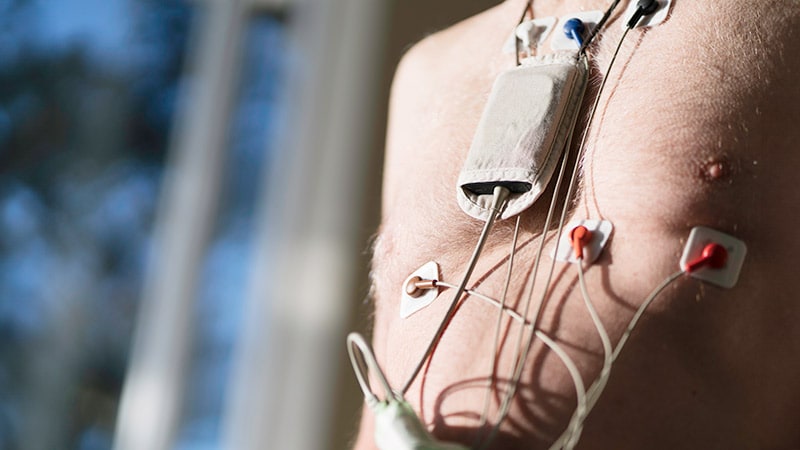
Dr Melissa Walton-Shirley comments, "I'm reading a Holter while I'm working out. Multitasking is important when you are trying to incorporate a workout into a busy schedule!"
|
"I tell my children that if I stay active, maybe you won't have to come visit me in the nursing home," said Walton-Shirley. "It's no guarantee, but I'm going to die trying. It's a matter of purchasing fewer medications, of having to introduce fewer medications into your system. A lot can be said to a natural approach, even for us as physicians."
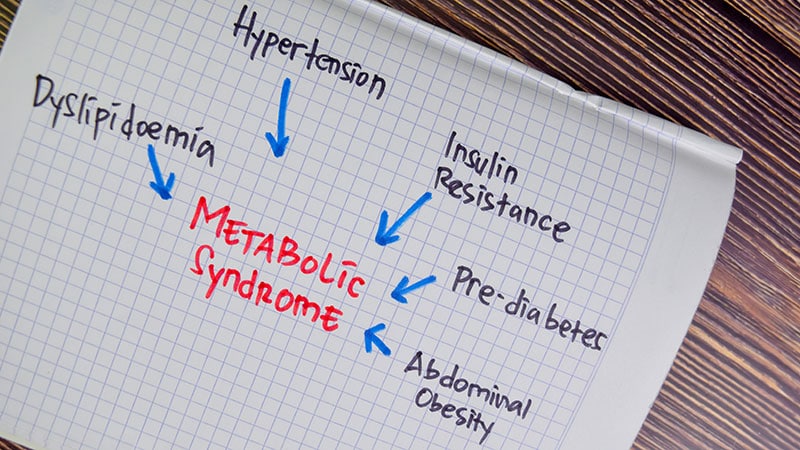
Dr Darren McGuire (University of Texas Southwestern, Dallas, TX) told heartwire that he walks every opportunity he has, including the stairs, as part of an effort to get to the recommended 10 000 steps per day. With his busy academic and clinical schedule, regular exercise is difficult, something that is compounded by two young children at home. He exercises for physical and psychological benefits, as well as to avoid the diabetes that runs rampant through his family. As a researcher with a focus on the metabolic syndrome, McGuire said it is important to constantly work toward improving his exercise habits.
|
Dr Darren McGuire
|
"I always feel guilty with my increased 'gut-to-butt' ratio, lecturing about the importance of exercise," said McGuire. "My close friend and life mentor Dr Jere Mitchell, a guru of the exercise field, commonly reminds me that I should be doing a better job practicing what I'm preaching. I have regularly cycled about plus/minus 20 lbs for most of my adult life, and there is nothing like hitting the top of that cycle to get me moving and eating better all over again."
de Lemos also has children, so what he does when he comes home is jump on the elliptical machine, something that allows him to watch TV, play videogames, or just talk with his family while he gets a workout in.
"I do think it's a little hypocritical of a cardiologist who is not taking care of himself to ask patients to stay active," he said. "It helps if you have a frame of reference of how you get a workout in your busy day. You can know what you're asking of your patients. Is it a deal breaker? No. It's like anything else. You can be a great cardiologist and not exercise and smoke, or you can be very active but not be a very good doctor."
-
Thompson PD, Buchner D, Pina Il et al. Exercise and physical activity in the prevention and treatment of atherosclerotic cardiovascular disease: a statement from the Council on Clinical Cardiology (Subcommittee on Exercise, Rehabilitation, and Prevention) and the Council on Nutrition, Physical Activity, and Metabolism (Subcommittee on Physical Activity. Circulation 2003; 107: 3109-16.
|
||||
|
|
|
|||
|
|
|
|||
|
|
|
|||
|
|
|
|||
|
|
|
|||
|
|
|
|||
|
|
|
|||
|
|
|
|||
|
|
|
|||
|
|
|
|||
|
|
|
|||
|
|
|
|||
|
|
|
|||
|
|
|
|||
|
|
|
|||
|
|
|
|||
|
|
|
|||
|
|
|
|||
|
|
|
|||
|
|
|
|||
|
|
|
|||
|
|
|
|||
|
|
|
|||
|
|
|
|||