








Thrombosis Risk
Bevacizumab significantly increases venous thromboembolism
November 18, 2008 | Zosia Chustecka
From Medscape Medical News—a professional news service of WebMD

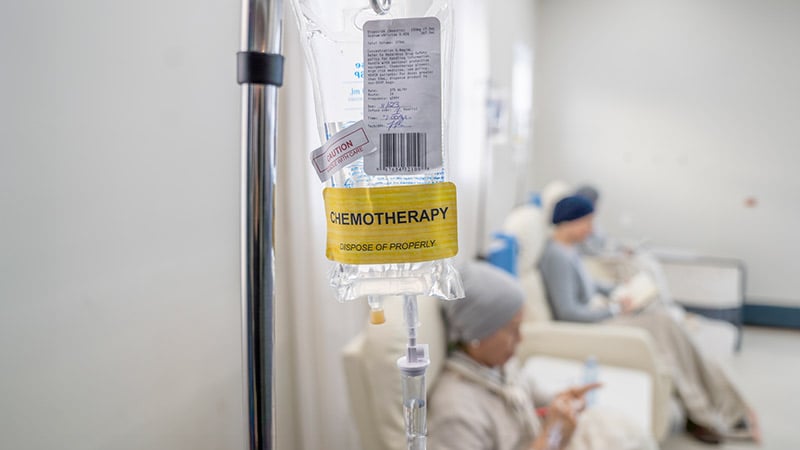
Stony Brook, NY - The angiogenesis inhibitor bevacizumab (Avastin, Genentech/Roche) significantly increases the risk for venous thromboembolism (VTE), a new meta-analysis concludes [1]. Because the drug is being increasingly used in the routine treatment of cancer patients, the authors suggest that this new finding might merit a black-box warning.

Currently, the product information includes only arterial thromboembolic events in its warnings section. That finding comes from a meta-analysis of five clinical trials involving 1745 patients, which did not find an increase in the risk of VTE [2].

However, many more trials have been conducted since then, and this new, much larger meta-analysis found a significant increase in the risk for VTE. The finding is reported in the November 19, 2008 issue of the Journal of the American Medical Association.

The new meta-analysis examined 15 randomized controlled clinical trials involving 7956 patients with various advanced cancers and found that the risk of developing VTE for patients taking bevacizumab was 33% greater than for controls (relative risk 1.33, 95% CI 1.13-1.56; p<0.001).

"It is imperative for physicians and patients to recognize this risk," write the authors, led by Dr Shobha Rani Nalluri (Stony Brook University, NY). "In the event of venous thromboembolism, anticoagulation is indicated, and bevacizumab may be continued if the benefits of the drugs outweigh the risk," they add.


Not surprising, but of concern clinically

The finding is of concern because of the risk for morbidity and mortality related to VTE, senior author Dr Shenhong Wu (Stony Brook University) commented. Patients with cancer undergoing treatment are already at an increased risk of developing VTE, he explained—the incidence of all-grade VTE among such patients is about 9.9%. This new result suggests that bevacizumab raises this risk by 29%, he added.

These are, after all, drugs that affect blood vessels.

The finding is not particularly surprising, commented Dr George Sledge (Indiana University Cancer Center, Indianapolis), who was not involved in the study. He pointed out that arterial thromboembolic events are already a known complication, so "it is not particularly surprising that the incidence of VTE events is modestly increased; these are, after all, drugs that affect blood vessels."

Bevacizumab is a monoclonal antibody that neutralizes vascular endothelial growth factor (VEGF), which results in the inhibition of angiogenesis.

VTE is an "emerging complication" of many angiogenesis inhibitors, Wu and colleagues write. Thalidomide and its derivative lenalidomide (Revlimid, Celgene), which both act on VEGF and other factors, have also been associated with this complication—VTE has been reported at an incidence of 12% with thalidomide and 8% with lenalidomide, which compares with the 11.9% incidence now reported with bevacizumab, the authors note.

Nevertheless, this finding is important and "certainly of concern clinically, particularly in patients who are already at an increased risk for thromboembolic events," Sledge noted. "It should represent part of the informed consent for clinical trials," he added, although the question of whether it warrants a black-box warning on the product label, as the authors suggest, is "within the purview of the FDA."

"At this point, clinicians should be aware of the potential risk for VTE, although the presence and exact size of any risk (if there is one) is still unclear and may be considered controversial," commented Dr Herbert Hurwitz (Duke University Medical Center, Durham, NC). Hurwitz was the senior author of the previous smaller meta-analysis that found no increase in the risk for VTE.

Fortunately, very few of these events were fatal.

"The most important issue for clinicians remains prompt and careful management of VTE if and when it occurs," Hurwitz said. "Fortunately, very few of these events were fatal," he pointed out (in the current meta-analysis, only three VTE-related deaths occurred, two in the bevacizumab group and one in the control group).

"To date, use of full-dose anticoagulation with bevacizumab has been shown to be safe in patients who have a clear indication for anticoagulation (ie, the presence of a VTE), provided that the patient does not have other underlying risks," Hurwitz commented. "Nevertheless, anticoagulants have intrinsic risks, particularly if used broadly." Therefore, he said, "until this issue is further clarified, routine use of anticoagulants in bevacizumab-treated patients probably cannot be recommended at this time."

The other issue for clinicians and researchers is whether the background rate of VTE (independent of any increase related to bevacizumab) justifies the prophylactic use of anticoagulants more broadly, Hurwitz said. This is an issue that merits further study, he added.

According to Genentech/Roche, the manufacturer of bevacizumab, the incidence of VTE reported in this meta-analysis is consistent with the drug's safety profile as documented in the product label and in previously presented data. "VTEs are typically managed with anticoagulant medication and can occur in people with cancer, regardless of the treatment they are receiving for their cancer," the company said.


Risk varied across different tumor types

The meta-analysis found that bevacizumab increased the risk not only for all-grade VTE but also for clinically significant high-grade VTE, the authors point out. The incidence was 11.9% for all-grade VTE and 6.3% for high-grade VTE. In addition, the risk was significantly and similarly increased by both the low dose (2.5 mg/kg per week) and the high dose (5 mg/kg per week).

However, there was difference in the risk seen among patients with different types of tumors. The highest incidence of all-grade VTE was observed among patients with colorectal cancer (19.1%), whereas the lowest risk was seen in patients with renal cancer (3%). In between were patients with non-small-cell lung cancer (14.9%) and patients with breast cancer (7.3%). A similar pattern across these tumor types was seen with the incidence of high-grade VTE.

This difference in VTE by cancer may be related to biology (eg, higher incidence in aerodigestive malignancies) but may also reflect other factors, such as previous treatment and performance status, say the authors.

What this analysis lacks is an exploration of predisposing factors for VTE events.

Wu suggested that the high risk found in patients with colorectal cancer and lung cancer may warrant the use of prophylaxis in these patients— for example, with enoxaparin (Lovenox, Sanofi-Aventis), warfarin, or aspirin. However, further studies on such prophylaxis need to be performed, he added.

The authors point out several limitations to their meta-analysis, including potential overlap between the various grades of VTE and the fact that the incidence of VTE varied greatly across the individual clinical trials (ranging from 3% to 19%).

"What this analysis lacks is an exploration of predisposing factors for VTE events," commented Sledge. One such factor clearly appears to be tumor type, but other factors important for clots include history of clotting episodes, age, obesity, family history, and smoking history. "If these were examined, my suspicion is that we would be able to separate out low and high groups," he said.

Wu reported acting as a speaker for Pfizer, receiving honoraria from Onyx Pharmaceuticals, and being partially supported by the Research Foundation of the State University of New York.

The complete contents of Medscape Medical News, a professional news service of WebMD, can be found at www.medscape.com, a website for medical professionals.

Sources
  1. Nalluri SR, Chu D, Keresztes R, et al. Risk of venous thromboembolism with the angiogenesis inhibitor bevacizumab in cancer patients. JAMA 2008; 300:277-2285.
  2. Scappaticci FA, Skillings JR, Holden SN, et al. Arterial thromboembolic events in patients with metastatic carcinoma treated with chemotherapy and bevacizumab. J Natl Cancer Inst 2007; 99:1232-1239.


You have to be logged in to add a comment to this article
Login
Username 
Password 
  Forgot your password?
 
Remember me on this computer
 
Join theheart.org community
Five reasons to become a member of the most trusted source of cardiology news:
1Be part of the conversation in our blogs and discussion forum
2Share your thoughts on our news or educational programs
3Receive exclusive newsletters related to your field of interest
4Access unique continuous medical education content
5See and read what leaders have to say about cardiology today
It is free and it only takes five minutes to join!
 
button
Previews
Featured CME
Inside: Thrombosis Risk
Thrombosis Risk
3 COMMENTS - Jan 12, 2009 02:02 EST
NATF's vision is to improve patient care, outcomes, and public health by utilizing a multidisciplinary approach to advance thrombosis research and education. NATF's legacy will be the improvement of patient care, outcomes, and public health by supporting thrombosis-related programs, such as novel research projects, innovative educational programs, public policy initiatives, regulatory issues and advocacy. NATF also seeks to broaden training opportunities for physicians, scientists, and other health professionals.