






Heart failure and transplantation with Dr Ileana Piņa

View all posts »

AF: Back to the basics with Dr Anne Gillis, HRS president

Nov 29, 2012 00:00 EST


In this first part in the series, Dr Ileana Piña sits down with the current Heart Rhythm Society president Dr Anne Gillis to review the epidemiology of AF and the basics of treatment.

See also:
Heart Rhythm Society Scientific Sessions

Parakh K, Win S, Stuart EA. Mortality in women with new-onset atrial fibrillation. JAMA 2011; 306:1200-1201. Abstract

Transcript:

Ileana Piña MD MPH: Hello, I'm Ileana Piña from Montefiore Medical Center in the Bronx. Today I am really excited about our guest speaker. We are going to be talking about atrial fibrillation. Atrial fibrillation is a problem that confronts primary-care providers and cardiologists. No matter what branch of medicine you are in, you are going to see atrial fibrillation. A lot has happened in the last few years, not only in drug therapy, but also the question of whether to control rate or control rhythm. What about devices? Should we be using devices? What about ablation? This is going to be the first of a series of three interviews to talk about atrial fibrillation and its different aspects. I want to welcome Anne Gillis, who is the current president of the Heart Rhythm Society and professor of medicine at the University of Calgary in Canada. Welcome, Anne. It's great to have you here.

Anne Gillis MD: Thank you, Ileana. I'm delighted to be here.

Dr Piña: You have a big job with the Heart Rhythm Society. When are your next sessions?

Dr Gillis: Our next sessions are next May 9–13, in Denver.

Dr Piña: And you want to encourage abstract presentation?

Dr Gillis: Absolutely.

Dr Piña: Let's talk about atrial fibrillation. You are an electrophysiologist. From your perspective, how common is it? Does the incidence increase with age? And what are the comorbidities? Tell me a little bit about the epidemiology of atrial fibrillation.

Dr Gillis: Atrial fibrillation is the most common sustained arrhythmia that we deal with in cardiology. To put it in perspective, if you live to be 40 years of age, the probability of developing atrial fibrillation at some point in your life is one in four, so that tells you the significance of the problem. Right now in the United States, 3.6 million people may have atrial fibrillation.

Dr Piña: Is age of onset different for men and women?

Dr Gillis: Age is the most important risk factor for atrial fibrillation. The incidence is highest in the population older than 75 years of age. The probability of men and women of the same age having atrial fibrillation is similar; it's just that women are more likely to have it because they live longer.

Dr Piña: I have always heard about hypertension as being in the background. Can you tell us a little bit about that?

Dr Gillis: Hypertension is the most important etiologic factor for atrial fibrillation, in addition to diabetes, obstructive sleep apnea, and underlying cardiac disease.

Dr Piña: My specialty is heart failure, and as I look at the literature and the clinical trials that we have done, where the prevalence of atrial fibrillation is usually reported, it keeps going up as patients get sicker. In a trial of class 3/4 heart failure, you may see 40% of patients having atrial fibrillation, and a lot less in a study of class 2/3 heart failure. Can you comment on that?

Dr Gillis: That is the case, and as heart failure advances, the left ventricle enlarges and the patient develops mitral regurgitation. The hemodynamic effects of heart failure lead to atrial stretch and atrial hypertension, which are important factors in the initiation of atrial fibrillation, along with the significant atrial remodeling and fibrosis that develop as part of the heart-failure pathophysiology.

Dr Piña: In the primary-care arena, my colleagues are seeing a lot of permanent atrial fibrillation with heart failure. On this blog we have talked about the diastolic dysfunctional patient, and we have learned that left atrium enlargement is probably the most consistent finding in the trial. Of course we don't have the right drugs, but can you tell us a little bit about why a patient with permanent atrial fibrillation with heart failure might not be able to tolerate an atrial-fibrillation event?

Dr Gillis: Sure. With diastolic dysfunction, the ventricle is very stiff, and if the patient goes into a tachyarrhythmia, the left atrial pressure will elevate and there can be elevation of pulmonary capillary wedge pressure, dyspnea, and heart failure. Those factors contribute to the reason that patients with heart failure don't tolerate atrial fibrillation.

Dr Piña: Left atrial enlargement may be a very early sign of hypertensive heart disease, even before the ventricular hypertrophy, so that is a good pearl—that when echocardiograms are ordered, take a look at the left atrial size. Clinicians often focus on the ejection fraction, but there is a lot more information there. There was a paper in JAMA[1] about the incidence of atrial fibrillation in women (I believe derived from the Women's Health Initiative), and the outcomes were not positive. Tell us a little bit about that.

Dr Gillis: In that study, they reported an increased risk for mortality in the small population of patients who developed atrial fibrillation, and when they did a multivariate analysis, even correcting for some of the comorbidities associated with an increased risk for atrial fibrillation, the risk for mortality was still increased. Other trials have suggested a similar increased risk for mortality in association with atrial fibrillation, so it is cause for concern. On the other hand, even multivariable analyses cannot assess the magnitude of a comorbidity, and it may be that the development of atrial fibrillation is associated with a more significant burden of other illness that contributes to its development and hence increases the risk for death.

Dr Piña: So, it is a sign that something else is going on; perhaps pressure is building up in the ventricle and it may be the preamble of something else. But it was surprising to me, because it is not a benign condition.

Dr Gillis: No, it is definitely not a benign condition. Even though we may have patients on appropriate antithrombotic therapy, there still is a risk for stroke. We can reduce it, but we don't reduce it to zero. If someone has a stroke, it can lead to other medical issues that can ultimately result in increased mortality.

Dr Piña: In an initial workup, the patient comes in to the office and has atrial fibrillation; you don't know how long it has been there. Some patients are symptomatic, but many are not. What is the first step that a primary-care provider should do?

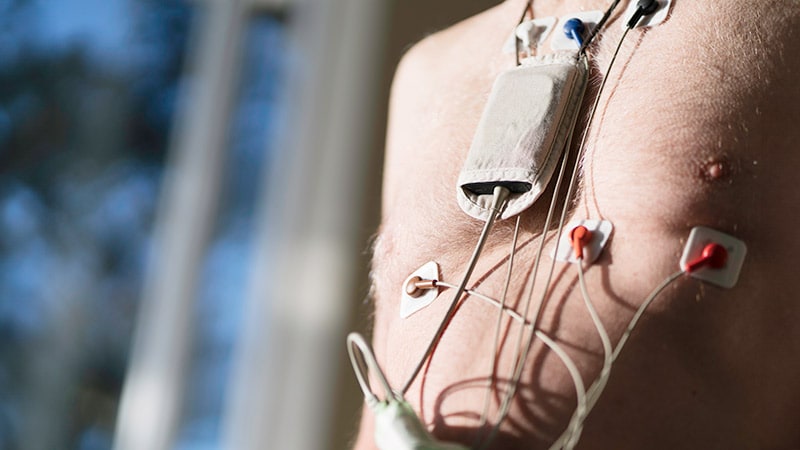
Dr Gillis: The first thing is to document the arrhythmia, assess for risk factors for stroke, and make sure the patient is on the appropriate antithrombotic therapy. An echocardiogram should be done to begin the process of looking for underlying structural heart disease. A Holter might be needed to see if the patient is adequately rate controlled, and then other tests will be dictated by the individual patient factors.

Dr Piña: Do you look for coronary disease if you have other risk factors? Would it be appropriate to send the patient for a stress test or even a catheterization if it is serious enough?

Dr Gillis: It depends on the individual (his or her functional capacity), whether symptoms occur during exercise, and age, but if the patient has a number of risk factors for coronary disease, certainly considering at least a stress test is reasonable.

Dr Piña: I want to reemphasize your point about hypertension—how important it is to get that blood pressure under control. If you want to keep them out of atrial fibrillation, and the blood pressure is not under control, it is not going to happen easily. I want to wrap up our first segment here and thank our readers. In our second segment, we are going to talk about anticoagulation, the approach to atrial fibrillation, and the medical therapy that has really changed through the years. Please stay tuned for our next segment. This is Ileana Piña, saying goodbye.

References
1. Parakh K, Win S, Stuart EA. Mortality in women with new-onset atrial fibrillation. JAMA 2011; 306:1200-1201. Abstract
 

?


You must be a member (with full membership) to post a comment.
Already a member?
Enter your login information below:
 Remember me on this computer
Enjoy all the benefits of theheart.org

With full membership, you can check out our educational and editorial content, search the site, receive our newsletters, join discussions, download slides and much more.

Membership is free!