







Genomic testing to take on unnecessary coronary angiography?

Aug 21, 2012 11:45 EDT


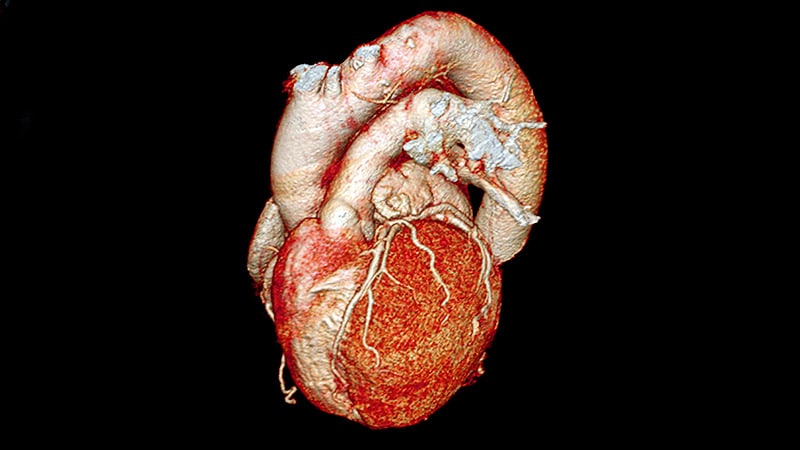
It's no secret that a high percentage of the two million coronary angiographies performed in the US each year are unnecessary—analysis of the ACC database published 2010 in NEJM concluded that more than 60% of tests showed no significant coronary disease. How do we stop the waste and the needless radiation exposure? There's a new genomic test for that.

Conflict of interest:

Dr Eric Topol has no relationship with CardioDx. Neither he nor Scripps has received grant support from the manufacturer of this gene-expression test.

See also:

Patel MR, Peterson ED, Dai D, et al. Low diagnostic yield of elective coronary angiography. N Engl J Med 2010; 362:886-895. Abstract.

Rosenberg S, Elashoff MR, Beineke P et al. Multicenter validation of the diagnostic accuracy of a blood-based gene expression test for assessing obstructive coronary artery disease in nondiabetic patients. Ann Intern Med 2010; 153:425-434. Abstract.

Hospital chain inquiry cited unnecessary cardiac work

HCA under investigation for PCI necessity

Transcript:

Eric Topol MD: The topic is coronary angiography and whether we need to do so many of them. And the precipitating reason for this segment is the recent New York Times article published on August 6 and the investigative reporting about the HCA chain and the headlines about unnecessary cardiac work.

This is a real problem, and there have been repetitive reports in the lay press about unnecessary coronary angiography and interventional procedures. In the United States, there are over two million coronary angiograms done [per year], well over 10 000 per day. A study that was using the ACC database of nearly 400 000 coronary angiograms done in the US, published in the New England Journal [of Medicine] in 2010, showed that about 62% had no significant coronary disease.

Of course, about a fourth, or 30%, are completely normal. So the problem we have here is a deep one, and it probably isn't just HCA, although that perhaps represents an extreme, and there were physicians who were reporting and paraprofessionals reporting colleagues because they felt there were procedures that were being done unnecessarily. But the question is do we need to do over two million angiograms in the United States each year? And do some result perhaps in unnecessary revascularization procedures because of the true, true unrelated principle—that is, there is a narrowing in that small percent that have a narrowing of the two million, relatively small, and then stand its place, but is that actually the reason for this ambiguous or even positive, potentially false-positive test?

Now there were some recent criteria that the ACC put out, through the ABIM (American Board of Internal Medicine) Choosing Wisely Campaign, trying to limit unnecessary coronary angiography. I'm not sure if that had any effect. But it's curious. This is expensive, there is radiation involved, there are alternatives. And I want to just mention one alternative.

Back in 2010, we published in Annals of Internal Medicine [a report on a] test that was a gene-expression test, looking at 21 genes that could pick up whether or not there was significant coronary disease or the absence thereof. And that test, just in the last week or so, has been approved for reimbursement by Medicare. So it's about some $1000 thereabouts for the cost of the test, but it's a blood test that could be useful in patients who have an ambiguous or potentially suspicious false-positive functional test.

So I don't know if it will get used, because obviously there is a predilection to using coronary angiography, but it seems as though we have a new alternative that could help reduce this call from the various reports, including this most recent one of HCA, that too many procedures are being done.

So I'll be interested in your thoughts. Of course there is CTA, as CT angiography, but that's still in most places a significant amount of radiation exposure, it's expensive, and it is not reimbursed. And so what do we do to try to reduce the need for unneeded or unnecessary or normal or no obstructive disease coronary angiograms?

I'll be really interested in your comments, and help me here, I'm trying to see what are the new tactics that we could use to reduce the exposure of cardiologists who are being called out for doing too many procedures. Thanks for your attention.

To download this transcript, click here.


Your comments
Genomic testing to take on unnecessary coronary angiography?
# 1 of 4
August 21, 2012 02:46 (EDT)
d.h.

Results: The area under the ROC curve (AUC) was 0.70 ± 0.02 (P < 0.001); the test added to clinical variables (Diamond–Forrester method) (AUC, 0.72 with the test vs. 0.66 without; P = 0.003) and added somewhat to an expanded clinical model (AUC, 0.745 with the test vs. 0.732 without; P = 0.089). The test improved net reclassification over both the Diamond–Forrester method and the expanded clinical model (P < 0.001). At a score threshold that corresponded to a 20% likelihood of obstructive CAD (14.75), the sensitivity and specificity were 85% and 43% (yielding a negative predictive value of 83% and a positive predictive value of 46%), with 33% of patient scores below this threshold.


These numbers are not all that impressive, even for intermediate risk patients. 

# 2 of 4
August 28, 2012 10:40 (EDT)
Sergio Stagnaro
A high percentage of the two million coronary angiographies performed in the US each year are unnecessary. And such a number will grow if physicians around the world will overlook, as now,  CAD Inherited Real Risk. Worst of all, CAD patients do not undergo coronary angiography at early as possible. For instance, from up-dated Medicine view-point, Neil Armstrong's CAD diagnosis at 82 years represents a shameful event for Cardiology. As a matter of fact, as one may read in a vast Literature, patient, suffering from CAD in the course of life, is involved since birth by CAD Inherited Real Risk, bedside recognised in ONE second, and healed definitively under Blue Therapy: See later on in References.

Neil Armstrong war really the first man who walked on the Moon, but also the FIRST case of CAD, humans have sent over there, without knowing it. Wonderful! 

Stagnaro Sergio. CAD Inherited Real Risk, Based on Newborn-Pathological, Type I, Subtype B, Aspecific, Coronary Endoarteriolar Blocking Devices. Diagnostic Role of Myocardial Oxygenation and Biophysical-Semeiotic Preconditioning. International Atherosclerosis Society. www.athero.org, 29 April, 2009 http://www.athero.org/commentaries/comm907.asp.

Sergio Stagnaro. Without CAD Inherited Real Risk, All Environmental Risk Factors of CAD are innocent Bystanders. Canadian Medical Association Journal. CMAJ, 14 Dec 2009,  http://www.cmaj.ca/content/181/12/E267/reply 

Stagnaro Sergio. Role of Coronary Endoarterial Blocking Devices in Myocardial Preconditioning - c007i. Lecture, Feder. Argent. Cardiol., 2007.  V Virtual International Congress of Cardiology. http://www.fac.org.ar/qcvc/llave/c007i/stagnaros.php

Stagnaro Sergio.   Bedside Evaluation of CAD biophysical-semeiotic inherited real risk under NIR-LED treatment. EMLA Congress, Laser Helsinki August 23-24, 2008. "Photodiagnosis and photodynamic therapy", Elsevier, Vol. 5 suppl 1 august 2008 issn 1572-1000.

Stagnaro Sergio. Biophysical-Semeiotic Inherited Coronary Real Risk, conditio sine qua non of CAD.17 August 2007. http://www.annals.org/cgi/eletters/0000605-200708070-00167v1#19068

# 3 of 4
September 2, 2012 09:09 (EDT)
PG

The impressive thing about this test is not its predictive value or effect on net reclassification but that it has done as well as it has. The genes in the panel were derived using a mix of heuristic selection and an unbiased discovery process. The methods for discovering gene expression profiles are now far more global and unbiased, meaning that this test could probably be optimised with a better set of genes. The test also uses a Taqman PCR array, which is not as sensitive/accurate as NextGen RNA sequencing, esp. for low fold-change gene expression (~x1.3). So bring in newer technologies and this is bound to become more precise. Looking at gene expression alone is like taking a look at an object in only 2-dimensions and trying to infer its shape. Other molecular methods such as metabolome profiling will probably be additive to the value of this test. Metabolomes vary between individuals by a higher order of magnitude than gene expression and provide additional information about the downstream effects of genes and the interaction with the environment.

In addition what is being missed here is that a blood test like this could be accessed directly by the patient - without going through a medical professional. In that sense it beats any model that requires a clinician to apply it, which carries the potential of self-referral bias for angiography. Supporting this technology, by having it funded, means it will evolve and similar innovation will follow. However for this to really happen current methods of assessing efficacy need to be rethought, otherwise regulators will not be able to keep pace with developments.

# 4 of 4
February 28, 2013 04:19 (EST)
John Bennett MD
Thanks for Facing Tough Issues
It is not easy to criticize a tried and true practice in American Medicine, but you seem to be up to the task, and priming for change,as you have attatcked other overordering issues in your great book, The Creative Destruction of Medicine.

We are putting this blog on the Best Cardiology Blogs, along with Dr. Wes, Dr. John, Dr. Cresman, because it seems that we may get wiser if we hang around your thoughts. thanks
Author's disclosure (Feb 28, 2013)
I have no relevant disclosures to make in connection with this topic.

You must be a member (with full membership) to post a comment.
Already a member?
Enter your login information below:
 Remember me on this computer
Enjoy all the benefits of theheart.org

With full membership, you can check out our educational and editorial content, search the site, receive our newsletters, join discussions, download slides and much more.

Membership is free!