






Trials and Fibrillations with Dr John Mandrola

View all posts »

The most overused word in cardiology?

Oct 22, 2012 16:42 EDT


Before starting, in the interest of full disclosure, I want to admit something.

I've been trying to write about this topic for more than a decade. I'm just going to start and see where it leads.

Years before we used the phrase "shared decision making," or my wife became a palliative-care doctor, or I saw a World War II veteran imprisoned for years with depression and anxiety after receiving 36 inappropriate ICD shocks (recalled RV lead fracture), I felt cardiologists overused the word . . .

. . . Need.

Not all that we do in cardiology needs to be done at the speed of acute coronary intervention for MI. We have time—to listen, to teach, and to share alternative options.

So entrenched, however, is the word "need" that even I catch myself saying a patient "needs" this or that device, or an ablation, or a medicine.

But is it true? Do patients need our treatments? Does any patient need an ICD? An ablation? An anticoagulant? A stent? A beta blocker in stable CAD? Surely, no one needs an antiarrhythmic drug?

If not these things, then what? What do our patients really need from us?

More and more, I wonder about this important question.

Here's a story that I would like to share as a prologue: (I'll never forget this patient. I even remember his room.)

He was in his early 80s. Other than mild high blood pressure for which he took only one medicine, he was near perfect. He was able of body and mind. Widowed for a number of years, he lived alone.

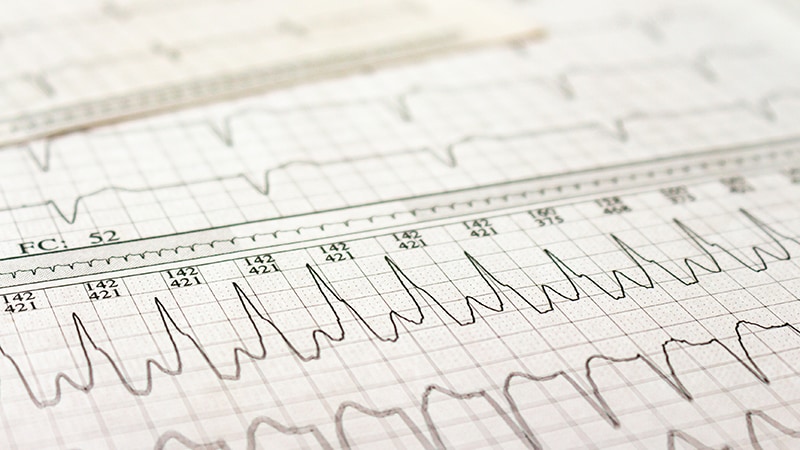
Then one day, he found himself dizzy and weak. Third-degree AV block was what the ECG showed. His heart rate was 32.

The first doctor told him he "needed" a pacemaker. It would take only 30 minutes to implant and he would go home as good as new.

Then something strange happened: The patient said he did not want or need the pacemaker.

My instructions were clear: "Mandrola . . . go see this guy and straighten him out."

I trotted down to the ER, shook his hand, and overconfidently went on to explain why he needed the pacemaker—which I would skillfully install. Graciously, he accepted my explanation.

But he still said no thanks.

"Okay then," I thought. I'm pretty tired; it's late in the day. I'll admit you to the heart floor, and we can talk some more tomorrow. He agreed. I figured the nurses would explain further, and we would go to the lab in the morning for the pacemaker.

The next morning his heart rate was still 32. And he still said no thanks to the pacemaker. Now it was time for serious words. "Sir, you need this pacemaker, because without it you will die," I firmly told him.

In a gentle tone, as if he was more worried about me than I was him, he explained that he understood the situation and was okay with what nature brought. His life had been wonderful. He had no regrets. He had watched his wife linger on with chronic illness. It was time. He was done. This was his exit.

His decision shocked us. Remember, as a patient on a cardiac unit, he was immersed in a sea of devout life-prolongers. We had other docs speak with him. Maybe it was our delivery; perhaps we were not clear? We sent in a chaplain, a parade of seasoned nurses, and even a friend. Still the decision was thanks, but no thanks.

He lasted days, slowly declining into a peaceful death. Over those days, the staff made peace with his decision. They accepted it and shifted their priorities to making him comfortable, which they did compassionately and skillfully.

This story unfolded years ago. If it happened now, things would be different. I'd call my wife, and she would reassure me that older patients are either getting busy living or getting busy dying. She would tell me that once patients decide they have had enough, well, then, they have indeed had enough. That one's life and one's death are their decisions.

It was a great teaching case for me. Here was a vital man that 100 of 100 doctors would have agreed on the need for a pacemaker. But yet, this remarkable man taught us about something very relevant to today's medical climate--a milieu where doing more is the default. This was the first time that I had thought about connecting the word "need" and medical procedures. He taught me that ultimately what patients need isn't determined by us. It's determined by them. Our job is to present the options, teach, counsel, and then support their decision.

Our job is rarely to dictate need. In fact, I'm going (to try) to stop saying the word "need."

JMM

PS. I've been thinking a lot about ICDs and the word "need." (And AF ablation and "need.") I plan to write more on these thorny topics. EP doctors speak of "learning while burning." A similar process could be called "learning while writing."

Three recent editorials have got me thinking about the notion of how best to select patients for ICDs. I'm struggling with our horrible ability to risk-stratify patients for sudden death. Or . . . said another way: does the two-decade old notion of uselessly exposing 19 of 20 patients to the risks of an ICD to get one appropriate shock (that may not be lifesaving) bother you?

  1. Epstein AE. "Please implant a defibrillator in my patient": It's déjà vu all over again. Heart Rhythm 2012; 9:47-48.
  2. Buxton AE. Implantable cardioverter-defibrillators for primary prevention of sudden death: The quest to identify patients most likely to benefit. J Am Coll Cardiol 2012; 60:1656-1658.
  3. Kramer DB, Buxton AE, Zimetbaum PJ. Time for a change—a new approach to ICD replacement. N Engl J Med 2012; 366:291-293.


Your comments
The most overused word in cardiology?
# 1 of 7
October 24, 2012 09:31 (EDT)
David Schwartzman

"Good advice. If I listened earlier, I wouldn't be here. But that's just the trouble with me. I give myself very good advice, but I very seldom follow it." From Alice in Wonderland, by Lewis Carroll.

I agree with what you say. My own travels in medicine have led to the point where I simply aspire to explain, to each patient, everything i know, to let s/he and family decide what makes sense, and then to do my best to support the decision. 

In addition, if you (as I) are interested in the prospects of your children and this country, the issue of medical need should be weighing more and more heavily upon you. This of course ignores the absurd context of starvation and malaria as common causes of misery and mortality in less fortunate parts of the world.

However, given that we as physicians are increasingly employed by Big Medicine, how strong is your moral compass?

# 2 of 7
October 26, 2012 10:49 (EDT)
cardiodo
well said.......we need to treat the patient... not the ekg/blockage/ number /lab /xray etc  he tho was a good consumer/customer... most people want to defer the /a decision to someone else or ask more qestions at the local fast food restaurant tan about what if i dont do this.. or if i do   doctors too quick to say need this/do this order this... cause of pay for performance also
# 3 of 7
October 26, 2012 11:22 (EDT)
Allison Teger, M.Ed., LMHC

As a Licesed Mental Health Counselor specializing in cardiac patients, and a WomenHeart Spokesperson, I have often talked about open dialogue with all of the patient's medical team.  One of the large challenges patients and blogs have reported is the decision over when is the right time for a medication or a procedure, and what are truely the pros and cons involved.  In addition, both need from the doctors perspective and need from the patient perspective may be different.  Terminology, years of medical experience on one side vs years of living with X challenge on the other may lead to passionate words that may not fully be understood by the other side. 

It is time for a major shift in which both the Doctor conveys clearly, the options available to the patient with the pros and cons involved.  And the patient takes on the responsibility to fully lay out their ideas and here comes that word, "Needs". On a daily basis I come across patients that have been placed on medications without full understanding of why, nor the ramifications of that medication.  Likewise, I also come across patients that did not realize the options involved, until they selected a particular medical path without knowing all of the ramifications associated with that decision.  Meanwhile, I have also met with many Doctors who truly want the best for their patient but have faced challenges in communicating effectively with their patients.  Some Doctors have said if I only had a therapist on staff, to help address some of these questions, then allowing for some time to make a decision by the patient.

It is time to think from the perspective of, "if this was my mom or sister" what would I want them to know or consider in this decision. 

Yes, I believe the question is what is best for the patient and what options could be considered.  Not what does this patient "Need". 

And as a side note I have also been a heart patient.  I had reparative surgery on both my cleft mitral valve and ASD.

 Thanks for listening.

Allison Teger, M.Ed., LMHC

# 4 of 7
October 26, 2012 01:05 (EDT)
SJE

As a very seasoned ICU nurse I had the opportunity to observe a physician obtaining informed consent from a patient of mine who, "needed", open heart surgery.

The patient declined the procedure. The physican, not happy with the answer, proceeded to discuss it with the patient's family. He wanted them to "talk" with the patient and "convince" him to have the surgery since the "patient's life depended" upon it.

The family "talked" to the patient and told him what the physician had said. The patient declined to give the family an answer at that time.

After the family left, I had an opportunity to talk with the patient. I asked him how he felt about the procedure, answered all of his questions, and told him about my experiences with open heart patients.

The most important thing I said to him was that I would support his decision regardless of what it was. He felt more comfortable talking with me because I was not "pressuring" him to consent to something he was not sure he "needed".

The patient did consent, had the surgery, and did very well.

# 5 of 7
October 26, 2012 04:19 (EDT)
Rusty
I am within two weeks of an ablation procedure to treat atrial fibrillation that has galloped along for seven years paroxysmally. The fibrillation events endure for many hours, leaving me so wasted it seems inconceivable. I have spent the past many months researching all the journals the cognoscente publish within to teach myself the jargon and refresh what I used to know before I quit being a premed student in college. The past 6 weeks I have ingested verapamil once a day and it keeps my heart rate in the low 40s, leaving me so ragged at the end of the work day I just come home and sleep. I am grateful for the absence of atrial fibrillation events, but stunned at how hard that medication is on all the rest of my body. I am now 66 years old and I work all day every day outside in the oilfield, as I used to do all the rest of my life in agriculture and construction. I greatly appreciated this discussion of 'need' from the medical field. I recently had three cardiologists in Amarillo, Texas name of Chappin, Jewel and Haddad tell me that I was not a candidate for their services because I researched my condition so hard and deep and wanted to talk this over with them, and they refused my participation in my own treatment. I call their names herein because their behavior was so far out of line with the spirit of this discussion piece by Mandrola. I think I have a couple decades plus to live, and so I want to pursue a treatment that will allow for the fruitful conduct of those remaining years. For me to die is gain, as the Apostle Paul wrote, but living is good also, methinks, at this time. I think it would be real efficacious if the medical practitioners would stand back every year and survey the extent of the arrogance they push, and read and reread this article.
# 6 of 7
October 28, 2012 07:09 (EDT)
jcisalways

I'm a layman. I don't suppose I know any more about modern medicine than the average person, but I do know this: Lingering is not living. A long slow decline gives those around us time to adjust to the idea of ones' death, but there is a downside. The procedures that prolong ones' life can be brutal. The drugs and side effects can be brutal as well.  The stress and strain of caregiving take a toll on ones' survivors, the financial impact often means the estate you might wish to leave to your loved ones is decimated, and, while I don't mean this to be a slam on the medical field and long term care providers, there is simply no way to truly maintain ones' dignity while dying in a prolonged manner. If it goes far enough, at some point people start feeling sad for what you have become.  I have had family members go to bed seemingly healthy and happy and just not wake up the next day, and I have had family members go the Alzheimers route.  I am very clear on which I would pick, given a choice. I believe everyone has a responsibility to honor their own existence by living the best life that they are capable of living. I also believe that if we are graced in our old age with the mental acutity to understand that our time has come, the very act of choosing to let ourselves die with grace and dignity is what I would consider the crowning achievement of a life well-lived.

I value what modern medicine and skilled medical professionals bring to our lives, but medical professionals can learn from the lesson that old man was teaching. I don't know who he was, but I am certain I'd liked to have known him. I don't know how well he was educated, but he was wise.

# 7 of 7
December 17, 2012 05:01 (EST)
garry holland
want V need
simply what does the patient 'want'. the patient may 'need' a PPM but may not want it.therfore next time just ask what do you 'want' after explaining the options.i.e. of course you will recommend the need for a PPM to stay alive but what does the pt want.
Author's disclosure (Dec 17, 2012)
I have no relevant disclosures to make in connection with this topic.

You must be a member (with full membership) to post a comment.
Already a member?
Enter your login information below:
 Remember me on this computer
Enjoy all the benefits of theheart.org

With full membership, you can check out our educational and editorial content, search the site, receive our newsletters, join discussions, download slides and much more.

Membership is free!

About the author

Dr John Mandrola practices cardiac electrophysiology in Louisville, KY. He finished training at Indiana University in 1996. His practice encompasses catheter ablation, including an eight-year experience with AF ablation, device implantation, and consultative EP. Outside of the EP lab, Dr Mandrola's two hobbies include competitive cycling and writing. He has maintained a medical, fitness, and cycling blog, Dr John M, for the past two years.