








Trials and Fibrillations with Dr John Mandrola

View all posts »

Turning the AF ablation world upside down--FIRM ablation

May 10, 2012 07:12 EDT


On the atrial-fibrillation ablation front, the most striking news comes from Southern California. Dr Sanjiv Narayan has made himself famous with his paradigm-shifting work in the approach to AF ablation. To call his work "novel" understates it greatly.
After his presentation yesterday, the father of catheter ablation, Dr Sonny Jackman, came to the microphone and said, "Amazing, this is about to turn the AF ablation world upside down." A senior electrophysiologist that I had dinner with last night was more skeptical, but when he heard Sonny was impressed, he took notice.

Current background on AF ablation

It's recently become understood that electrical rotors and nests of focal impulses play an important role in AF. For guys like me, these lofty notions of spinning waves of electricity, rooted deeply in complicated matters of optics and physics, have always been noteworthy but far too complicated and not clinically relevant enough to warrant much attention. Most "regular" ablationists have felt the same. We want to know about power, watts, where, how much, and in whom to burn. AF ablation has been about building electrical fences around pulmonary veins—which may or may not be critical. Since it ain't easy, we like to get moving on it fast. Smart people call this approach an anatomic one.

A component missing from this current strategy is the physiology of AF. Anatomic ablators ignore physiology. Dr Narayan's work changes that. By targeting rotors and focal impulses—which he and others believe important in AF initiation and maintenance—his work moves us closer to the root cause of AF. And anything that does that—especially if it shortens the case and improves outcomes—will be welcomed.

What is FIRM ablation?

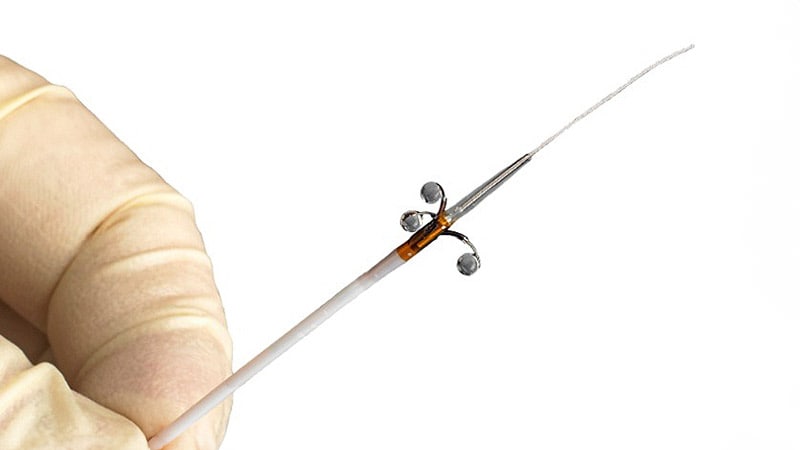
Their technique involves placing commercially available multipole basket catheters into the atria. During AF, the thousands of signals are sent to an investigational computer system, which then displays optical images and movies of the activation. Distinct geographic "areas of interest" in either the right or left atrium can be seen in almost all cases of AF. Sometimes the rotors are located in areas typically targeted during pulmonary vein isolation (PVI), but in many cases they are not.
Most remarkably, his prior work has shown that when these areas are ablated, AF terminates. That's striking. But it's not all. Patients who have undergone focal impulse and rotor modulation (FIRM) ablation in addition to standard PVI remain AF free more often than those treated with standard PVI.

Wednesday, Dr Narayan presented—to a crowded room—new data on the acute termination of AF with FIRM-guided ablation. In a cohort of patients with advanced AF, he showed that rotors or focal impulses could be seen in 98%. Ablation at these focal sites terminated, slowed, or converted AF to flutter in 88% of patients. Almost half converted to sinus rhythm. In one case, ablation for only one minute converted the patient to sinus rhythm.

And remember, he is ablating focally and terminating AF before PVI. Contrast this with the work of others that terminate AF after PVI and (hours of) extensive linear ablation. Dr Narayan has none of that. His magic entails finding the spot.

He gave us more good news. (That's the thing; he's always got more good news.) First, and most important in my mind, he now has a consortium of eight labs using his proprietary system. One of the senior leaders emailed me to say that he was impressed and mused: "This was the real deal."

Second, he showed a couple cases of using FIRM only, without PVI. It's too early to say, but would not this be incredible—a complete change?

What to think of all this?

Students of AF ablation have heard similar stories before. Ablating at sites of complex fractionated electrical activity (so-called CFAE) held similar promise. This strategy has not proven successful. There have also been boastful labs from across the globe purporting 100% success in one-hour cases. They have never panned out. We AF docs, therefore, stay skeptical.

The next step with FIRM ablation must be to show that others can see the rotors that Dr Narayan does. That the proprietary software will work in other labs. And of course, the ultimate test will come when it is tested in randomized multicenter clinical trials.

Still. If it is true, magic it will be.

JMM


Your comments
Turning the AF ablation world upside down--FIRM ablation
# 1 of 6
May 11, 2012 11:26 (EDT)
Allison
Does this work for people with intermittent AF?  Or does one need to consistently arrhythmic for the equipment to find the bits that need to be ablated?
# 2 of 6
May 11, 2012 12:26 (EDT)
John Mandrola
Great question. When patients are not in AF, they induce AF, then do the map.
# 3 of 6
May 11, 2012 09:37 (EDT)
Dls
I've been following the CONFIRM/FIRM work closely.   So are they experiencing success with paroxsysmal as well as chronic a-fib? Who are the 8 labs using the Topera (I assume) technology?
# 4 of 6
May 14, 2012 10:58 (EDT)
mary lau
Could you tell me who are the 8 labs that using Topera tehcnology?
# 5 of 6
May 15, 2012 07:41 (EDT)
John

John Hummel, Robert Kowal, John Miller, Ellenbogen, Shivkumar, Vivek Reddy were the names I remember

# 6 of 6
July 31, 2012 06:57 (EDT)
C Leistikow
Rhythmview cardiac imaging system from Topera was at eight clinics with twelve Ep's doing ablations for evaluation.  These were for research and developemnt of the FDA approved imaging system. The systems have returned to Topera.  Rhythmview is being rolled out in Europe now.  US release is second quarter of 2013.

You must be a member (with full membership) to post a comment.
Already a member?
Enter your login information below:
 Remember me on this computer
Enjoy all the benefits of theheart.org

With full membership, you can check out our educational and editorial content, search the site, receive our newsletters, join discussions, download slides and much more.

Membership is free!

About the author

Dr John Mandrola practices cardiac electrophysiology in Louisville, KY. He finished training at Indiana University in 1996. His practice encompasses catheter ablation, including an eight-year experience with AF ablation, device implantation, and consultative EP. Outside of the EP lab, Dr Mandrola's two hobbies include competitive cycling and writing. He has maintained a medical, fitness, and cycling blog, Dr John M, for the past two years.