




With full membership, watch our educational and editorial videos, search the site, receive our newsletters, join discussions, download slides and much more.
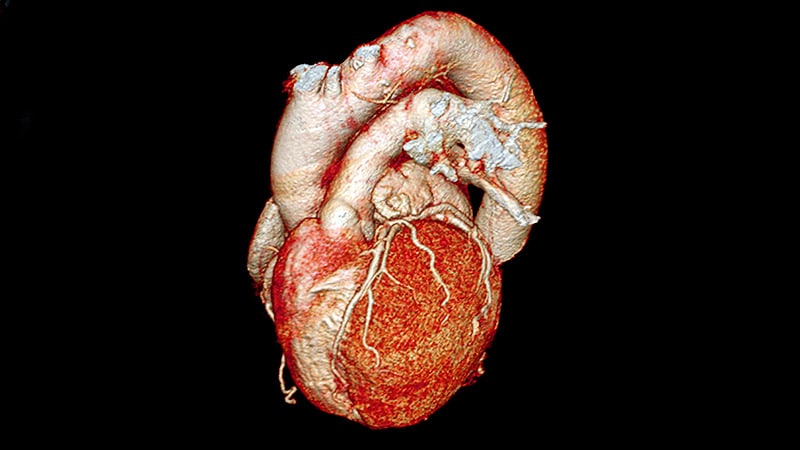
Measures of left ventricular dysfunction or wall motion identified by different imaging modalities at baseline offer no clues as to whether a subset of patients treated with surgical ventricular reconstruction might benefit from the procedure.
Orlando, FL - Heaping on the disappointment, a new substudy from the Surgical Treatment for Ischemic Heart Failure (STICH) trial has failed to find a subgroup that benefits from surgical ventricular reconstruction (SVR), a least on the basis of left ventricular (LV) function at the time of study enrollment.
Read full article »
Inside: Interventional/Surgery
Accredited educational programs,
supported by industry, developed by theheart.org
SYNTAX and MAIN-COMPARE suggest a role for PCI in subsets of patients with left main disease; however, in current ACC/AHA guidelines this remains a class III indication. Dr. Turco chairs a roundtable with interventionalists Drs Kandzari and Park and surgeon Dr Sabik.
Since BARI, CABG has been the gold standard for patients with diabetes and multivessel disease. However, SYNTAX suggests an increasing role for PCI and BARI 2D highlights the importance of optimal medical therapy. Dr. Boden leads a multidisciplinary discussion with Drs. Holmes and Taggart.
Dr. Dean Kereiakes leads an international panel of experts, Drs. Meredith, Banning, and Hermiller, as they discuss fascinating developments in stent and polymer technology and design their "dream stent."
How do the results of the SYNTAX trial impact clinical practice now? Join Drs. Banning and Hill as they present a complex case taken directly from the SYNTAX trial and discuss how new data will impact their choice of treatment, and listen to an overview of the trial presented by Dr. William Wijns.
The PARTNER and PAVIS trials of transcatheter aortic valve implementation will include inoperable or very high-surgical-risk patients. In Europe, where the devices have been approved for a few years, the technology is being expanded to lesser-risk patients. Interventionalist Dr Jeffrey Popma discusses the selection of patients with surgeon Dr Mathew Williams.
Transcatheter aortic valve implantation (TAVI) has been approved in Europe since 2007, whereas these devices are just entering large-scale research trials in the United States. Dr. Popma leads a panel discussion with European interventionalist Dr. Eberhard Grube and surgeon Dr. Neil Moat on their experiences with TAVI.
How do drug-eluting stents compare? Our panel of experts, Drs. Stone, Kereiakes, Serruys, and Windecker discuss the late-breaking trials at TCT 2009 of DES vs DES.
Recently published data suggest that prior polyvascular disease increases the risk for inhospital adverse events in patients with ACS. Join Drs. Deepak Bhatt, Jean-Pierre Bassand, and José R. Gonzalez-Juanatey for a discussion of the current data on identification and management of patients with polyvascular disease.
AF can lead to stroke, congestive heart failure, and other serious complications. Successful management should include reducing these risks. Join our expert panel, Drs. Peter Rothwell, Donald Easton, and Mark Alberts, as they discuss new data and strategies for improving outcomes in patients with AF.
Despite modern therapy, the rates of death, MI, bleeding, and readmission remain high in patients with ACS. Join Drs. Jeffery Popma, Héctor Bueno, Freek Verheugt, and Sunil. Rao for a review of the latest data on antiplatelet therapy for patients with ACS.
Variable rate contrast delivery systems have the potential to improve workflow and patient outcomes by providing a more precise flow of contrast. Watch Dr. Jeffrey Moses and his team as they demonstrate the use of the device in the cath lab in a patient with complex lesions.
As part of his mission to see more financial transparency in medicine, Sen Grassley has asked eight top US medical schools about their policies on ghostwriting.
Mayo Clinic researchers report that their stroke rate related to PCI has stayed steady for the last 15 years, something they interpret as good news, given that substantially older, sicker patients with more complex anatomy are now undergoing PCI.
A dose-finding study saw what were characterized as low bleeding rates associated with triple-drug antithrombotic therapy that included the oral anticoagulant dabigatran in patients with a recent ACS event and other cardiovascular risk factors.
Publicly released report cards based on hospital performance did not result in a measurably greater systemwide improvement in two composite AMI or CHF process-of-care indicators in a Canadian study. But they did appear to stimulate some important changes in delivery of care that could have led to some better outcomes.
New data from the BARI 2D trial comparing medical therapy vs revascularization in diabetics shows higher up-front costs of revascularization are only partially offset by long-term savings.
The latest evidence for the treatment of STEMI and PCI has been incorporated into a fast-track update of US guidelines. But questions remain about the quality of some of the evidence informing the guidelines and about the composition of the writing committees.
UPDATED WITH COMMENTARY // Thoratec's HeartMate II continuous-flow VAD keeps about half of patients alive and stroke- or reintervention-free after two years in pivotal destination therapy trial.
Depression after coronary artery bypass surgery is often overlooked by physicians but is associated with worse outcomes. A new US study illustrates a simple telephone-based approach to tackle this, with nurses encouraging patients to seek help from their primary-care doctors and providing ongoing feedback and review.
Raised in a blue-collar neighborhood of Somerville, MA, Dr Bob Harrington was blessed to have a strong family and the Jesuits on his side as he traveled from "Yankee" Boston to Duke University. Join him as he tells his story to Dr Rob Califf.
How do regulatory pathways differ in the US and UK? Drs Harrington, Bhatt, and Cleland share their experiences and offer insight on how to support innovative research.
With the ISIS-1 trial, Dr Peter Sleight and his team at Oxford changed the approach to cardiovascular research. Join Dr Robert Califf as he talks to Dr Sleight about his journey from London to San Francisco to Oxford and finally to Italy, where he discovered the music of the heart.