








The selected article could not be found. Try again later or contact administrator.
Hypertension
2 COMMENTS - Nov 4, 2009 14:30 EST
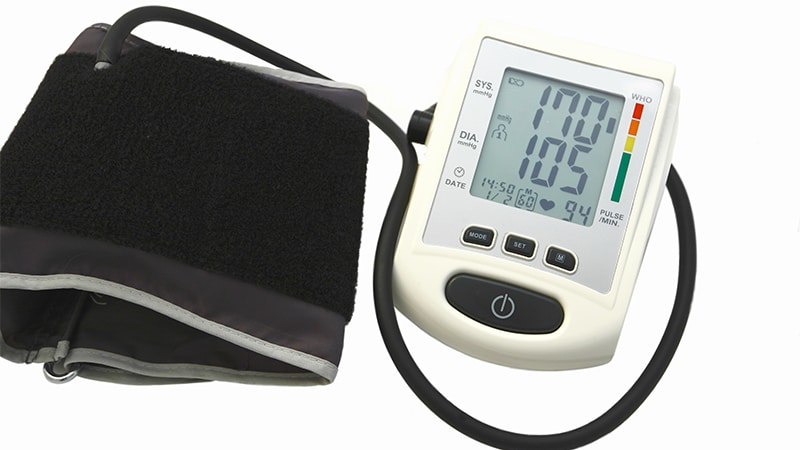
More discussion about the J-curve in hypertension is published this week; one expert believes the undue attention being paid to this subject might discourage doctors from treating high blood pressure aggressively.

New York, NY and Leicester, UK - Hypertension doctors are once again clashing over the phenomenon of the J-curve, the concept that there is a "normal" blood pressure below which it is dangerous to lower it any further [1,2].

Among the latter camp are Drs Franz Messerli (St Luke's Roosevelt Hospital Center, New York) and Gurusher S Panjrath (Johns Hopkins Hospital, Baltimore, MD), who, in their new viewpoint in the November 10, 2009 issue of the Journal of the American College of Cardiology, note that "careful scrutiny of the available data seems to show a J-shaped relationship between diastolic BP and coronary heart disease in high-risk patients." There is no evidence of a similarly shaped curve with regard to other target organs, however, such as the brain and kidney, they note. Read full article »

Inside: Thrombosis Risk
Accredited educational programs, supported by industry, developed by theheart.org

Thrombosis Risk
3 COMMENTS - Jan 12, 2009 02:02 EST
NATF's vision is to improve patient care, outcomes, and public health by utilizing a multidisciplinary approach to advance thrombosis research and education. NATF's legacy will be the improvement of patient care, outcomes, and public health by supporting thrombosis-related programs, such as novel research projects, innovative educational programs, public policy initiatives, regulatory issues and advocacy. NATF also seeks to broaden training opportunities for physicians, scientists, and other health professionals.
 
heartbriefs
Nov 20, 2009 13:15 EST
As part of his mission to see more financial transparency in medicine, Sen Grassley has asked eight top US medical schools about their policies on ghostwriting.
Acute Coronary Syndromes
Nov 19, 2009 11:00 EST
A dose-finding study saw what were characterized as low bleeding rates associated with triple-drug antithrombotic therapy that included the oral anticoagulant dabigatran in patients with a recent ACS event and other cardiovascular risk factors.
News
Nov 19, 2009 10:00 EST
Publicly released report cards based on hospital performance did not result in a measurably greater systemwide improvement in two composite AMI or CHF process-of-care indicators in a Canadian study. But they did appear to stimulate some important changes in delivery of care that could have led to some better outcomes.
Thrombosis Risk
Nov 18, 2009 15:00 EST
New and unique phase 2 data add to the growing body of evidence explaining the pharmacologic effects of the new antiplatelet agent ticagrelor.
Acute Coronary Syndromes
7 COMMENTS - Nov 18, 2009 09:00 EST
The latest evidence for the treatment of STEMI and PCI has been incorporated into a fast-track update of US guidelines. But questions remain about the quality of some of the evidence informing the guidelines and about the composition of the writing committees.
Interventional/Surgery
4 COMMENTS - Nov 17, 2009 09:00 EST
Dual antiplatelet therapy did not significantly reduce vein graft intimal hyperplasia compared with aspirin alone over 12 months.
Interventional/Surgery
Nov 16, 2009 17:45 EST
A randomized trial found no protection from in-hospital cardiovascular events with a strategy of blood transfusions to maintain hemoglobin above 10 g/dL, compared with a more conservative approach to transfusion therapy, in patients with CV disease or risk factors who underwent hip surgery.
Acute Coronary Syndromes
2 COMMENTS - Nov 16, 2009 15:15 EST
Discussion is abounding on why cangrelor did not show benefit over clopidogrel despite the fact that it did inhibit platelet activity more effectively.
Acute Coronary Syndromes
1 COMMENT - Nov 15, 2009 19:30 EST
Ticagrelor, an investigational antiplatelet agent, may become a new standard of care for the management of patients with STEMI heading for primary PCI, said the lead investigator of the STEMI subset of the PLATO trial. Reporting the new findings here today, he said they were consistent with the overall PLATO results.
Arrhythmia/EP
Nov 15, 2009 16:30 EST
In patients with conventional indications for pacing and normal systolic function, preservation of synchrony with biventricular pacing prevented the adverse remodeling effects of right-ventricular-only pacing. But some question the trial's methods.
Thrombosis Risk
Nov 15, 2009 14:15 EST
None of the eight platelet assays studied were able to predict bleeding, but four of the eight, based on ADP-induced platelet aggregation, produced results that correlated with adverse CV outcomes. By contrast, four tests that use shear-stress-induced adhesion-based methods were not predictive.
Editorial Programs
The Cardiology Show
1 COMMENT - Nov 18, 2009 16:30 EST
Join Drs Valentin Fuster, Roger Blumenthal, Bob Harrington, Judith Hochman, Sanjay Kaul, Suzanne Oparil, Gregg Stone, Lynne Warner Stevenson, and Bruce Wilkoff as they discuss the results of ARBITER 6-HALTS, the PLATO STEMI subanalysis, the two CHAMPIONs, and CASCADE and tackle the issue of too little, too soon in clinical trials today.
Editorial series
2 COMMENTS - Nov 6, 2009 09:50 EST
Raised in a blue-collar neighborhood of Somerville, MA, Dr Bob Harrington was blessed to have a strong family and the Jesuits on his side as he traveled from "Yankee" Boston to Duke University. Join him as he tells his story to Dr Rob Califf.
Editorial series
Oct 30, 2009 12:35 EDT
How do regulatory pathways differ in the US and UK? Drs Harrington, Bhatt, and Cleland share their experiences and offer insight on how to support innovative research.
button
Previews
Poll
Would you feel comfortable stopping clopidogrel for 5-10 days if a patient with a DES required surgery?
See: Shelley Wood. Five-to-10 day cessation of thienopyridine likely safe for surgery if aspirin maintained, post-DES.
Yes
No

Info from Industry