








This section contains information, resources and content provided by the corporate sponsors of theheart.org.


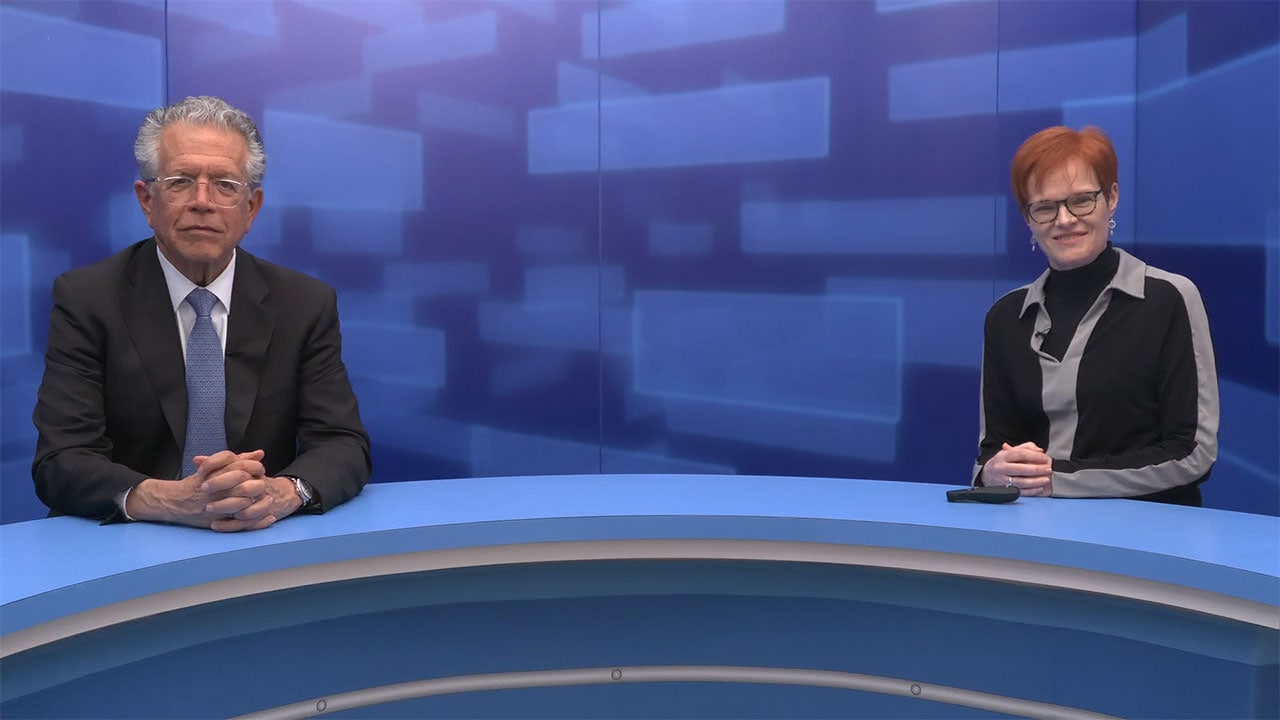
Joeseph Izzo, MD Department of Medicine, State University of New York at Buffalo,
Buffalo, NY

A brief interview with Dr Izzo discussing the role of central blood pressures in cardiovascular disease and the importance of how better understanding of systolic hypertension and optimal antihypertensive therapy is possible through the measurement of central blood pressures.

Click listen to presentation below to learn more about what is offered in this Resource Center.


This PowerPoint presentation provides a basic tutorial on understanding pressure wave reflection and the potential clinical importance of this measure.


This animation offers further information on the concept of wave reflection and demonstrates how the incident and reflected wave changes with vasodilation, vasoconstriction, aortic stiffening and during the aging process.


This resource center is a virtual venue for in-depth information, tools, and support material for physicians and healthcare providers involved in the care of patients presenting with hypertension, a major risk factor for cardiovascular disease.

Hypertension is a major risk factor for a wide range of cardiovascular diseases and is typically identified by measuring blood pressure (BP) at the brachial artery. While such a measurement might accurately determine diastolic BP, it does not accurately reflect systolic BP. This is because the blood pressure waveform (and systolic pressure) is distorted as it travels outward from the heart due to the presence of wave reflections from the peripheral arteries. Because of this distortion, blood pressure measured in the brachial artery provides an inaccurate measure of central aortic systolic pressure. The relationship between peripheral brachial systolic BP and central systolic BP varies among individuals, depending on the stiffness of the blood vessels and the shape of the pressure waveform. The relationship cannot be predicted in an individual from brachial cuff values because the degree of pressure amplification between the ascending aorta and the brachial artery varies widely between individuals. Central systolic pressure is an important factor determining cardiac function and work that can now be derived non-invasively by examining the shape of the pulse wave at the wrist.

Recently, it was shown that different classes of antihypertensive drugs produced different BP effects peripherally vs centrally (Morgan et al. 2004). Alterations in peripheral artery pressure did not accurately reflect changes in central aortic pressure following different drug interventions. Specifically, the effect of b-blockers on central aortic pressure was overestimated by brachially-measured BP. In addition, the effects of ACE inhibitors and calcium channel blockers were underestimated by brachially-measured BP.

The results reported by Morgan, et al., were supported by the Conduit Artery Functional Evaluation (CAFE) sub-study of the Anglo-Scandinavian Cardiac Outcomes Trial (ASCOT) trial, which included 2,199 hypertensive patients.(Williams et al. AHA 2005 Late Breaking Clinical Trials). The ASCOT study was stopped early when it was shown that the treatment arm using calcium channel blockers showed a significant reduction in unfavorable cardiovascular outcomes compared to the treatment arm using beta blockers. While no significant difference was seen in brachial systolic pressures between the two treatment arms, the CAFE study showed a significant difference in central systolic pressures. Thus, central systolic pressures could differentiate between the two treatment arms when brachial systolic pressures could not. This result has important clinical implications.

The Strong Heart Study is an ongoing study of cardiovascular disease and its risk factors among American Indians. This study recorded central blood pressure measurements in over 2,400 subjects and showed that central pressures were predictive of cardiovascular disease whereas brachial pressures were not. The study's authors suggested that this may be because central pressures more accurately represent the vascular load on the left ventricle.

Taken together, these data suggest that awareness and management of central blood pressure may be important in improving clinical outcomes.


Resource Library:

There is a growing body of research regarding the importance of central aortic pressure. Below is a selection of relevant documentation.

Relevant Studies:

The CAFE Investigators, for the Anglo-Scandinavian Cardiac Outcomes Trial (ASCOT) Investigators , CAFE Steering Committee and Writing Committee: , Bryan Williams MD, FRCP*, Peter S. Lacy PhD, Simon M. Thom MD, FRCP, Kennedy Cruickshank MD, Alice Stanton MB, PhD, FRCPI, David Collier MBBS, PhD, Alun D. Hughes MBBS, PhD, H. Thurston MD, FRCP, and Michael O'Rourke MD, FRACP, Study Advisor. Differential Impact of Blood Pressure-Lowering Drugs on Central Aortic Pressure and Clinical Outcomes. Principal Results of the Conduit Artery Function Evaluation (CAFE) Study. Circ. Published online before print February 13, 2006.  

Kullo IJ, Bielak LF, Turner ST, Sheedy PF 2nd, Peyser PA. Aortic pulse wave velocity is associated with the presence and quantity of coronary artery calcium: a community-based study. Hypertension. 2006 Feb;47(2):174-9  

Katakam R, Townsend RR. What’s in a Pulse? J Clin Hypertens (Greenwich). 2006 Feb;8(2):140-1.  

Dhakam Z, McEniery CM, Yasmin, Cockcroft JR, Brown MJ, Wilkinson IB. Atenolol and Eprosartan: Differential Effects on Central Blood Pressure and Aortic Pulse Wave Velocity. Am J Hypertens. 2006 Feb;19(2):214-219.  

McEniery CM, Yasmin, Hall IR, Qasem A, Wilkinson IB, Cockcroft JR; ACCT Investigators. Normal vascular aging: differential effects on wave reflection and aortic pulse wave velocity; the Anglo-Cardiff Collaborative Trial (ACCT). J A Coll Cardiol. 2005 Nov 1;(46(9):1753-60.  

Morgan T, Lauri J, Bertram D, Anderson A. Effect of different antihypertensive drug classes on central aortic pressure. Am J Hypertens. 2004 Feb;17(2)118-23.  

Wilkinson IB, Hall IR, MacCallum H, Mackenzie IS, McEniery CM, van der Arend BJ, Shu YE, MacKay LS, Webb DJ, Cockcroft JR. Pulse-wave analysis: clinical evaluation of a noninvasive, widely applicable method for assessing endothelial function. Arterioscler Throm Vasc Biol. 2002 Jan:22(1):147-52.  

Williams B, O’Rourke M: Anglo-Scandinavian Cardiac Outcomes Trial. The Conduit Artery Functional Endpoint (CAFE) study in ASCOT. J Hum Hypertens. 2001 Aug;15 Suppl 1:S69-73.  


Commercial support acknowledgment
Supported by AtCor Medical.